Flat and Polish

Quick answer: Flat and polish is the process of sanding fresh paint flat with very fine abrasives to remove orange peel, dust nibs and runs, then machine polishing it back to a high gloss so the finish looks smooth and even.
To flat and polish, is to flatten down imperfections in the paint surface using sandpaper, then to polish it using a machine polisher, so it's shiny again. This is sometimes called "wet sanding" or "Cut and Buff" in the Americas.
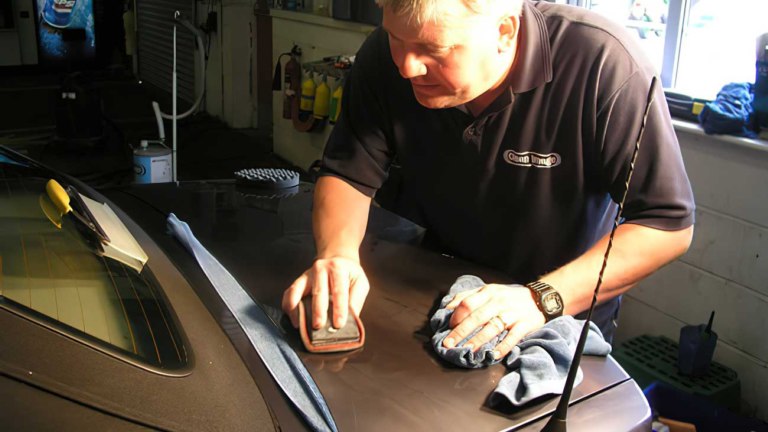
This expression is common in body shops where cars are being repainted. Sometimes mistakes can be made which cause a high point, run or sag in the paintwork, or there might be some other imperfection such as excessive orange peel, debris, bubble or pinhole which can be removed by flatting and polishing.
This technique can also be used to lessen or remove damage to the surface of the paint such as scratches and is essentially the same thing as 'paintwork correction'.
We also flat-and polish plastic headlights to remove oxidation, discolouration and staining. We do this with a 6-stage headlight polishing system.
What it means
Flat and polish (often said as flatten and polish) is a two stage process used mainly on freshly painted panels. First the surface is flatted with very fine wet and dry paper or sanding discs to knock down orange peel texture, dust nibs and small runs. Then the sanded surface is machine polished with compounds and pads to remove sanding marks and bring the gloss back so the paint looks smooth, deep and reflective.
Why it matters
- Levels the surface: Flattening removes high spots in the clearcoat so the paint reflects light evenly, reducing orange peel and giving a more mirror like finish.
- Corrects minor paint defects: Small runs, dust nibs and bits of contamination left in fresh paint can often be removed by a careful flat and polish instead of repainting.
- Finishes off body repairs properly: A good flat and polish helps new paint match or even surpass factory finish, which is important on visible panels like bonnets, roofs and doors.
Where you'll see it
You will see flat and polish on bodyshop estimates, particularly after a respray, panel repair or smart repair where fresh clearcoat has been applied. Detailers may also mention it when offering orange peel reduction or denibbing services on newly painted cars, show cars or custom work.
Context
Bodyshops often talk about flat and polish when finishing new paint - for example, flattening and polishing a bonnet after a respray so it looks smooth and glossy. In detailing it overlaps with wet sanding, denibbing and heavy compounding, but is usually reserved for controlled work on fresh or very thick paint where there is enough material to sand safely.
Common mistakes
- Thinking flat and polish is just a heavy machine polish without any sanding, rather than a controlled sand and polish process on fresh paint.
- Trying to flat and polish thin factory paint to remove orange peel and ending up with strike through on edges and high spots.
- Expecting deep scratches, stone chips or damage through the paint layers to disappear with a flat and polish instead of needing repainting.
- Attempting DIY flat and polish without proper abrasives, lighting, paint thickness checks and polishing skills, which can leave sanding marks, holograms or even bare patches.