
Random Orbital Polisher
Quick answer: A random orbital polisher is a type of machine polisher where the pad both spins and orbits in a random pattern, making it safer and more forgiving than a rotary while still effective at removing defects and boosting gloss on car paintwork.
Like a rotary polisher, a random orbital has a spinning backplate, however the pad is attached to a plate with a second axel and spins via momentum of the first, causing the polishing pad to move in a random motion. This breaks up any pattern which might cause buffer trails or holograms.
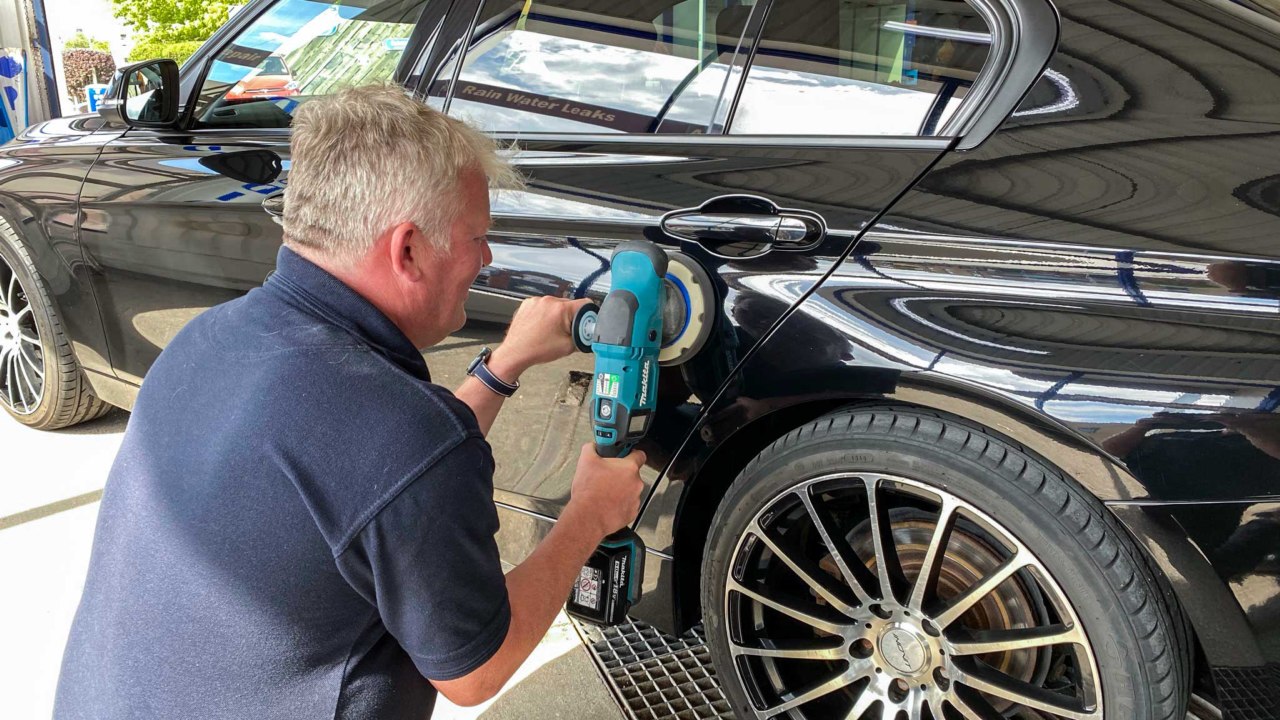
What it means
A random orbital polisher is a machine polisher where the backing plate both spins and moves in a small orbit, so the pad traces a constantly changing, random pattern across the paint. This dual action motion means no part of the pad follows the same path twice, which helps prevent rotary-style buffer trails and makes the tool more forgiving while still allowing polishes and compounds to level defects in the clearcoat.
Why it matters
- Safer and more forgiving: The random orbital action greatly reduces the risk of holograms, swirl marks and localised burn through compared with a pure rotary polisher.
- Versatile correction tool: With the right pads and compounds, a random orbital polisher can handle everything from light enhancement to fairly serious correction on many modern clearcoats.
- Ideal for enthusiasts and pros alike: The gentle learning curve makes it popular with DIY users, while professionals rely on it for refining and even main correction on many jobs.
Where you’ll see it
You will see random orbital polishers described as dual action polishers or DA machines on detailing equipment sites, in bodyshops and in better valeting operations. Service menus that mention DA polishing, safe machine polishing or enhancement details are usually referring to work carried out mainly with random orbital polishers.
Context
Within machine polishing, random orbital polishers sit between simple hand polishing and more aggressive rotary polishing. Free spinning DA machines are designed to stall if too much pressure is applied, adding another layer of safety. Detailers often use a random orbital polisher for the bulk of their work, switching to a rotary only when they need very heavy cut, then coming back to the DA to refine the finish before protection.
Common mistakes
- Assuming a random orbital polisher cannot cause any damage at all, and using it carelessly on edges and very thin paint.
- Pressing too hard so the pad stalls and stops orbiting, which reduces cutting power and can lead to uneven results.
- Using an overly aggressive pad and compound combination and expecting the DA to hide poor technique.
- Believing a DA can always replace a rotary for heavy sanding mark or deep defect removal, when in some cases a rotary is still needed first.
Written by Danny Argent. Last updated 17/11/2025 16:54