Scratches

Quick answer: On car paintwork, scratches are cuts or scores in the clearcoat and colour layers, ranging from light marks that only affect the surface to deep gouges that reach primer or bare metal.
Scratches are damage to the paint caused by abrasion, when an object scores a grove.
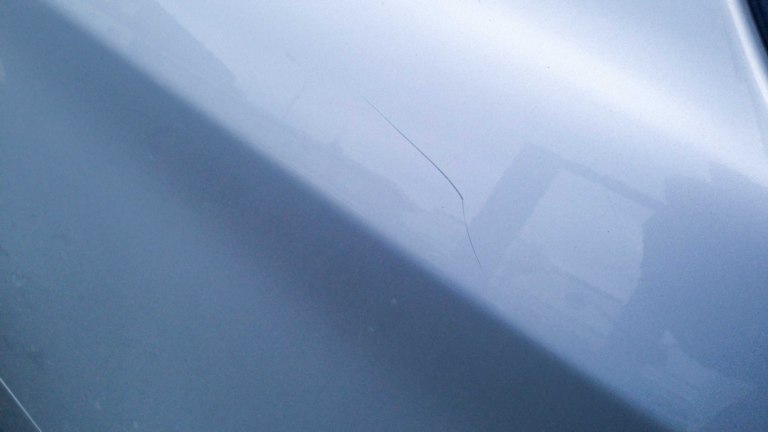
Although swirl marks, buffer trails, micro-maring, and wash marks are all scratches, those are not typically what we mean when talking about scratches. These kinds of scratches are very light and usually only visible when they catch the light.
As long as they do not penetrate too deeply into the clear coat, they can often be polished out by cutting back the damaged paint.
With deeper scratches, the best way to deal with them is to repaint the area, either with a smart repair or at a bodyshop, however this is expensive, and a cosmetic repair can be a good compromise, especially on areas which are low down on the car.
What it means
Scratches are physical grooves cut into the outer layers of your car's paint. They are usually caused when something harder than the paint is dragged across the surface, such as grit in a sponge, keys, branches or abrasive brushes. Light scratches only disturb the clearcoat and may show as swirl marks or fine lines in the sun, while deeper scratches cut through the colour coat into primer or even down to bare metal.
Why it matters
- Cosmetic appearance: Scratches catch the light, making otherwise tidy paint look dull, tired or neglected.
- Protection of the panel: When damage breaks through the clearcoat and colour, it exposes the primer or metal beneath, increasing the risk of corrosion on steel panels.
- Determines the right repair: Whether a scratch can be improved by machine polishing or needs smart repair or repainting depends entirely on how deep it is.
Where you'll see it
You will see scratches mentioned on inspection reports, condition appraisals, lease return checklists and bodyshop or detailing estimates. Descriptions often include phrases like light wash marring, light scratches, key scratch, vandal damage, scratch through to primer or scratch through to metal.
Context
In detailing and body repair, scratches are grouped by depth. Light clearcoat scratches and wash marring are usually tackled with machine polishing and paint correction. Medium scratches that catch a fingernail but are still mostly in the clearcoat may need careful wet sanding followed by polishing. Deep scratches that have broken through the colour coat usually require paint touch in, smart repair or panel respray rather than polishing alone.
Common mistakes
- Assuming all scratches can be polished out, even when they have gone through the colour coat and really need repainting.
- Judging scratches only in dull light and being surprised when they look worse in bright sun or under petrol station lighting.
- Using harsh DIY scratch removers or coarse compounds by hand, which can leave hazy patches or flat spots around the original scratch.
- Ignoring scratches that have exposed bare metal, allowing corrosion to start under the surrounding paint.