
Cosmetic Repair
Quick answer: A cosmetic repair is a small, localised fix to the visible parts of a car – such as scuffs, scratches or minor dents – that improves appearance without involving major structural work or full-panel replacement.
A cosmetic repair is a repair where typically paint is applied to hide a scratch, chip or blemish. It doesn't make the damage disappear, but will improve it by making it less noticeable.
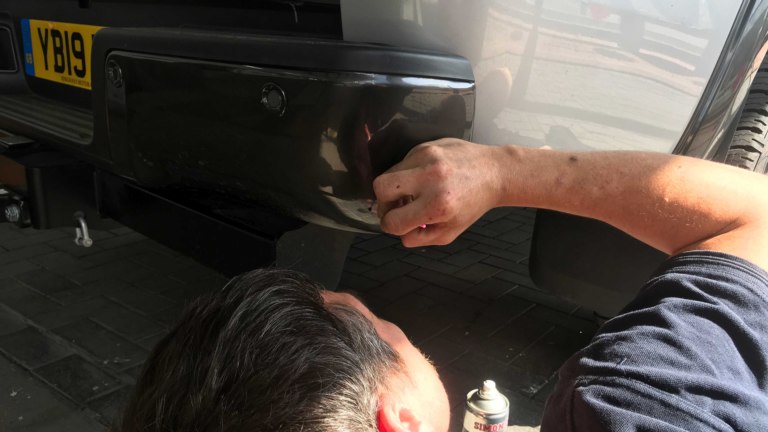
For example, if you have a scratch which is too deep to polish out, it would require repair-and-repaint in order to fully rectify. However, these repairs are expensive, especially on larger panels such as the roof or bonnet. Many people would not consider it worth paying hundreds of pounds to respray a roof in order to correct a scratch which is half an inch long.
Carefully touching in a scratch with a matched paint will not be an invisible repair, but will help it be less obvious, and can be considered an improvement.
This kind of repair can be very effective when it is low down on a car because when you are close to the panel, it's well below your eye-line, making it harder to see, and when you are further away it is perfectly camouflaged.
It is possible to get a 60-90% improvement with a cosmetic repair, at a fraction of the cost of repair and repaint, making it a very attractive alternative.
What it means
A cosmetic repair is a repair aimed purely at tidying up how a car looks, rather than fixing anything structural or mechanical. It usually covers things like bumper scuffs, light scratches, stone chips, small dents, kerbed wheels and minor trim damage. The work is kept local to the damaged area, using techniques and materials that blend the repair into the surrounding finish without repainting or replacing whole panels unless absolutely necessary.
Why it matters
- Improves appearance cost-effectively: Cosmetic repairs can dramatically smarten a car for a fraction of the cost of full bodyshop work or panel replacement.
- Helps with sale and lease returns: Tidying up obvious cosmetic damage often pays for itself by making a car more presentable and reducing the likelihood of recharge on lease inspection.
- Minimises disruption: Localised cosmetic repairs are usually quicker, with less dismantling and shorter off-road time than full conventional repairs.
- Focuses on what really shows: Cosmetic repair targets the little niggles that catch your eye every time you walk up to the car – scuffed corners, obvious scratches and chips.
Where you’ll see it
You will see the term cosmetic repair on bodyshop estimates, SMART repair quotes, detailing menus and lease-return reports. Typical phrases include cosmetic repair to bumper scuff, cosmetic paint repair to door edge, cosmetic wheel refurbishment or cosmetic rectification only. It is often contrasted with structural repair, panel replacement or repair and repaint of full panels.
Context
Cosmetic repair sits between pure detailing and full accident repair. Detailers can correct wash marks, swirls and light defects by polishing the existing paint. At the other end, heavy collision damage needs structural work, panel replacement and full repainting. Cosmetic repair covers the middle ground: localised painting, chip repair, smart dent removal and wheel refurbishment that improve how the car looks without major strip and rebuild. It is common on retail sales preparation, lease-return tidy-ups and everyday car park damage.
Common mistakes
- Expecting a quick cosmetic repair to make severe or poorly repaired damage look brand new when it really needs full repair and repaint.
- Choosing the absolute cheapest cosmetic option and accepting poor colour match or rough texture that can actually draw more attention to the repair.
- Trying to treat rust, deep dents or structural issues as “cosmetic only”, which can mask problems without really fixing them.
- Leaving obvious cosmetic damage untouched on a sale or lease return car, only to lose more money in knocked-down offers or end-of-lease charges than a sensible cosmetic repair would have cost.
Written by Danny Argent. Last updated 21/11/2025 16:29