
Lichen
Quick answer: Lichen is the tough, crusty growth you see on neglected roofs, rubbers and trims - a slow-growing organism that bonds tightly to textured surfaces and is much harder to remove than simple green algae.
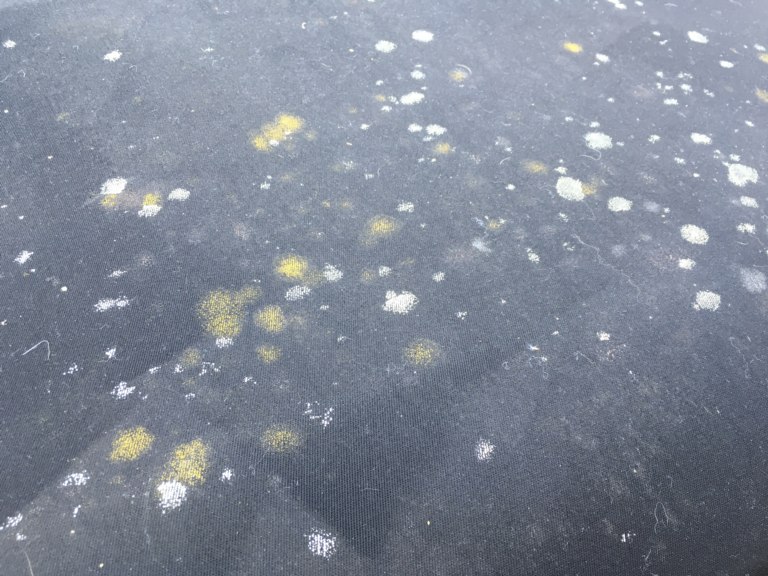
Lichen is a symbiotic organism made of algae and fungus which can appear on your convertible roof as white, yellow or green spots.
The fungus provides interwoven fungal filaments which give it strength and can weave their way into the fibres of the fabric, making lichen particularly difficult to remove.
However, lichen can be removed and seldom does any long term damage to fabric roofs made of synthetic fibres.
Bio-active detergents can often help to break down lichen, while vinegar and bleach are not recommended on cabriolet hoods.
People are often tempted to attempt to remove lichen with a pressure washer, and damage their hood in the process as water at high pressure will cause the fibres of the fabric to pull apart, roughening the surface creating a fluffy texture. Instead, it is recommended to remove lichen with a brush, which although time consuming is much safer. Even here, care must be taken not to apply too much pressure.
What it means
Lichen is a hardy, crusty growth that can take hold on neglected areas of a car, especially fabric convertible roofs, window rubbers and textured plastics. It is not just simple green slime - it forms small, often pale or grey patches that cling tightly to the surface and do not wipe off with normal washing. On soft tops it often appears as little round spots or speckles that give the roof a freckled, aged look.
Why it matters
- Much tougher than algae: Lichen bonds itself to the surface structure, so it usually needs careful, targeted cleaning to remove without damage.
- Makes the car look old: A roof or set of rubbers dotted with lichen instantly makes a car look poorly cared for, even if the paint and interior are tidy.
- Can hold moisture and dirt: Lichen colonies trap moisture and grime against fabrics, rubbers and seams, which is not helpful for long term condition.
- Indicator of long term neglect: Because lichen grows slowly, heavy growth suggests the area has been damp and uncleaned for quite some time.
Where you’ll see it
You will see lichen most often on fabric and mohair convertible roofs, particularly around edges, stitching and areas that stay damp. It also appears on window rubbers, gutter trims, wiper arms and other textured plastics that are shaded and rarely cleaned properly. Inspection and detailing reports may mention lichen on roof and rubbers, lichen spots on soft top or lichen growth around window seals.
Context
Lichen sits in the same family of biological contamination as algae, moss and mould, but is tougher and more deeply attached. On cars it tends to favour rougher, slightly porous surfaces rather than smooth paint. Proper treatment usually involves careful pre-soaking, gentle agitation and repeated rinsing, sometimes over more than one visit, followed by appropriate protection such as fabric roof proofer or trim dressing. Aggressive scrubbing or harsh chemicals can damage the underlying material long before the lichen finally lets go, so technique and product choice matter just as much as effort.
Common mistakes
- Attacking lichen with very stiff brushes or scouring pads, which can damage roof fabric, stitching and rubbers while the lichen still clings on.
- Using strong TFR or household chemicals in an attempt to burn it off, risking bleaching, streaking and weakened materials.
- Assuming a quick one-off wash will fix heavy lichen growth, rather than planning a careful, staged cleaning process followed by proper protection.
- Leaving lichen in place for years on soft tops and rubbers, allowing it to dig in further and making eventual restoration more difficult and expensive.
Written by Danny Argent. Last updated 03/12/2025 15:27