
Grit
Quick answer: Grit is the fine dirt, dust and tiny hard particles that get trapped in a soft top roof. You may not see it, but it is abrasive and is one of the main causes of wear, thinning and eventual holes in convertible fabrics.
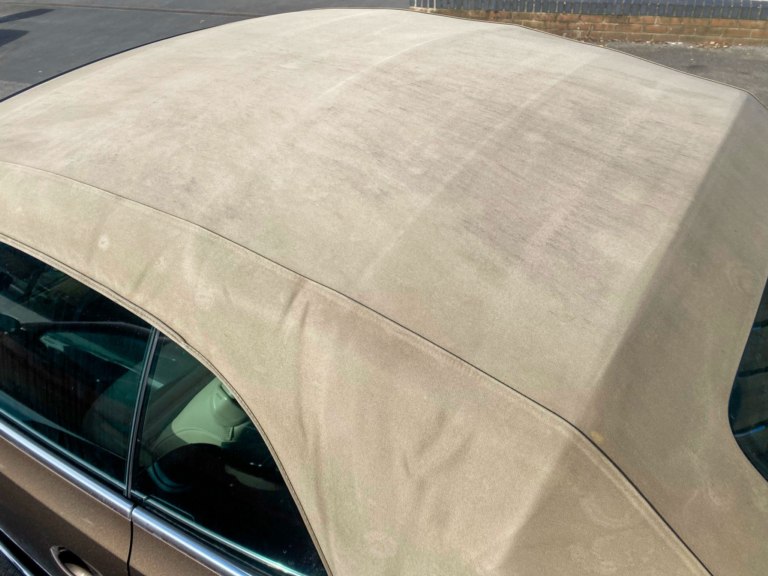
Grit is the main cause of damage to soft top roofs, and will eventually cause your convertible roof to require replacement.
While most people notice the roof greening which makes their roof look shabby and old, it is the dirt and grit that they don't see which is the main cause of all the problems.
There is dirt and dust falling out of the sky onto your roof all the time, where it becomes trapped in the fibres. This provides the substrate for algae and lichen to grow on. So while you may not be able to see the dirt, if you have roof greening, this is a sure sign it's there.
The problem is that grit is abrasive. As you fold your roof up and down, the grit wears at the fibres causing wear marks, and eventually will wear all the way through causing holes.
What it means
Grit is the mixture of fine dirt, dust and tiny hard particles that land on your car and get stuck in textured surfaces, especially fabric soft tops. Much of this contamination is too small to notice until it collects in patches, but it sits deep in the fibres and along stitching lines. On light-coloured roofs you may see this as darker dirty areas even when there is little obvious green algae.
Why it matters
- Main cause of roof wear: Because grit is abrasive, it acts like fine sandpaper. Every time the roof is folded or flexes in the wind, the trapped grit rubs against the fibres, gradually thinning them and creating wear marks.
- Can lead to holes and replacement: If left for long enough, the constant abrasion will wear right through the fabric in high-stress areas, eventually leaving holes and forcing roof replacement.
- Feeds biological growth: The dirt and dust provide a perfect base for algae, moss and lichen to grow on, which is why a roof that has gone green is usually heavily contaminated with grit even if you cannot see it.
- Not always obvious at a glance: Owners often focus on visible “roof greening”, but the underlying grit is the hidden problem that does the real damage over time.
Where you’ll see it
Grit is most noticeable on pale fabric roofs where dark dirty patches show in the weave, particularly in gutters, around stitching and where the roof folds. On darker roofs it may be harder to see, but will still be present wherever the car lives outside and is not cleaned regularly. Inspection and detailing notes may mention grit building up in roof fabric, heavy grit contamination or grit causing wear marks on soft top.
Context
Grit contamination is part of the wider problem of roof neglect. Dust and airborne dirt fall on the car all the time and get trapped in the pile of the fabric, especially if the roof is damp and never thoroughly cleaned. Over months and years this builds up, encouraging algae and lichen and gradually wearing away the fibres as the roof moves. Proper soft top care therefore means more than just rinsing off the green – it involves deep cleaning to remove as much embedded grit as safely possible, followed by proofing and regular maintenance washes to slow future build-up.
Common mistakes
- Assuming that only the visible green growth is the problem and ignoring the embedded grit that is actually wearing the roof out.
- Rubbing or scrubbing a dry, gritty roof, which can accelerate abrasion and leave shiny wear patches in the fabric.
- Skipping periodic deep cleans and relying on quick surface washes that never really remove the dirt trapped in the fibres.
- Delaying proper cleaning and proofing until wear marks and holes appear, by which time replacement may be the only sensible option.
Written by Danny Argent. Last updated 04/12/2025 02:56