
Zig-Zags
Quick answer: Zig-zags are the pale, angled lines you see across a soft top where it has repeatedly folded in the same places, usually where grit and movement have begun to mark and thin the fabric along the roof’s fold pattern.
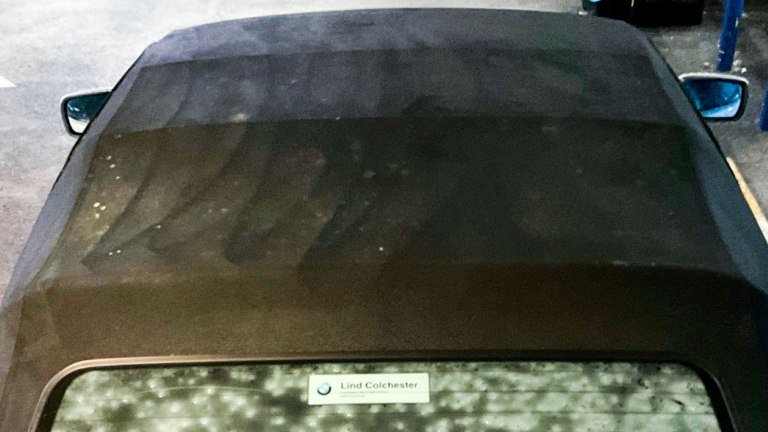
Zig-zag marks are caused by attempting to clean a cabriolet roof with a pressure washer.
When people see that their roof is dirty, they try to clean it themselves, and a pressure washer seems like a sensible way to do it.
However, most pressure washers are far too harsh for fabric roofs and so while they might be able to clean dirt out of the roof if you get them close enough, they may also damage the fibres of the roof.
Most pressure washers don't have access to large amounts of water, they are attached to a hose pipe and only have the water that can be fitted through that small hose. So what they are doing it using very little water at very high pressure. These high pressures can be enough to cut straight through a cabriolet roof, although it is usually the case that they rough up the surface. Unfortunately, this damage can be permanent.
What it means
Zig-zags are the angled lines that show where a soft top folds and rubs every time it is opened and closed. On many convertibles the roof folds in a set pattern, so the same creases form again and again. Over time these fold lines can become visible as pale, shiny or slightly rough bands that trace a zig-zag pattern across the fabric, usually most obvious when the roof is dry and viewed in low, glancing light.
Why it matters
- Shows where the roof is working hardest: Zig-zags highlight the stress lines where the fabric bends sharply and is most prone to long-term wear.
- Often linked to grit and contamination: Embedded grit in the fibres acts like fine sandpaper along the folds, so zig-zags are frequently early signs of abrasion rather than just harmless creases.
- Can develop into tears: If the same fold lines are repeatedly flexed with grit present, light zig-zag marks can progress to heavy wear, thinning and eventually tears along those bands.
- Affects appearance and appraisal: Obvious zig-zag wear makes a roof look older and can be noted on inspection reports as evidence of roof ageing and possible future failure points.
Where you’ll see it
You will see zig-zags most clearly on fabric and mohair soft tops that are a few years old, particularly on cars that are folded regularly and live outside. The lines usually run diagonally across the roof panels, matching the fold geometry of the hood frame. Inspection and detailing reports may refer to zig-zag wear along folds, zig-zag marks across roof or early zig-zag thinning at fold lines when commenting on roof condition.
Context
Zig-zags sit in the same family as wear marks, thinning and tears. They are not just simple dirt; they are a visual clue that the roof fabric has been repeatedly flexed along the same paths, often with grit trapped in the fibres. Proper roof care – regular deep cleaning to remove grit, followed by proofing to help the fabric shed dirt and water – can slow the progression from light zig-zags to serious damage. However, once strong zig-zag wear is visible, it is a sign that the roof is part-way through its life and those lines are the areas to watch most closely for future tears.
Common mistakes
- Assuming zig-zags are just harmless creases and not recognising them as early wear from grit and repeated folding.
- Scrubbing harder on zig-zag lines to “clean them off”, which can accelerate abrasion and make the bands more obvious.
- Continuing to operate the roof frequently without addressing heavy contamination, allowing zig-zag wear to progress into full tears.
- Promising that cleaning and proofing alone will remove strong zig-zag marks, when in reality they indicate material that has already been permanently thinned.
Written by Danny Argent. Last updated 04/12/2025 03:12