
Roof Dye
Quick answer: Roof dye is a coloured coating or dye used to restore or change the colour of a faded fabric convertible roof, usually applied after deep cleaning and before proofing, to make the soft top look more even and presentable again.
There are several products on the market for recolouring cabriolet roofs, and even if people don't know about them, they still assume that you can re-dye a soft top back to its original colour, or to another colour.
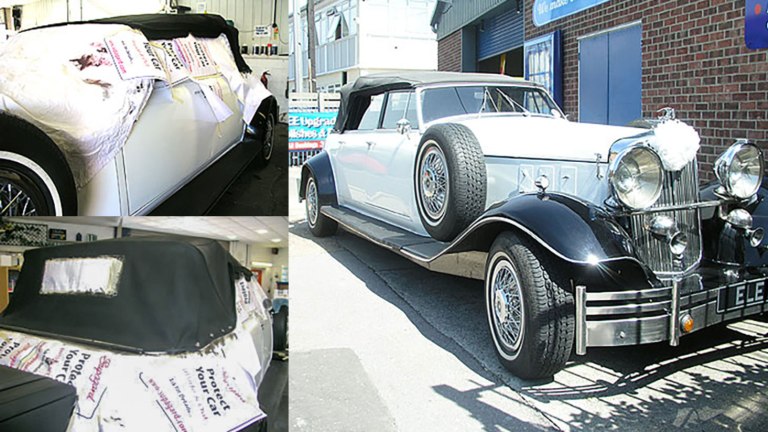
However, it is not possible to re-dye a synthetic fabric roof. Dying is an electrochemical process that can only be done once because it depends on the difference in electrical charge between the dye and the fabric.
What this means is that any product for recolouring fabric hoods is actually a paint rather than a dye. The product needs to have some opaqueness and body to it, so it can cover. Unfortunately, the finish it gives also looks like paint. This may be acceptable on vintage vehicles, where it is impossible to buy a replacement roof kit, and the original finished looked like painted canvas anyway, but it wouldn't satisfy most owners of modern vehicles.
The good news is that recolouring is seldom needed. Most of the discolouration of a hood is actually dirt which can be washed out.
Weather proofing also darkens the hood, taking it back to its original colour.
What it means
Roof dye is a coloured coating or dye used to refresh the appearance of a fabric convertible roof. Over time, soft tops fade, go patchy or develop light wear marks. A purpose-made roof dye is brushed or rolled onto the cleaned fabric to restore a richer, more even colour. On many products it behaves more like a very thin paint than a traditional clothing dye, bonding to the outer fibres of the roof material.
Why it matters
- Improves appearance: A good roof dye can transform a tired-looking soft top, making faded panels and wear marks far less obvious and helping the whole car present better.
- Helps disguise staining: Old bird stains, algae shadowing and general blotchiness may still be faintly visible after cleaning; dye can reduce their contrast so they do not jump out at first glance.
- Separate from waterproofing: Roof dye is mainly about colour. Proper waterproofing still comes from the roof’s membrane and any dedicated proofing product applied afterwards, not from the dye alone.
- Not a cure for wear or damage: Dye cannot put fabric back where it has worn away, fix tears or repair failed stitching – it can only improve how those areas look.
Where you’ll see it
You will see roof dye mentioned in detailing menus, restoration descriptions and some DIY products aimed at convertible owners. Typical phrases include roof dye to restore colour, roof recoloured then proofed or roof too worn to benefit from dye. It mainly applies to mohair and other fabric roofs rather than vinyl, which are usually dressed rather than dyed.
Context
Roof dye sits alongside cleaning and proofing as one part of soft top restoration. The usual sequence is: deep clean to remove grit, algae and contamination; allow the roof to dry fully; apply roof dye in thin, even coats where appropriate; then, once cured, apply a dedicated fabric roof proofer. On some roofs, age and wear mean dye is not recommended – for example where fabric is already very thin, heavily torn or the membrane has failed, in which case replacement may be more sensible. Choosing the right colour (often the original or slightly darker) and managing expectations about how much long-term damage can be disguised is an important part of any professional advice.
Common mistakes
- Using roof dye on a dirty or only lightly cleaned roof, trapping grit and contamination under the new colour and shortening its life.
- Expecting dye to fix structural problems such as thinning, tears or failed membranes, rather than seeing it as a primarily cosmetic treatment.
- Applying heavy, uneven coats that leave streaks, brush marks or a stiff, painted feel instead of a natural fabric finish.
- Skipping the proofing stage afterwards and assuming the dyed roof is now fully waterproof, when it still needs a proper fabric proofer for best protection.
Written by Danny Argent. Last updated 04/12/2025 03:17