
Mechanical Brush
Quick answer: A mechanical brush is a powered or machine-driven brush used in detailing to scrub surfaces such as fabric convertible roofs more evenly and deeply than by hand, helping to lift grit, algae and dirt without relying purely on elbow grease.
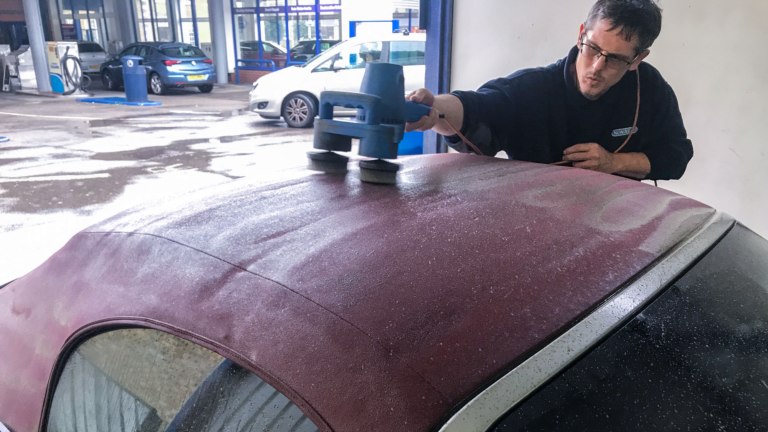
A mechanical brush is any brush attached to a machine. We typically clean roofs using brushes attached to a twin head random orbital polisher for the bulk of the roof, but may also use a brush attached to a drill for smaller panels so that stitching can be avoided.
Cleaning a soft top roof is a lot of work, and using a mechanical brush speeds up the process, making it many times faster.
What it means
A mechanical brush is a cleaning brush driven by a motor or machine rather than just by hand. In the context of car detailing and soft top work, it usually refers to a rotary or oscillating brush head used with dedicated roof cleaners. The brush provides controlled, repeatable scrubbing across the surface, helping to work cleaner into the fibres and lift out grit, algae and general grime from fabric or mohair roofs, rubbers and some textured trims.
Why it matters
- More consistent than hand brushing: A mechanical brush applies a more even action over larger areas, reducing the hot spots and missed patches that are common when everything is done by hand.
- Helps remove embedded grit and growth: The combination of suitable cleaner and mechanical agitation is far more effective at loosening grit, algae, moss and lichen from roof fibres than just shampoo and a quick scrub.
- Reduces reliance on harsh chemicals: Because the brush does a lot of the work, you do not need to lean so heavily on very strong cleaners that might damage stitching, membranes or colour.
- Can be gentler overall: Used correctly with the right bristle type, a mechanical brush can be kinder to the material than vigorous manual scrubbing, as pressure and movement are more controlled.
Where you’ll see it
You will see mechanical brush referred to in soft top restoration descriptions, detailing menus and inspection notes. Typical comments include roof cleaned using mechanical brush and specialist cleaner, mechanical brush used to lift grit from fibres or do not use automatic car wash brushes, use controlled mechanical brush and roof cleaner. It is most often mentioned in connection with fabric and mohair roofs, but similar tools may be used carefully on carpets, mats and some trims.
Context
Mechanical brushes sit between simple hand brushing and large automatic car wash brushes. In professional use they are chosen and set up specifically for the job – for example, a particular head and bristle stiffness for soft tops, used with appropriate cleaners and plenty of rinsing. This is very different from driving a convertible through a rotary car wash, which uses big, coarse brushes and detergents designed for hard paint, not fabric. The aim with a mechanical brush in roof work is to remove as much embedded contamination as safely possible, slowing down wear marks, roof green and eventual tears by getting the grit out of the fibres.
Common mistakes
- Confusing controlled mechanical brushes used by specialists with the harsh rotating brushes in some automatic car washes, and assuming both are equally safe for soft tops.
- Using the wrong type of brush head or bristle (too stiff) on delicate fabrics and stitching, which can cause premature wear or visible scuffing.
- Letting a mechanical brush run too long on one spot, creating localised wear instead of even cleaning.
- Relying on mechanical brushing alone without proper roof cleaners and rinsing, which can simply move contaminated slurry around rather than fully removing it from the fibres.
Written by Danny Argent. Last updated 05/12/2025 15:07