
Drying
Quick answer: Drying is the controlled process of removing moisture from a car after leaks, flooding or heavy cleaning – not just on the surface, but from carpets, underlay, cavities and components – to prevent mould, corrosion, bad smells and future electrical problems.
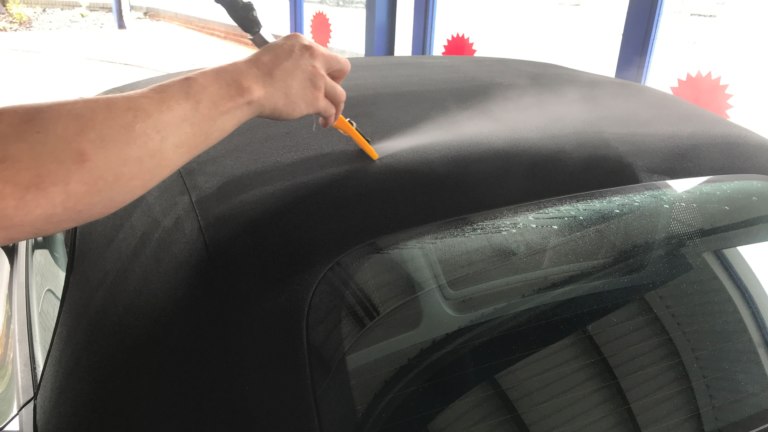
Drying is an essential part of re-weatherproofing a fabric soft top, for a number of reasons.
Firstly, you can't really tell if the roof is totally clean until it's dried. When the hood is wet, it is dark, and this can hide dirt and stains that might have been missed during the cleaning process.
Pushing the water out of the hood, inch-by-inch, not only helps dry the hood but allows us to inspect it in detail, ensuring nothing was missed. If we did miss something, the car may have to go back to the wash-bay for another wash and scrub.
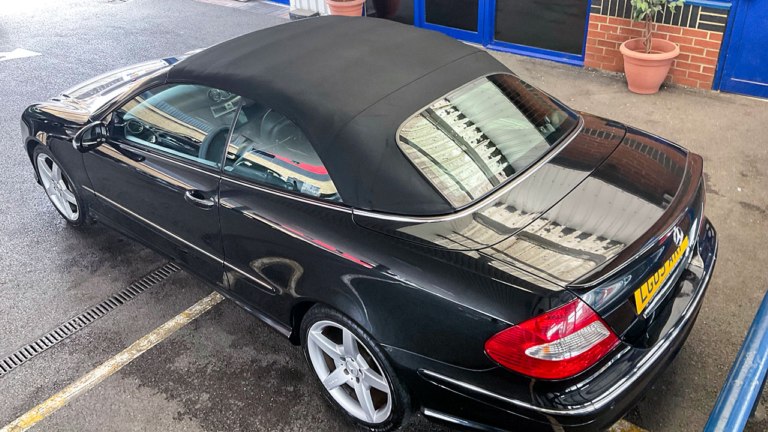
The second reason it is important to dry the hood is that our waterproof coatings are hydrophobic! They repel water, but conversely are repelled by water. They just won't go onto a roof unless it's bone dry.
It's also very important that once the weatherproof coating is applied, it is allowed to dry and cure before the car is driven in case it rains.
We use oil based products and oil and water, famously, don't mix, and so drying is a vital part of our process, and it should be part of yours too, if you are planning on cleaning and weatherproofing your car using a D.I.Y. kit. You should do everything possible to ensure the hood is dried properly between stages. This either means doing in a garage with heating, or during very favourable weather.
What it means
Drying is the stage after a leak or flood where trapped moisture is actively removed from the car. It is more than just leaving the doors open on a sunny day. Proper drying uses extraction, airflow, dehumidification and sometimes gentle heat to draw water out of carpets, underlay, soundproofing, seat bases and hidden cavities so the car is genuinely dry throughout, not just on the surface.
Why it matters
- Prevents mould and bad smells: If soft materials are left damp inside, mould and mildew will grow, creating health concerns and persistent musty odours.
- Protects wiring and electronics: Water left around looms, connectors and control units can cause corrosion and intermittent electrical faults months after the original leak.
- Helps avoid rust: Damp trapped in seams, box sections and under carpets encourages hidden corrosion in floors and structural areas.
- Essential for lasting repairs: Fixing the leak and cleaning the interior is only part of the job – unless the car is fully dried, water damage can continue quietly in the background.
Where you’ll see it
You will see drying mentioned in leak repair estimates, flood damage reports and interior decontamination quotes. Typical phrases include drying of carpets and underlay required, vehicle placed on controlled drying rig, additional labour for drying cavities or insufficient drying after previous leak repair. It is a key part of professional leak and water damage work, not just an optional extra.
Context
Drying sits in the middle of the proper sequence for dealing with water ingress. First you find and fix the leak, then strip out trims and soft materials as needed, extract standing water, clean and disinfect, then dry the vehicle under controlled conditions before refitting and finishing. Simply valeting a wet car or parking it in the sun leaves deep materials wet and is a common cause of recurring smells, mould and electrical issues. Effective drying may take several days, but done properly it greatly reduces the long-term consequences of water damage.
Common mistakes
- Assuming that because the carpet surface feels dry, the underlay and soundproofing underneath must also be dry.
- Relying on a quick valet and air freshener instead of controlled drying after a significant leak or flood.
- Refitting trims and seats over damp floors and foams, trapping moisture where it cannot evaporate properly.
- Failing to monitor moisture levels, so drying stops too early and hidden damp later leads to mould, corrosion and electrical faults.
Written by Danny Argent. Last updated 05/12/2025 16:39