
What is quick detailer?
Quick answer: A quick detailer is a spray used between washes to remove light dust and fingerprints while boosting gloss and slickness. It’s safe over waxes and ceramic/graphene coatings, adds short-term hydrophobicity, but isn’t a substitute for proper washing or long-term protection.
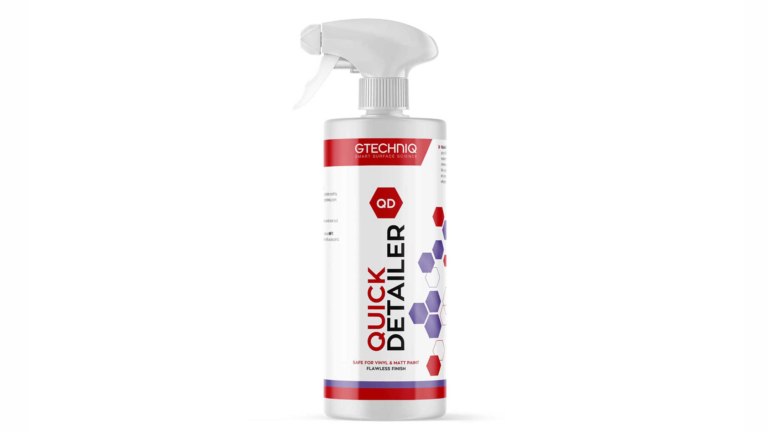
A quick detailer is a product which is sprayed onto the car, and is supposed to lubricate dust and light soiling, enough so that you can wipe it off the car's paintwork without causing scratches. This product also leaves a shine to the car once buffed off.
These products are somewhat controversial, with many professionals holding the opinion that it is not a safe method of cleaning a car without leaving scratches. However, it has its place as a product when used appropriately.
It is an alternative for when water is not available to wash a car, or where water cannot be used, and it can serve as a show-shine type product for removing fingerprints and light dust on already clean cars.
It is a good product to keep in the car with a couple of cloths for issues that should arise when you are out and about - it can for example serve as a bird-mess remover. However, we would not recommend relying on it for protection.
What a quick detailer really is
A quick detailer is a light cleaning and gloss boosting spray that you use between proper washes. It is designed to remove light dust, fingerprints and fresh watermarks, while adding a bit of slickness and shine. Think of it as a finishing or tidy up product, not a replacement for a full wash and protection routine.
Most quick detailers contain lubricants that help the cloth glide, some form of gloss or beading booster, and mild cleaning agents to lift very light contamination safely.
How quick detailers are meant to be used
Used in the right way, a quick detailer is a handy tool that makes it easier to keep a cared for car looking sharp.
- After washing - used as a drying aid, sprayed lightly onto a damp panel or towel to add slickness and reduce the risk of towel marks.
- Before a show or handover - to remove fingerprints, light dust and fresh water spots the day after a proper wash.
- On sheltered cars - for garaged cars that gather a light film of dust rather than heavy road grime and mud.
- On specific marks - to gently remove bird lime residue or bug splatter after the bulk has been safely softened and rinsed away.
The common theme is that the surface should be nearly clean already. The product is there to refine and top up, not to strip off heavy dirt.
Where quick detailers are genuinely useful
A good quick detailer earns its keep by saving time and reducing the need for full washes in borderline situations.
- Keeping a freshly detailed or coated car looking “just done” for longer between proper washes.
- Freshening up sales or display cars that are mostly sitting rather than doing big mileages.
- Making drying easier by breaking surface tension so water sheets away and towels glide more easily.
- Adding a short term slick feel and water beading ahead of a show, meet or special trip.
Used this way, they support your main protection, whether that is wax, polymer or ceramic, instead of trying to replace it.
Limits and risks if you use them as a shortcut
The problems start when a quick detailer is asked to do the job of a full wash. The lubricants help, but they cannot safely cope with heavy contamination on their own.
- Trying to remove thick dust, mud or winter film with just a spray and a towel is a good way to grind grit into the clear coat and create swirls.
- Using quick detailer as a regular “waterless wash” on a daily driver that lives outside is harder on the paint than a proper pre wash and contact wash.
- Layering lots of different quick detailers, waxes and sealants can lead to smearing, hazing and unpredictable behaviour in the rain.
- Some contain gloss enhancers or waxes that may not suit matte finishes, wraps or certain trims.
If the car is genuinely dirty, it needs a proper wash with shampoo, rinse water and the usual safe wash steps. Quick detailer is for light work only.
Different types of quick detailer sprays
Not all quick detailers are built the same. The label often hints at what they are best at.
- Pure quick detailers - focused on lubrication and cleaning, with a subtle gloss boost. These are often the safest on coatings and delicate finishes.
- Wax rich detailers - add a warm, waxy glow and short-term protection, ideal on cars already protected with waxes or polymer sealants.
- SiO2 or “ceramic” detailers - contain ceramic style additives to top up beading and slickness on coated or uncoated cars for a few weeks at a time.
- Show detailers - geared towards maximum gloss and richness for display, with less focus on long-term durability.
The choice comes down to what is already on the car and whether you are chasing looks, ease of drying, or a small top up in the short-term protection.
How quick detailers fit with ceramic coatings
If your car has a professional ceramic coating, a compatible quick detailer can make maintenance easier, but you do not want to fight the underlying chemistry.
- Use products your coating installer is happy with so you do not clog or mute the coating with unsuitable waxes or fillers.
- Choose sprays sold as coating safe toppers or maintenance products, rather than heavy cleaner waxes.
- Avoid anything abrasive or strong enough to strip protection, as this shortens the life of the coating.
- Remember that a quick detailer is a light jacket over the top, not the main winter coat. It does not replace proper inspections and decontamination.
Handled properly, a quick detailer simply keeps a coated car feeling slick and looking freshly done between more thorough maintenance visits.
Best practice when using quick detailers
To get the benefit without adding swirls, it helps to treat quick detailing as a careful, light touch process.
- Only use it on lightly dusty or freshly washed panels, not on heavy grime.
- Use good quality, clean microfibre towels and flip or swap them frequently so you are not dragging collected dirt across the paint.
- Mist the product onto the towel or panel sparingly – more is not always better and can lead to streaking. Be aware of which way the wind is blowing and try to avoid getting it on windows.
- Work in the shade on cool paint and buff any residue gently before it dries hard.
- Build it into a wider routine of safe washing, periodic decontamination and appropriate long-term protection, rather than relying on it alone.
Used in this way, a quick detailer is a genuinely useful tool for keeping a well looked after car at its best, rather than a risky shortcut.
What you should ask next
Which type of quick detailer would you recommend if my car already has a ceramic coating?
We would recommend Fireball Waterless Max, because Fireball is a ceramic coating supplier, they are one of our suppliers, and they have a good range of products. We know you want to buy all your sundries in the same place and they have everything the ceramic coating enjoyer needs.
What is the safest way to deal with bird mess or water spots without marking the paint?
The best way is as quickly as possible. Whatever you have to hand, be it a quick detailer or baby-wipe, get it off. If it is dried on, use a dedicated cleaner such as Fireball Bug Cleaner to break it down. Bird lime is acidic and highly corrosive, so we don't recommend hot wet towels, as heat adds energy to the chemical reaction. Once removed, flush the area with water and pH neutral shampoo.
People also asked
Written by Danny Argent. Last updated 28/11/2025 16:31
Further Reading
-
Bird Mess Marks
This is a quick clip showing damage by bird mess, which has etched its way right through the clear-coat and permanently damaged the finish of this Toyota. -
What are the disadvantages of a ceramic coating?
There are many benefits of ceramic coatings, but what are disadvantages of ceramic coating? Are there any?
Services
-
🔥🔥🔷 Car Ceramic Coatings
We offer a range of Graphene, Diamond and Ceramic Coatings for cars of all types. -
🔷 Exterior Car Detailing
Our exterior detail prepares your car's exterior, and is an essential step in the process if you are having paintwork restoration, polishing and ceramic sealants.