
What is Aqua-Wax?
Quick answer: Aqua Wax is a spray-on wax used on a freshly washed, still-wet car. Mist onto wet panels, spread with a damp microfibre and dry off; it leaves a slick, glossy, hydrophobic layer. It’s quick and safe over coatings, but durability is weeks rather than years.
Aqua Wax is a branded product by AutoGlym, but may be used synonymously with a category of products which are sprayed onto the car after washing, but before drying.
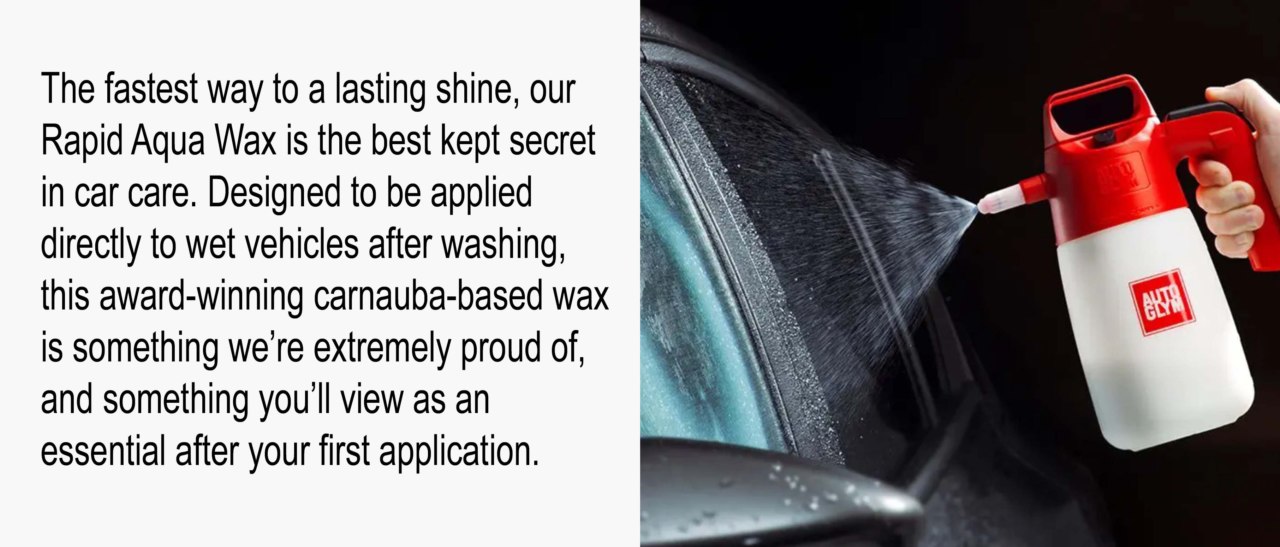
This is a very quick way to wax a car and has been common practice with contract valeters for many years, who might have to clean and wax thirty cars in a single day. A product often used in the trade is bright orange and usually called "Tango".
These products are all very good, easy to use and will leave a shiny bright finish over the whole exterior of your car including glass, chrome, plastics and rubber. They don't however offer long lasting protection, which is not an issue as it is assumed you will reapply the product every time you wash your car. In this, it is similar to wash'n'wax.
These are also the types of products used in automated car washes. If when you go to the car wash, you select the option called "hot wax" or something similar, you will be getting this type of product.
What aqua wax actually is
Aqua wax is a spray-on wax or sealant that is designed to be applied to a wet car straight after washing. You mist it over the rinsed panels and then dry the car as normal, so the product spreads and bonds while you towel it off. The aim is to add short to medium term protection, gloss and beading without the effort of traditional paste waxing.
Chemically, most aqua waxes are blends of synthetic polymers, waxes and surfactants that are tuned to behave properly on wet panels.
How aqua wax behaves in real use
Used as intended, aqua wax sits somewhere between a quick detailer and a more durable sealant.
- Hydrophobic behaviour - you will usually see strong water beading and sheeting after use, which makes drying and future washes easier.
- Gloss and slickness - it adds a noticeable boost in shine and a smooth feel, especially on already well prepared paint.
- Short to medium term protection - it gives a sacrificial layer that can help with light contamination and mild UV, but still needs topping up fairly regularly.
- Speed and convenience - because it is used on a wet car, it turns the drying stage into a quick protection step rather than a separate job.
Performance varies a lot by product, but most aqua waxes are designed to be quick, forgiving and easy to reapply.
Where aqua wax fits in the protection ladder
It helps to see aqua wax as part of a wider protection ladder rather than a magic shortcut.
- Traditional waxes - applied to dry paint, often give a richer glow but take longer and still do not last very long on a daily driver.
- Aqua wax and similar wet coats - faster to use, ideal for topping up gloss and beading after each wash or every few washes.
- Polymer coatings and non-stick sealants - designed for longer intervals between applications, but usually applied to dry paint with a little more preparation.
- Ceramic coatings - professional level, harder and more durable sacrificial layers that protect for years when maintained properly.
Aqua wax lives firmly in the “easy maintenance” tier. It is a helper, not a replacement for proper long-term protection.
Limits and common misconceptions
The marketing around wet coats can make them sound more powerful than they really are, so it is worth keeping expectations realistic.
- They do not turn your car into a fully ceramic coated vehicle, even if words like nano or SiO2 are on the label.
- They cannot stop stone chips, car park scrapes or deeper scratches and should not be treated as impact protection.
- They do not excuse poor washing habits. Aggressive wash tools and harsh chemicals will still mark the clear coat underneath.
- They are not permanent. Most will tail off noticeably over a few weeks or months on a daily driven, outdoor car.
If you treat aqua wax as a quick, regular top up rather than a one-time treatment, it sits in a much more honest place.
Using aqua wax on coated or waxed cars
Aqua wax can work well on top of existing protection, but a little care is needed so you do not fight the chemistry that is already there.
- On a ceramic coated car, it is best to use wet coat products that are known to be coating safe, ideally from the same brand system.
- On a waxed or polymer protected car, aqua wax can refresh slickness and beading without needing a full re-wax every time.
- Avoid anything with strong cleaners or abrasives if you want to preserve the underlying layer for as long as possible.
- If beading suddenly drops off despite regular aqua wax, it may be time for a proper decontamination or a fresh base layer, not just more topping up.
Think of aqua wax as a light jacket over whatever main protection you have chosen, not as the only coat.
Best practice when using aqua wax
To get the benefits without adding marks, it helps to follow a simple, consistent routine.
- Always start with a proper wash and rinse so you are not sealing heavy grime under a fresh layer of product.
- Apply aqua wax to panels that are clean, wet and cool, working in the shade where possible to reduce streaking.
- Use good quality drying towels and turn them frequently so you are not dragging dirt across the paint.
- Use a light mist of product rather than overloading – more product can actually make drying harder and leave smears.
- Build it into a regular schedule, for example every wash or every second wash, rather than assuming one application will last all season.
Handled this way, aqua wax is a genuinely useful way to keep a well looked after car feeling freshly finished between more major protection steps.
What you should ask next
Can I safely use aqua wax on top of an existing ceramic or polymer coating?
Yes, most products are safe to use over ceramic and polymer coatings, in as much as they won't do the coating any harm. However, there may be a problem with some products 'sticking' to ceramic and graphene coatings, as they are non-stick. It could result in them being smeary.
Is there any benefit to using both traditional wax and aqua wax on the same car?
Absolutely, it will safely go over paste-waxes and provide a top-up which will extend it's life.
How does aqua wax compare with a proper sealant or ceramic in real-world protection?
It doesn't compare. Aqua wax will last only months, shorter if there's hot sun or you need to use TFR to remove winter road spray. A ceramic coating will last years under all weather conditions.
Why don't these waxes last very long?
Because they aren't much different to the wax you would find on a candle. They are fairly soft and will get stripped off by the elements. They have a low melting point, so when your car gets hot in the sun, they will burn off.
People also asked
Written by Danny Argent. Last updated 28/11/2025 16:54
Further Reading
-
How to make a car shine like glass
Ever wondered how you get a really shiny car? There are plenty of products on the market which promise a glossy wet look, but the real secret to a mirror finish is polishing.
Services
-
🔷 Exterior Car Detailing
Our exterior detail prepares your car's exterior, and is an essential step in the process if you are having paintwork restoration, polishing and ceramic sealants. -
🔷 Exterior Fallout Removal
Removal of all kinds of contamination from graffiti and vandalism to ash, soot, metal particles, paint, tar and tree sap. You can guarantee we have the solution.