
Ultrasonic Leak Detector
Quick answer: An ultrasonic leak detector is a tool that uses high frequency sound to find tiny gaps and leak paths in a car’s body, seals and glass – you put a transmitter on one side and a sensor on the other, and any sound that gets through points to places where water, wind or noise are likely to enter.
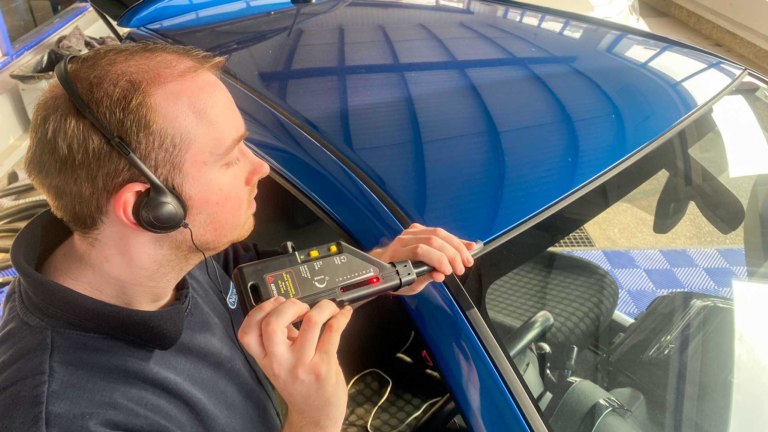
An ultrasonic leak detector consists of a speaker which emits ultrasonic sound, beyond the range of human hearing. It also has a microphone which has a unit with a gauge which shows the strength of the sound, and can convert the sound into a frequency which we can hear through headphones.
You place the ultrasonic emitter inside the car, and then use the sensor to detect areas where the sound is strongest. In operation, it is rather like using a metal detector, where louder and stronger sound indicates a hit.
An ultrasonic sensor is a vital and very useful tool for finding rain water leaks but must be used with some knowledge as cars are full of holes which may allow sound to pass through them, but do not necessarily let water pass, so there is a greater chance of false-positives.
What it means
An ultrasonic leak detector is a two part system – a sound maker and a sound listener. The transmitter sits inside the car (or sometimes outside) and produces a controlled ultrasonic noise that humans cannot hear. The technician then moves a handheld receiver around the outside of doors, glass, seals, vents and joints. Where the receiver picks up a strong signal, there is a path for sound to get through, which usually means a gap where water, wind and noise can also pass.
Why it matters
- Finds very small gaps: Ultrasonic sound will squeeze through tiny openings that may not show up easily with hose tests or visual checks, making it useful for pinhole leaks and fine wind-noise issues.
- Good for complex seals and glass: Modern cars have layered seals, frameless glass and intricate roof and tailgate arrangements. An ultrasonic leak detector can quickly show where those systems are not sealing properly.
- Helps with wind noise as well as water: The same gaps that leak water often cause whistles and draughts. Ultrasonic testing is widely used to chase wind noise complaints, especially at doors and around panoramic roofs.
- Reduces guesswork and random sealant: Because it gives a clear indication of where sound is escaping, it lets repairs be targeted to specific weak points rather than smearing sealant everywhere and hoping.
Where you will see it
You will see ultrasonic leak detector or ultrasonic leak testing mentioned in specialist leak and refinement reports. Typical comments include ultrasonic test shows leakage at top of door frame, ultrasonic leak detected around tailgate seal, ultrasonic signal strong at sunroof perimeter or retest with ultrasonic detector after seal adjustment. It is especially common on newer cars, prestige models and vehicles with big glass areas or frameless doors.
Context
Ultrasonic leak detection is one of several tools used in a structured diagnosis. It sits alongside smoke testing, bubble testing, controlled water testing, endoscope inspection and lifting carpets. The detector does not measure water directly – it finds sound paths which are then interpreted in the light of how the car manages water and air. A trained technician will combine ultrasonic results with knowledge of door membranes, weather striping, rear vents, drainage pipes and body seams to decide which gaps genuinely matter and how best to fix them.
Common mistakes
- Assuming any ultrasonic signal automatically means a serious water leak, without considering whether that gap actually sits in a water path.
- Holding the receiver too far away or moving too quickly, which can miss narrow but important leak points.
- Using the wrong test setup – for example leaving windows slightly open or vents unsealed – which lets sound escape in ways that would not happen in normal use.
- Making adjustments or adding sealant based on the first strong reading, but not repeating the ultrasonic test afterwards to check that all significant leak paths have been dealt with.
Written by Danny Argent. Last updated 08/12/2025 17:05