Do ceramic coatings prevent water marks?

Quick answer: Not entirely. A ceramic coating reduces the risk and makes marks far easier to remove, because deposits sit on the slick surface instead of biting into the paint. You can still get spotting if water is left to dry on the panels. Dry the car after washing, and keep a coating-safe water-spot remover on hand.
One of the big selling points of a ceramic coating is the way it repels water. The surface is so slick and hydrophobic that water beads up and rolls away, taking loose dirt with it. That is why coated cars stay cleaner for longer and rinse off more easily. But it does not mean the end of water spots, and we would rather be honest about that than oversell the coating.
What a "water mark" actually is
Water-marks are not really water at all. They are the minerals and contaminants left behind when a droplet evaporates and the water disappears into the air. Tap water, rainwater and a garden hose all carry calcium, salts and airborne pollutants in solution. When the droplet dries, that dissolved cargo has nowhere to go but down onto the panel, and it crusts into the faint ring you see in low sun.
On bare paint those minerals can bond stubbornly to the clear coat and, given heat and time, etch a permanent dimple into it. That etching is the part that costs money, because the only fix is to machine-polish the affected area back to a flat surface. With a coating in place the minerals do not bite in as easily; they sit on top of the sacrificial layer rather than the paint. That is the real benefit. Not that marks never happen, but that when they do they are sitting on a hard, smooth, chemically resistant surface where they are far easier to lift off and far less likely to leave lasting damage.
The trade-off nobody mentions in the sales pitch
Here is the awkward bit. Because a coating beads water into tight, high-contact-angle droplets, each of those beads is a little concentrated reservoir of minerals. If that bead is left to dry in place, it deposits all of its mineral content into a small, well-defined ring; a flatter sheet of water on an uncoated panel actually spreads the same minerals over a wider, less obvious area. So a coated car that is allowed to air-dry in the sun can, paradoxically, show tidier and more visible spotting than you might expect.
It is a bigger headache in hotter countries than it is here. In the UK we rarely get a downpour followed immediately by temperatures hot enough to flash every droplet dry. More often the spots come from a summer shower followed by an hour of sun, or from washing the car on a warm afternoon and leaving it to "dry itself" on the driveway. We see the second one constantly: a customer has done everything right, washed the car carefully, then walked away and let the south-facing panels bake half-dry. The bonnet and roof come back spotted while the lower doors, which stayed shaded and damp longer, are clean.
How to keep a coated car spot-free
The single most effective habit is to dry the car straight after washing rather than letting it air-dry. A plush drying towel or, better, a forced-air blower clears the water before it has a chance to evaporate in place. If you have the set-up for it, a filtered or deionised final rinse removes the minerals at source, so any droplets that do dry leave nothing behind; this is what gives you the "rinse and walk away" finish without spotting.
A few sensible habits cover most situations:
- Wash early or late, never on a hot panel in full midday sun.
- Dry promptly with a clean drying towel or a blower; do not leave it to air-dry.
- Rinse off Saharan dust (the pink film that settles on cars before some summer showers) before it gets rained on.
- Keep a coating-safe water-spot remover in the cupboard for the marks you inevitably miss.
Much of the UK sits on hard water, and the South East is among the hardest, so there is more dissolved mineral in our tap water than most. That is worth knowing if you wash at home with a hose: the water itself is part of the problem, not just the rain.
Dealing with marks once they appear
If spots have already set, a water-spot remover is the right tool. These are mildly acidic and work by chemically dissolving the mineral deposit rather than abrading it away, which is exactly what you want on a coated surface. Ceramic coatings are considerably more resistant to mild acids than bare clear coat, so a coating-safe remover used as directed will not harm the layer. Wipe it on, let it dwell briefly, and buff off; the deposit comes away with the residue.
What you must not reach for is a windscreen water-spot paste. Those are designed to be abrasive, because glass can take it. On a ceramic coating they will scour and dull the layer you paid to have applied. The mechanism matters here: dissolve the deposit, never grind it off.
Note on products
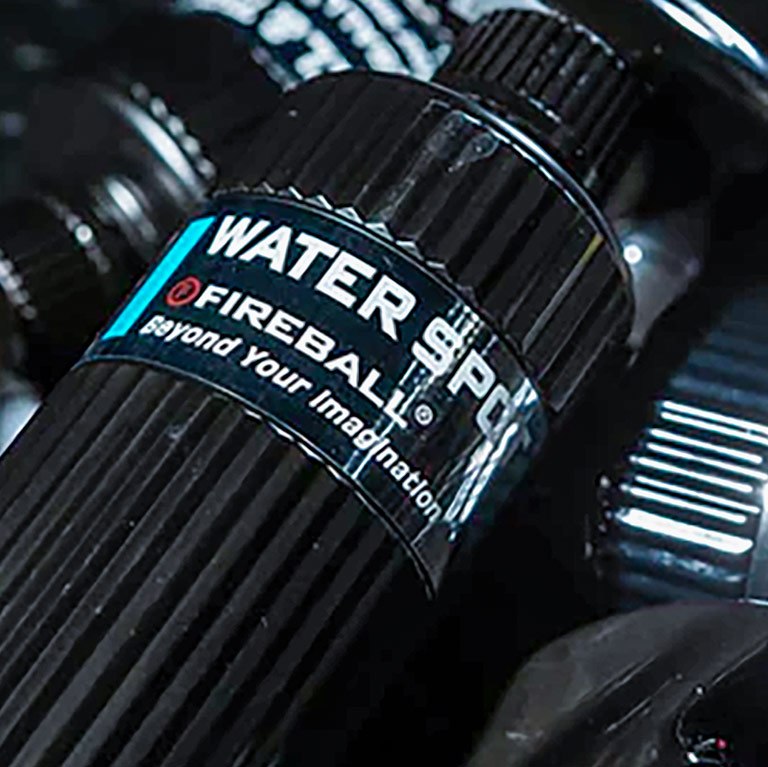
In the UK the most widely stocked option is Chemical Guys Heavy Duty Water Spot Remover, available at Halfords. Fireball Water Spot is the product we reach for in the workshop. Other coating-safe removers are available from the usual online motor-accessory shops, Amazon, eBay and the like; the only firm rule is to check that it is described as safe for ceramic coatings and is acid-based rather than abrasive.
So, do ceramic coatings prevent water-marks? They reduce the risk and make the marks that do appear far easier to clean off, but they do not make the car immune. Think of the coating as an extra line of defence: it takes the hit so your clear coat does not, and it buys you time to wipe the marks away before they ever become permanent.
For the broader picture of how a coated car handles water and dirt overall, see how does a car with a ceramic coating stay clean?. For the cluster spoke specifically on preventing water spots and what to do when you find them, see can a ceramic coating prevent water spots on a car?