
Glass coating vs ceramic coating - Which is better?
Quick answer: Neither is “better” - glass and ceramic are essentially the same SiO2-based coatings. Performance depends on the product, preparation and the installer, not the label.
When these products were very new, those people who do marketing (like me) tried different ways to market them. There was much talk of nano-technology and glass coating as a way to get the public interested in this very new technology.
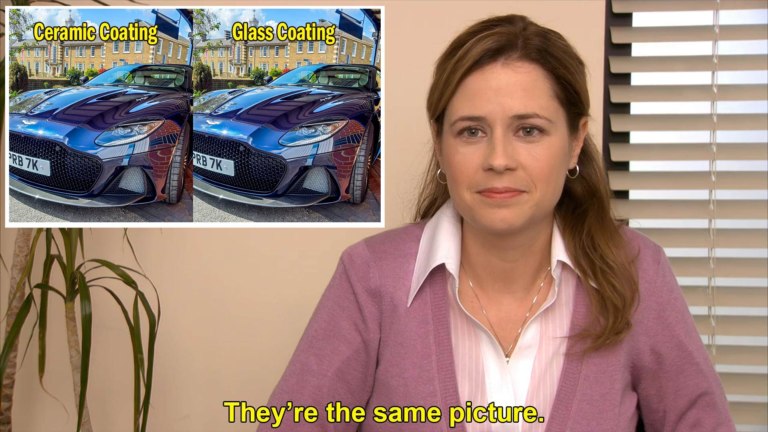
However, as time has passed by, the value of the products speak for themselves and people have come to know them as "ceramic coatings".
It is true, that they use advanced technology such as nano-particles, and it is partially like coating your car in a sheet of glass, and in the past we have used both of these phrases.
Both have largely fallen into disuse, except for a small number of companies or resellers, which have revived them to differentiate themselves in the marketplace.
"Our product is better than ceramic, it's glass coating using nano-technology!"
Don't believe the hype. We have noticed that there are some companies making the claim that their product is somehow different, and better. Most of these seem to be in the Far East, and we would definitely file these claims under 'snake oil' if they are insisting that their product is somehow better, If you read carefully, you will notice they will say they are almost the same, but don't quite get around to saying how they are different, other than, "because of the nanos, and glass coating is better, so obviously more expensive. Obviously."
However, we shouldn't be too hard on them. The products they are providing are probably very good ceramic coatings, and they are likely to just be repeating what a salesman told them. And it's highly likely the salesman got this dodgy information from the marketing team. However, I wouldn't pay extra for glass coating nanotechnology.
What it is
“Glass coating” and “ceramic coating” are marketing labels for the same or closely related technologies. They are professionally applied, microns-thin, semi-permanent films that bond to clear coat. “Glass” does not mean a thick sheet of glass on the car.
How it works
Your installer prepares the paint and applies a recognised coating that cures into a tight network on the clear coat. The result is easier washing, better chemical and UV resistance, and reduced wash marring. Differences you feel day to day come more from the specific product and prep than from the word on the bottle.
Key differences at a glance
- Term: “Glass” is often used for silica or polysilazane-based ceramics. “Ceramic” is the wider umbrella.
- Thickness: Typical ceramic/glass coatings ≈ 0.5–2 µm; clear coat ≈ 35–50 µm.
- Systems: Some ranges are single-layer, others are base coat + top coat for slickness and durability.
- Outcome: Gloss comes from machine polishing before coating. The coating preserves that finish and makes cleaning simpler.
What can go wrong - and how to avoid it
- Name-chasing: Picking “glass” or “ceramic” by label alone can miss the point. Judge the system and the installer.
- Overhyped claims: Ignore promises of “glass-thick” layers or scratch-proof paint.
- Skipping prep: Coatings rely on proper decontamination and correction by your installer.
Removal and reversibility
Ceramic or “glass” coatings are semi-permanent. They are not stripped with solvents, caustics or acids. If you need to reset the finish, a professional will use abrasion - machine polishing and, if required, wet-sanding - then re-coat.
Best-practice checklist
- Always choose an accredited installer with good reviews, and a recognised coating brand.
- Prioritise paint correction for the gloss; the coating preserves it.
- Follow simple aftercare, so performance stays high for years.
Written by Danny Argent. Last updated 23/01/2026 16:06
Further Reading
-
🍀 What are the drawbacks of a ceramic coating?
We asked Artificial Intelligence to tell us the downsides of a ceramic coating, then reviewed the result. -
🍀 Is a Ceramic Coating Worth it?
Ceramic coatings are expensive, there's no getting away from that. So the question has to be asked, are they worth the money?