Can I use a pressure washer to clean my soft top?

Quick answer: We advise against it. A pressure washer can mark, roughen or even tear soft-top fabric, and you won't see the damage until the hood dries out. If you insist on using one, keep the lance at least 20 inches off the fabric on the gentlest setting and stay clear of seams and the rear window. The reliable way to clean a hood is a stiff brush with a dedicated fabric cleaner, then a generous rinse from a standard hose nozzle. Self-service forecourt units are gentler than the domestic high-pressure washer in your garage, but neither is risk-free.
A pressure washer can clean a convertible roof, but the margin between clean and damaged is narrow. By the time the jet is close enough to shift roof green, it is close enough to bruise the fabric. That is the whole problem in one sentence, and it is the reason we keep saying no.
Why the fabric loses every time
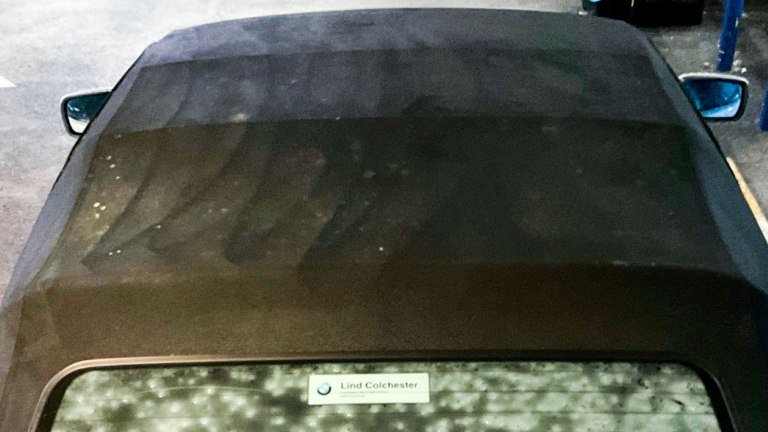
A soft-top is not a panel; it is a tightly woven textile with a coating sitting on top of the fibres. That coating is what keeps the rain out. A pressure washer attacks both layers at once. At worst, the jet rips straight through a thin or aged cabriolet hood. Far more common is the subtler failure: the jet roughs up the nap, lifts the fibres and leaves zig-zag marks tracing exactly where the lance travelled.
Either way the weatherproofing goes. Once the surface is disturbed, water soaks in instead of beading off, and you are on a fast track to stains, ingrained dirt and eventually tears. The cruel part is the timing: a freshly pressure-washed hood looks clean and bright while it is wet. The damage only shows once it dries, by which point the fibres have already been disturbed and there is nothing to undo.
Not all pressure washers are equal
It helps to understand why the machine in your garage is the worst offender. The domestic pressure washer is designed around very high pressure through a narrow nozzle -- great for blasting a patio, brutal on textile. The industrial units at self-service car washes tend to work the other way: lower pressure, much higher water volume. That makes them gentler on the fabric and better at rinsing, which is why a forecourt unit is the safer of two imperfect options.
But "safer" is not "safe". Here is the test we put to anyone who asks: if your washer has enough force to strip lichen and green growth off the weave, it has more than enough force to damage that weave. There is no pressure setting that removes stubborn organic growth but politely leaves the fabric alone. The two go together.
One that came in already ruined
The Audi A3 Cabriolet below makes the point better than any warning. The owner had been fighting a stubborn patch of green growth and reached for the pressure washer to finish the job. It finished the job, all right. When Tom, our operations manager, unwrapped it in the bay, the zig-zag pattern was unmistakable -- a perfect map of the jet's path drawn into the surface of the hood. There was no cleaning that out. The fabric had been physically disturbed, and the only honest answer we could give was that the marks were permanent. A re-cover was the realistic fix, and a re-cover costs many times what a careful clean would have.
The way that actually works
Cleaning a soft-top properly is unglamorous and a little tedious, which is precisely why people reach for the shortcut. The reliable method is a stiff brush, a dedicated fabric-hood cleaner and a fair amount of effort. You work the cleaner into the weave with the brush, lift the dirt out of the fibres rather than blasting at it, and then rinse -- thoroughly. Getting a hood genuinely clean takes a lot of rinsing, and yes, a little water pressure behind the rinse helps; a standard hose nozzle gives you all the pressure you need without the risk.
If you have already decided you are going to use the pressure washer regardless, at least follow the rules that limit the damage:
- Hold the lance at least twenty inches off the hood, and resist the constant temptation to close that gap to work faster.
- Stay on the gentlest setting and the widest fan the machine offers.
- Keep well clear of seams, rubber edges and the rear window -- those are the points that fail first.
- Finish with a plain-hose rinse so nothing is driven into the fabric.
The trap is always that the jet looks like it is lifting dirt without marking anything. While the hood is wet you cannot tell the difference between clean and damaged. Trust the dry result, not the wet one.
Prevention beats rescue
Almost every ruined hood we see started as a neglected one. A roof that is washed regularly never grows the green film that tempts people into reaching for heavy artillery in the first place. Keep on top of it with the brush-and-rinse routine every few weeks through the damp months and you remove the whole reason to escalate.
If you already own a pressure washer and already wash your own car, telling you to never go near it is unrealistic, so the honest advice is: keep it a long way back, gentlest setting only, and finish on the hose. The same caution applies to automated car washes -- the bristle rollers and aggressive chemistry at a forecourt are built for hard paint, not for a fabric hood, and a soft-top has no business going through one.