Tim Allcorn
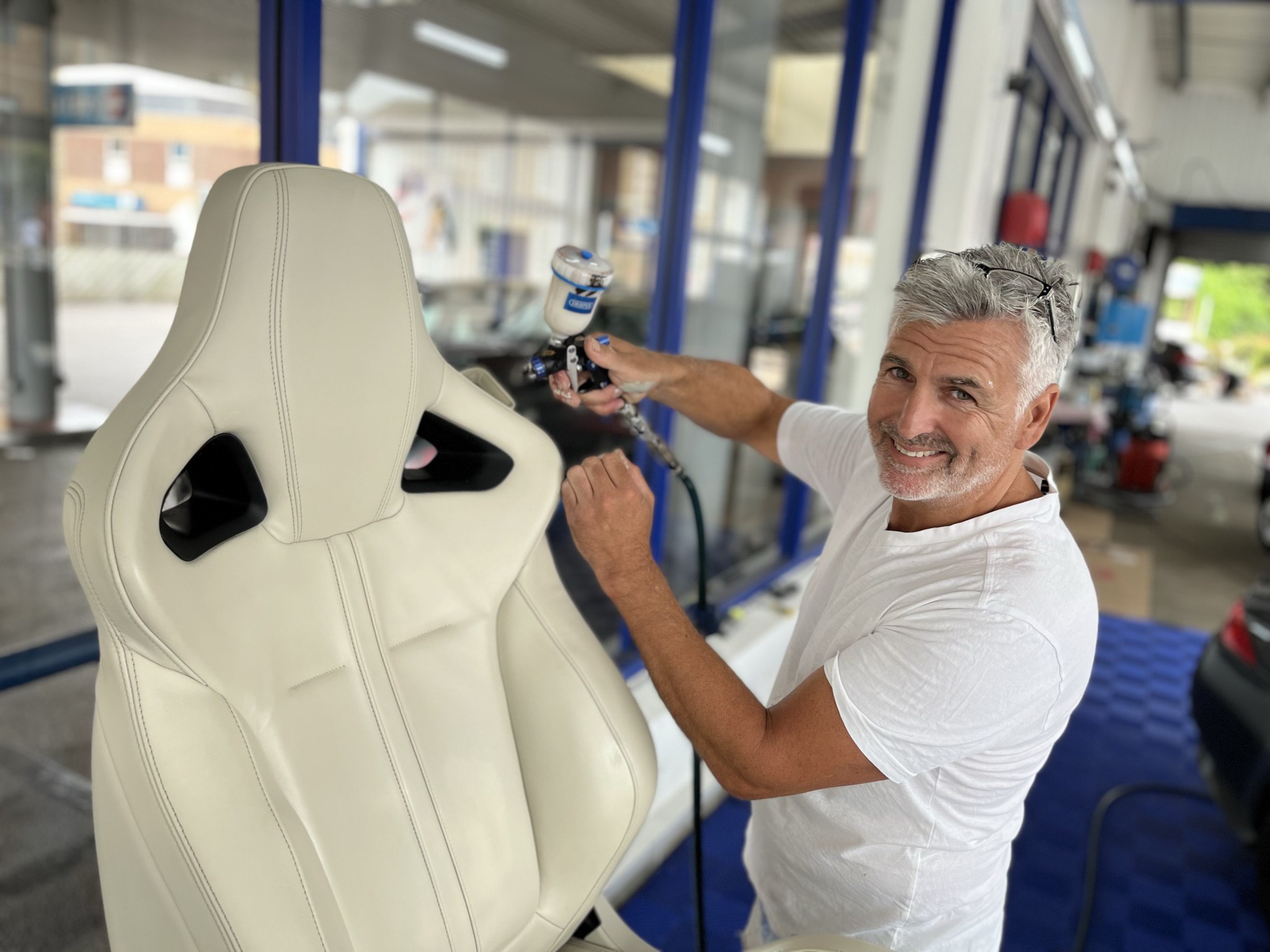
Contacted the team due to an incident with some paint stains on our leather seats. The advice over the phone was really helpful and when i arrived with the car they sorted the problem on the spot. Would definitely recommend.

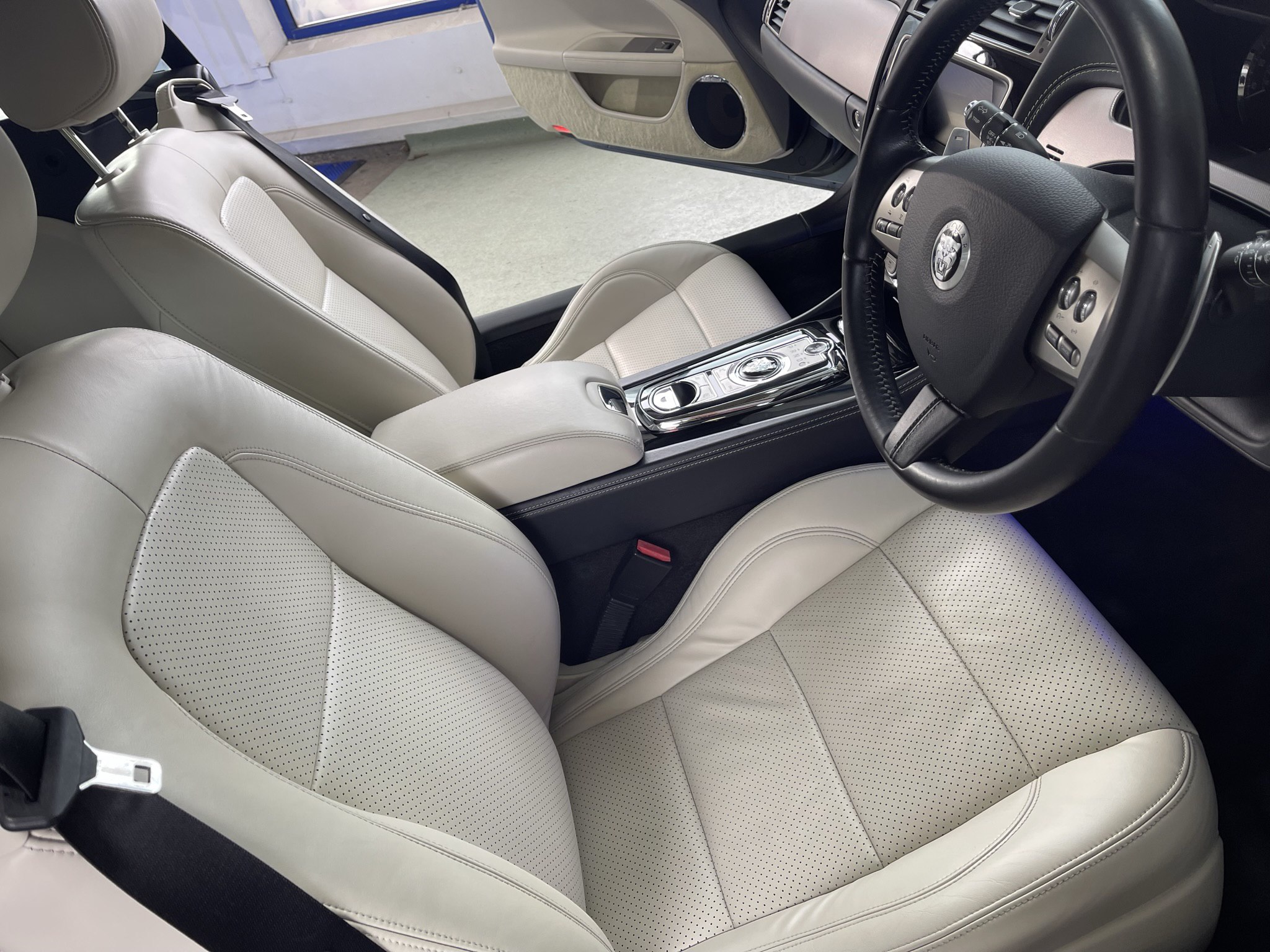
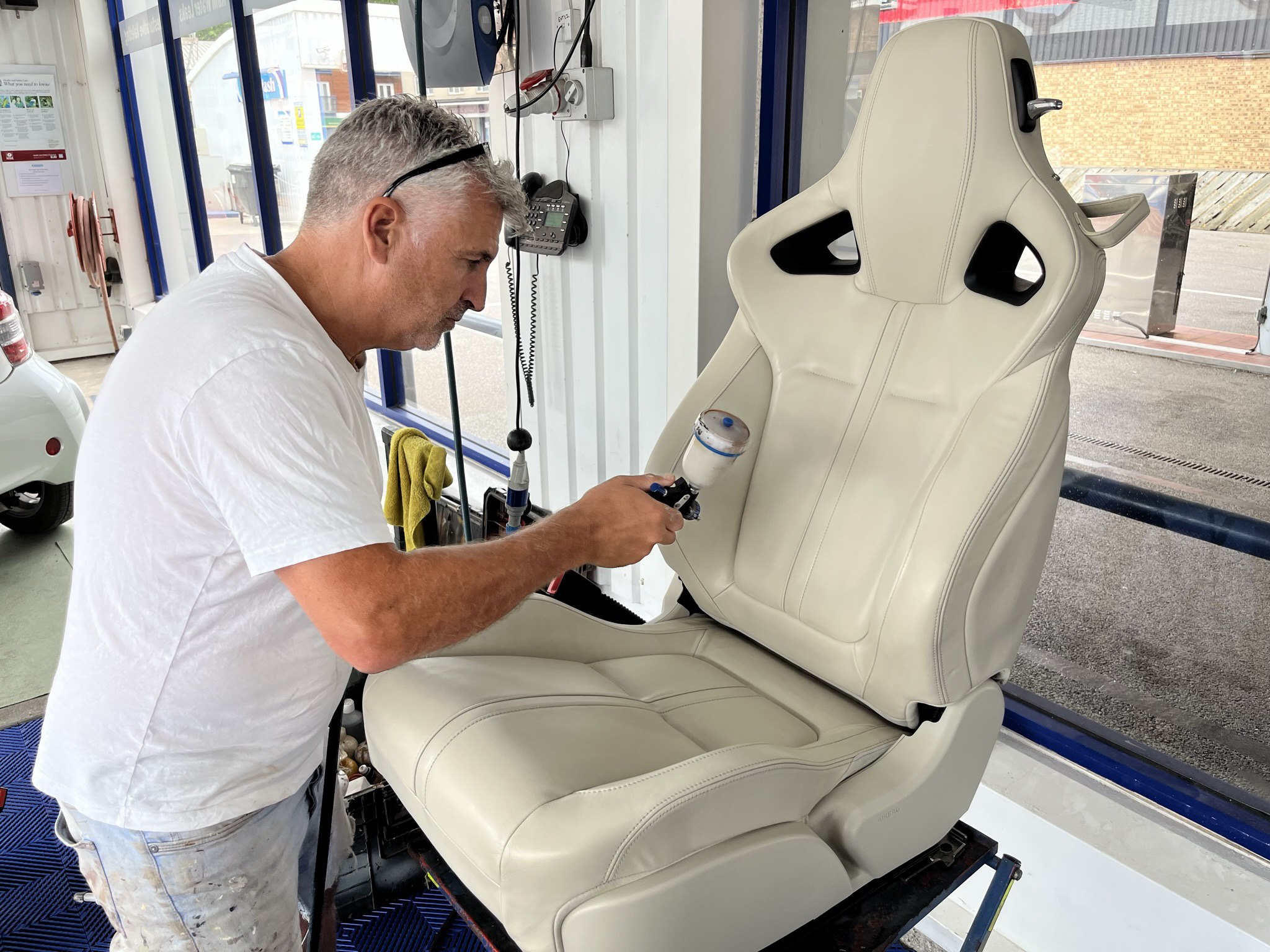
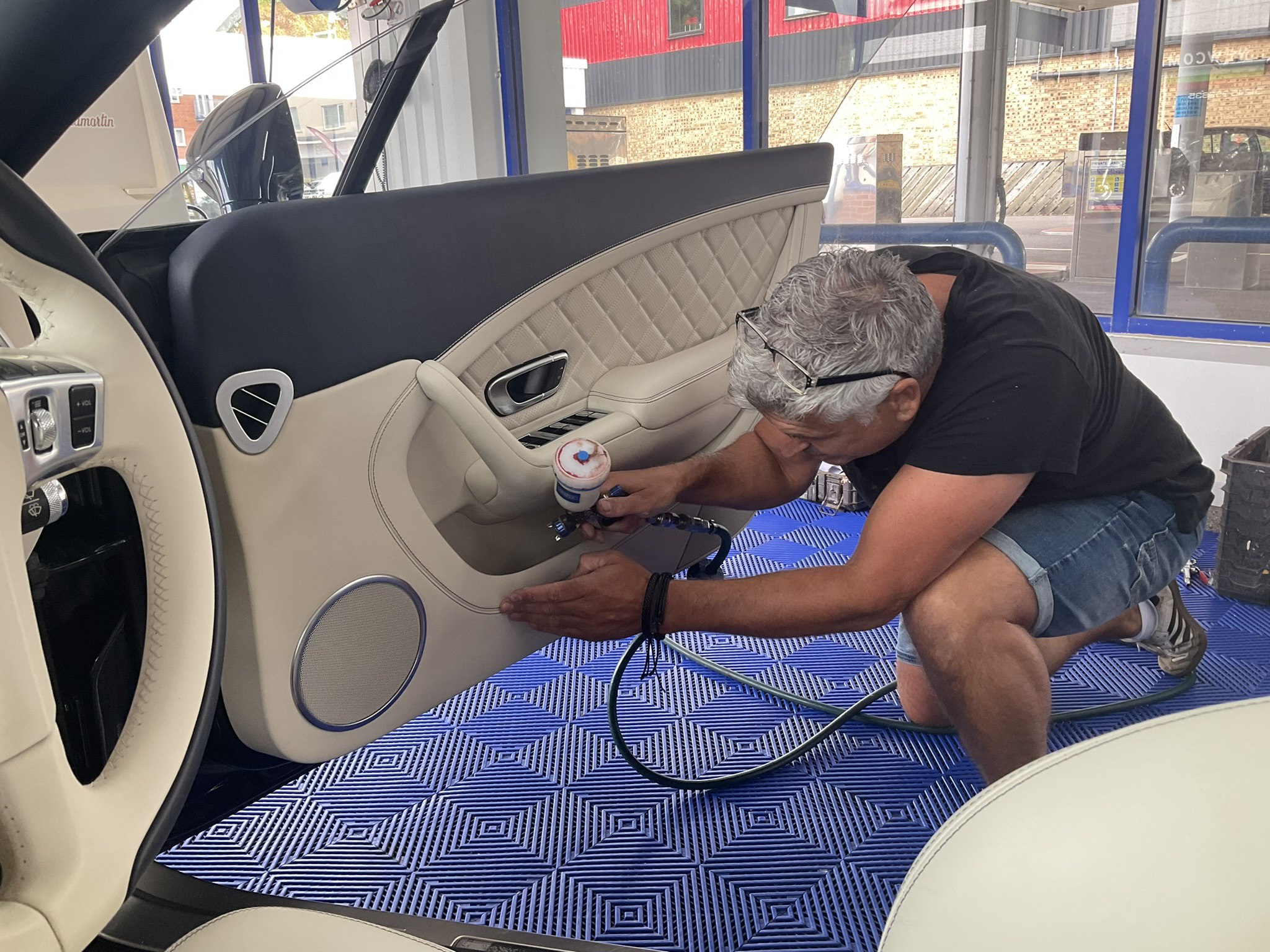
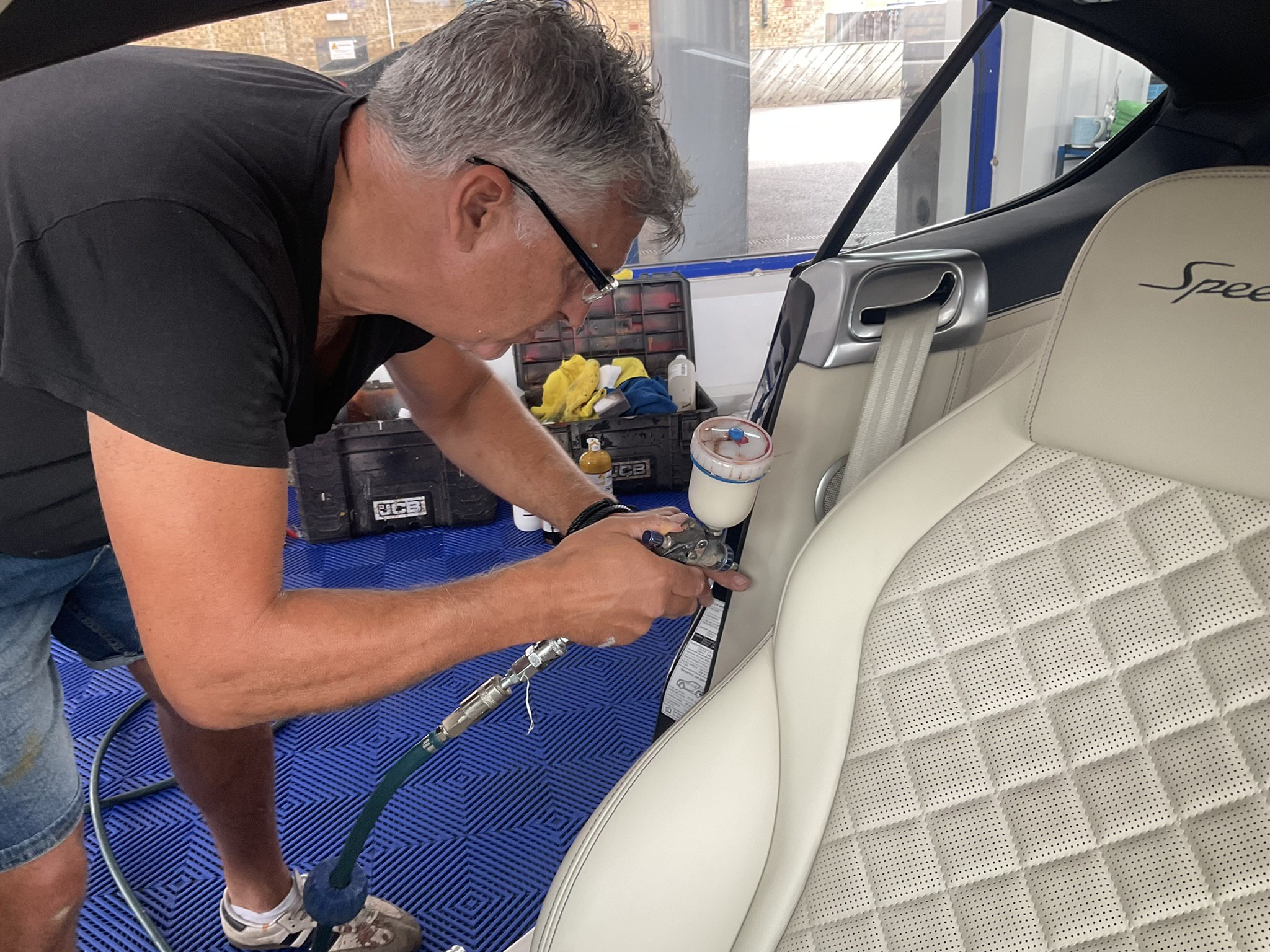
Leather car seat restoration, upholstery repair, reconditioning, refinishing. Re-colouring of leather seats and door panels.
Talk to us Talk to usNamed after the famous Connolly leather company, who for many years supplied full leather interiors for Aston-Martin and Rolls-Royce. "Connollising" has become the name given to methods of reconditioning and refinishing leather upholstery.
We now use modern products that are soft, flexible and hard-wearing, with great coverage and guaranteed not to peel or fade.
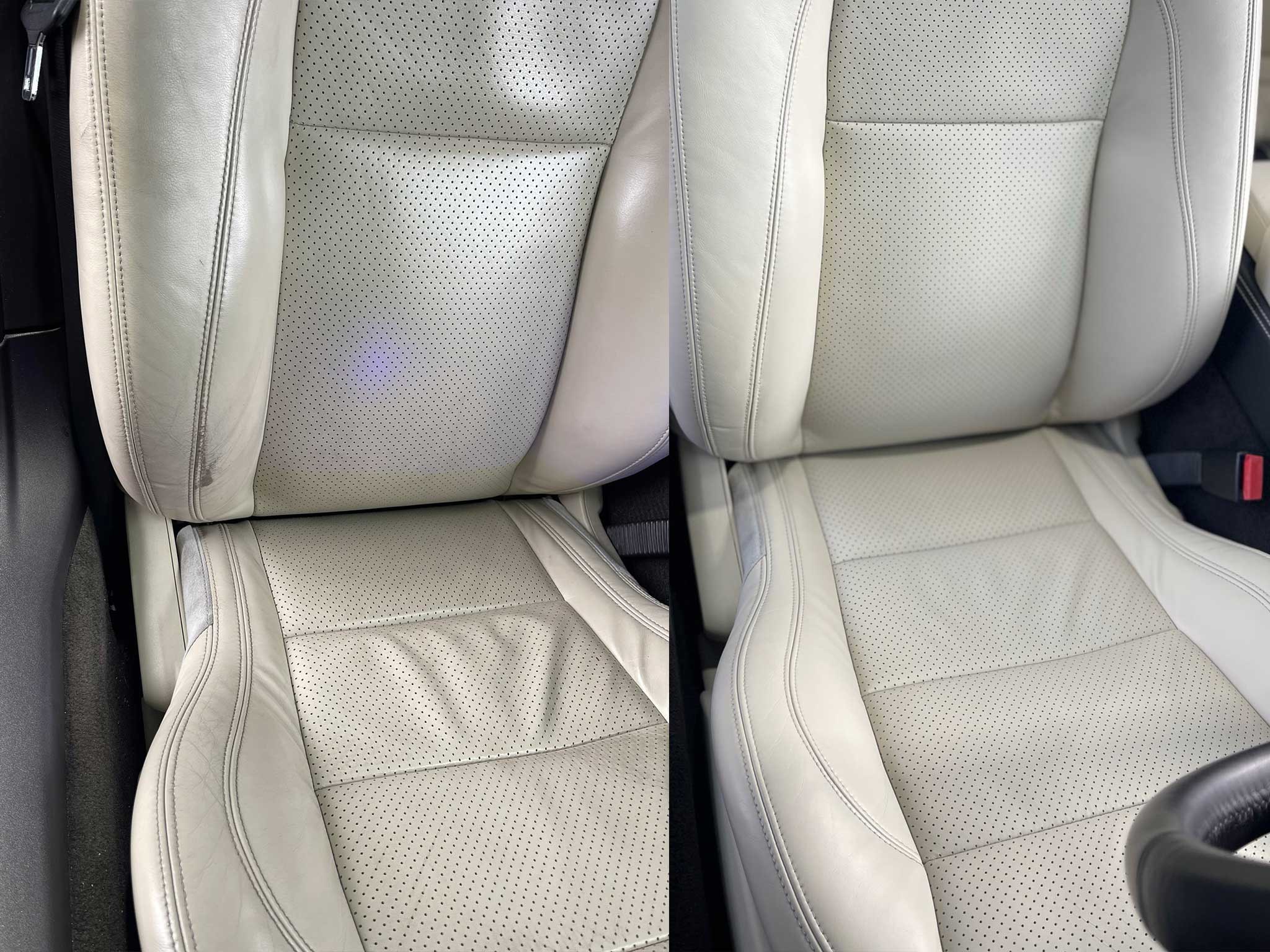
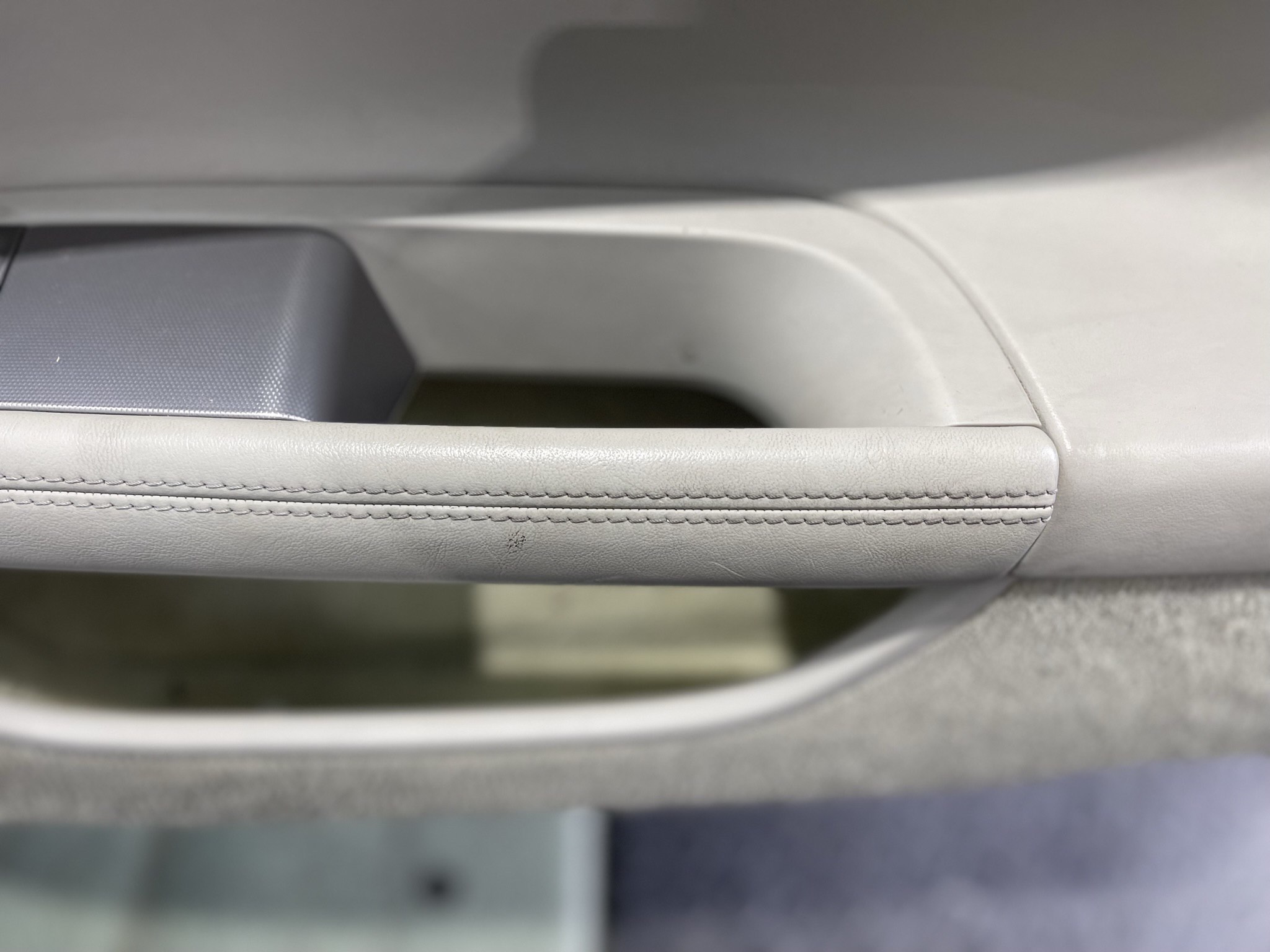
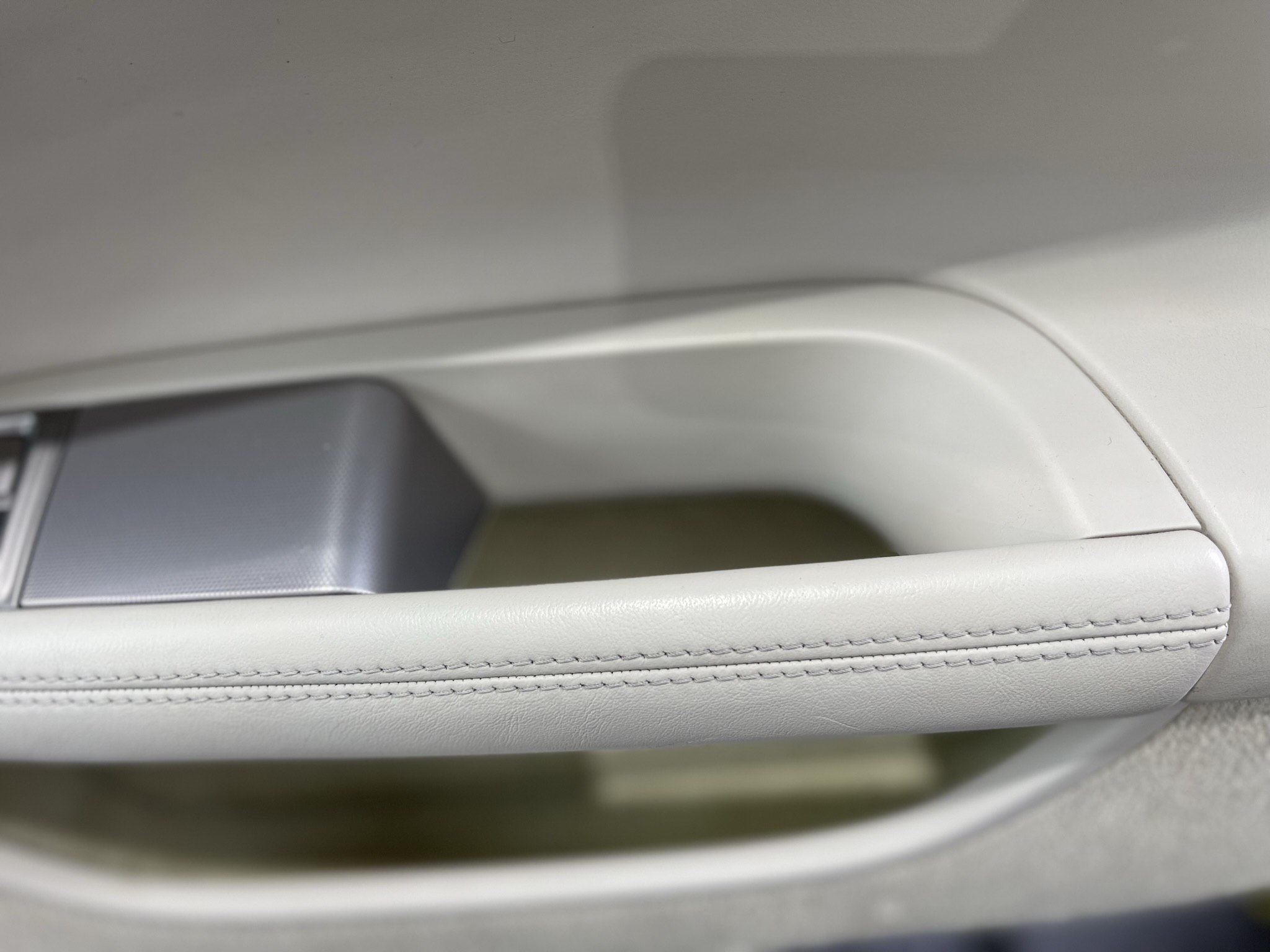
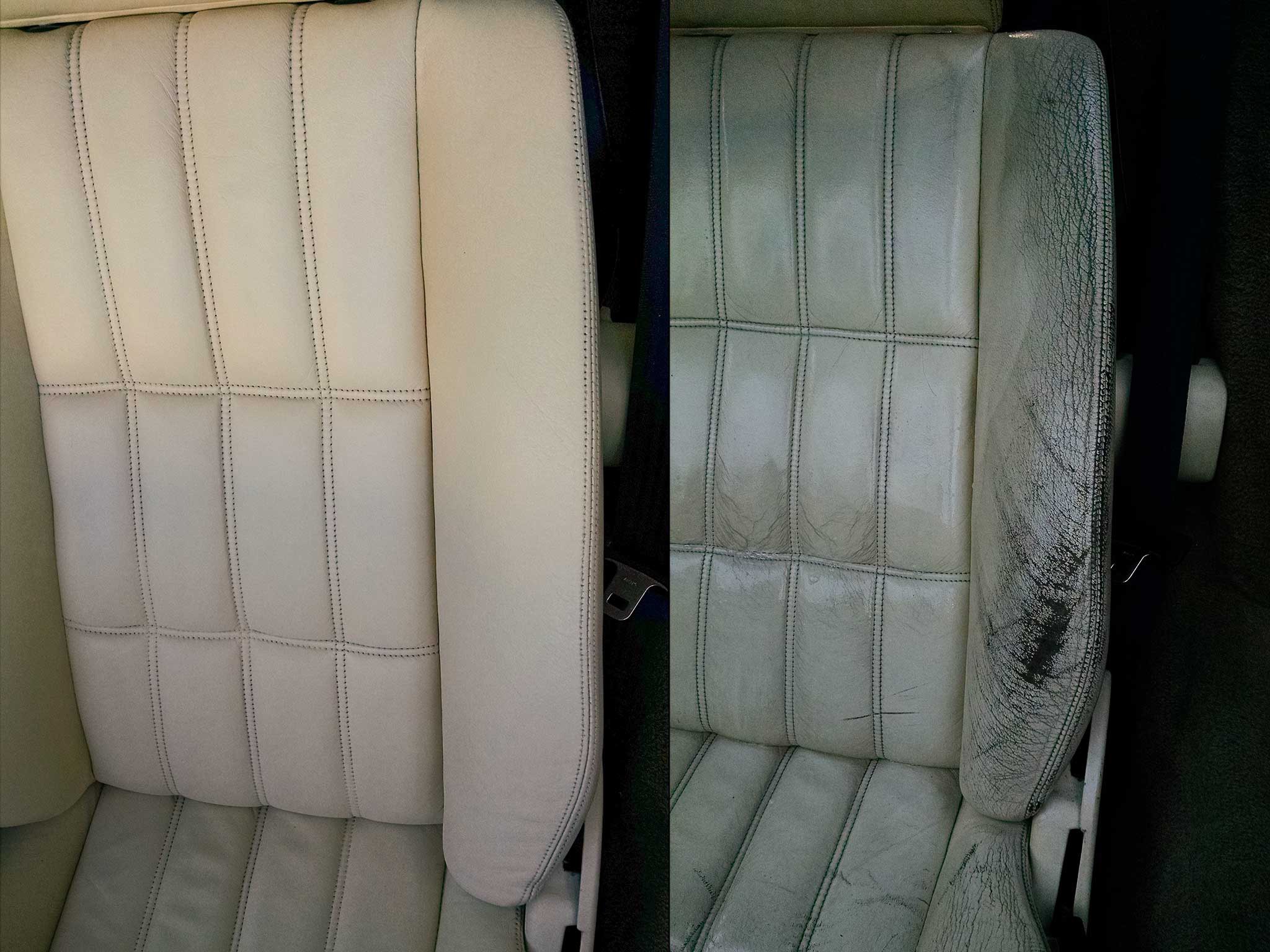
This is the ideal solution for worn, cracked and faded leather, as well as for scuffs and cigarette burns. We use tried and tested colours and coatings. We don't repair systems that little more than temporary cover-ups which can be wiped off in the process of normal valeting.
Wear to the driver's side seat bolsters is the most common form of damage we see. Because leather is a natural breathable material, it does soak up dirt and can become discoloured, therefore to get a good match in colour and finish we recolour a larger area than just the bolster. Usually, this will be either the whole face of the upright, or the whole face of the seat base. Please note that while the face of seat is leather, in the vast majority of cases, the sides and back are usually plastic or vinyl.
Unless you have an old vintage car, it's unlikely you will need the whole interior re-coloured. We will just repair the localized areas of wear, and the rest can be cleaned and conditioned. You would be amazed at how new your leather will look after a good clean.
On touch devices, once you are in the gallery, you can tap to zoom in, and then drag to pan around the photo. Tap again to zoom out.
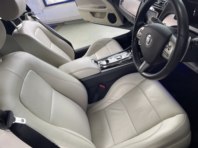
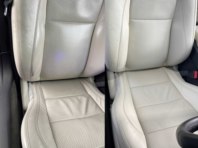
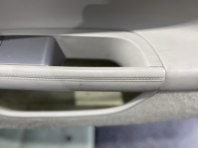
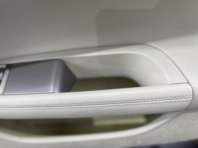
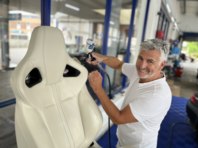
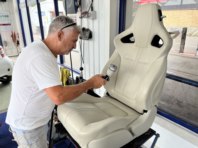
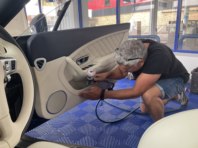
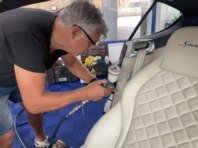
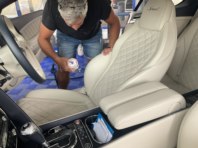
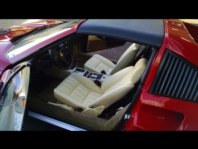
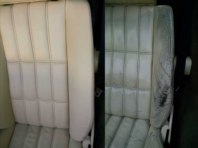
We are able to carry out minor repairs to scuffs and cigarette burns as part of both of the above methods. For rips, holes and loose stitching, you may need the services of a Coach Trimmer. If you are unsure, you could always take some pictures on your phone and send them to us, we'll get you pointed in the right direction.
You can video the problem and send it to us on WhatsApp, or phone us and ask.
Advice is free
Allan ~ Hide Works
Essex
0786 3716 244
website
whatsapp
Matt ~ Trimline
London & South East
07956 349 066
website
whatsapp

The easiest way to send a trusted contractor a video of your repair, is by using your mobile phone. Simply take a video using your phone and then scan the QR code to the left to open this page on your phone. You can then click on the whatsapp buttons to send your video to the contractors near you to get a quote.
These prices are examples based on typical car sizes and typical levels of trim with typical wear. We will quote each job on an individual basis. Cars with bi-coloured seats or exceptional wear may cost more and take longer.
| Part Interior - Medium Executive Cars e.g. 3,5,7 series BMW, Mercedes, Porsche, Lexus 200, Alfa-Romeo, Fiat Barchetta, Lotus |
Prices |
|---|---|
| 1 front seat | £360 |
| 2 front seats including door panel arm rests | £600 |
| 1 front seat with different coloured piping* | £468 |
| 2 front seats with different colour piping* including door panel arm rests | £780 |
| Whole interior leather - excluding steering wheel | £1000 - £2000 |
| Paint Removal of DIY colouring kits and oils*** (One seat typically takes one hour) |
£120 per hour |
* Cars with coloured piping or bi-coloured seats take far longer to do, and we will usually need the car for two days.
** Please note, Colour changes are not always possible. Please ask.
*** DIY Leather Colouring Kits - We are seeing a significant number of cars which have been previously recoloured with DIY kits, incompatible products, or poor preparation/application. The result is that these products often crack or peel, or otherwise make an unsuitable base for our own products. These products need to be completely removed before we can apply our own products. Leather contaminated with hair gel, sun cream ect., also needs additional preparation.
| Whole Interior - Large Executive Cars e.g. Jaguar, Lexus 400, BMW 7, Mercedes S class |
Prices |
|---|---|
| Porsche 911 | |
| Whole interior - excluding steering wheel | £1500 |
| Two Front Seats with single piping | £780 |
| Aston-Martin Vantage - DB9 | |
| Whole interior - with double piping. Excluding steering wheel | £2,470 |
| Whole interior - with single piping. Excluding steering wheel | £2,224 |
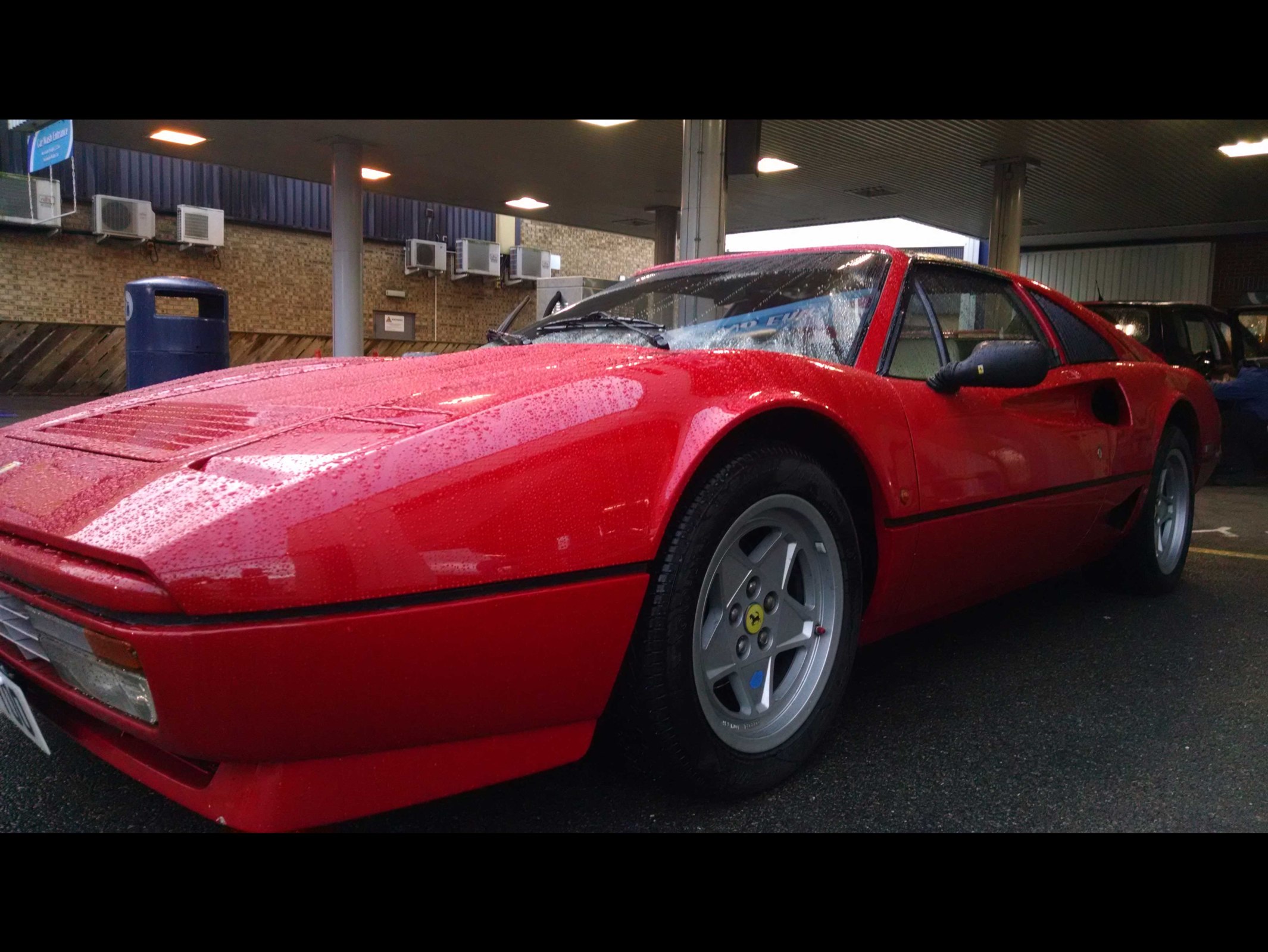
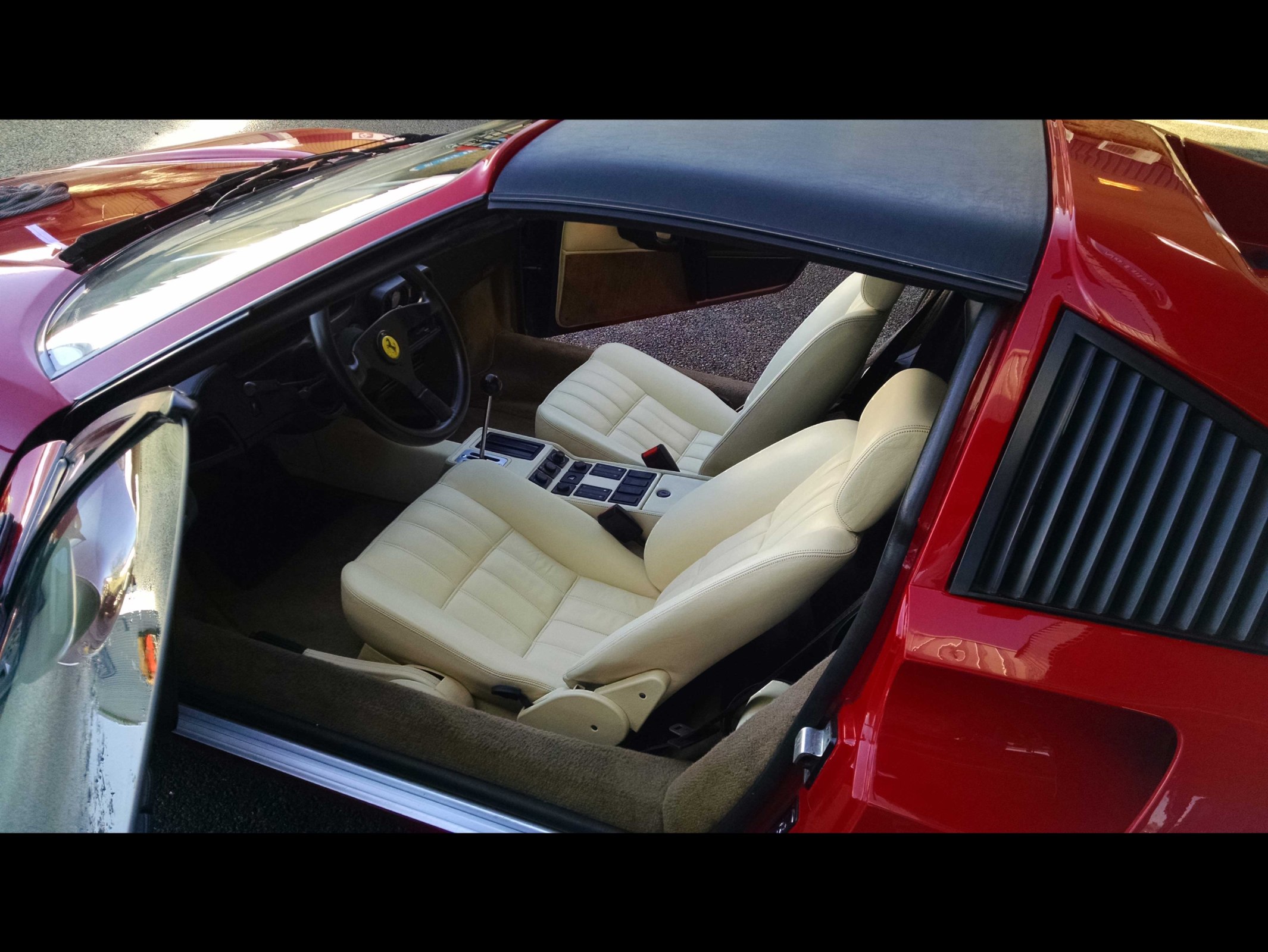
| Ferrari 355 | |
| Whole interior - Excluding steering wheel and dash. | £1380 |
| Range Rover | |
| Whole interior - with single piping. Excluding steering wheel. | £1726 |
| Rolls-Royce - Bentley | |
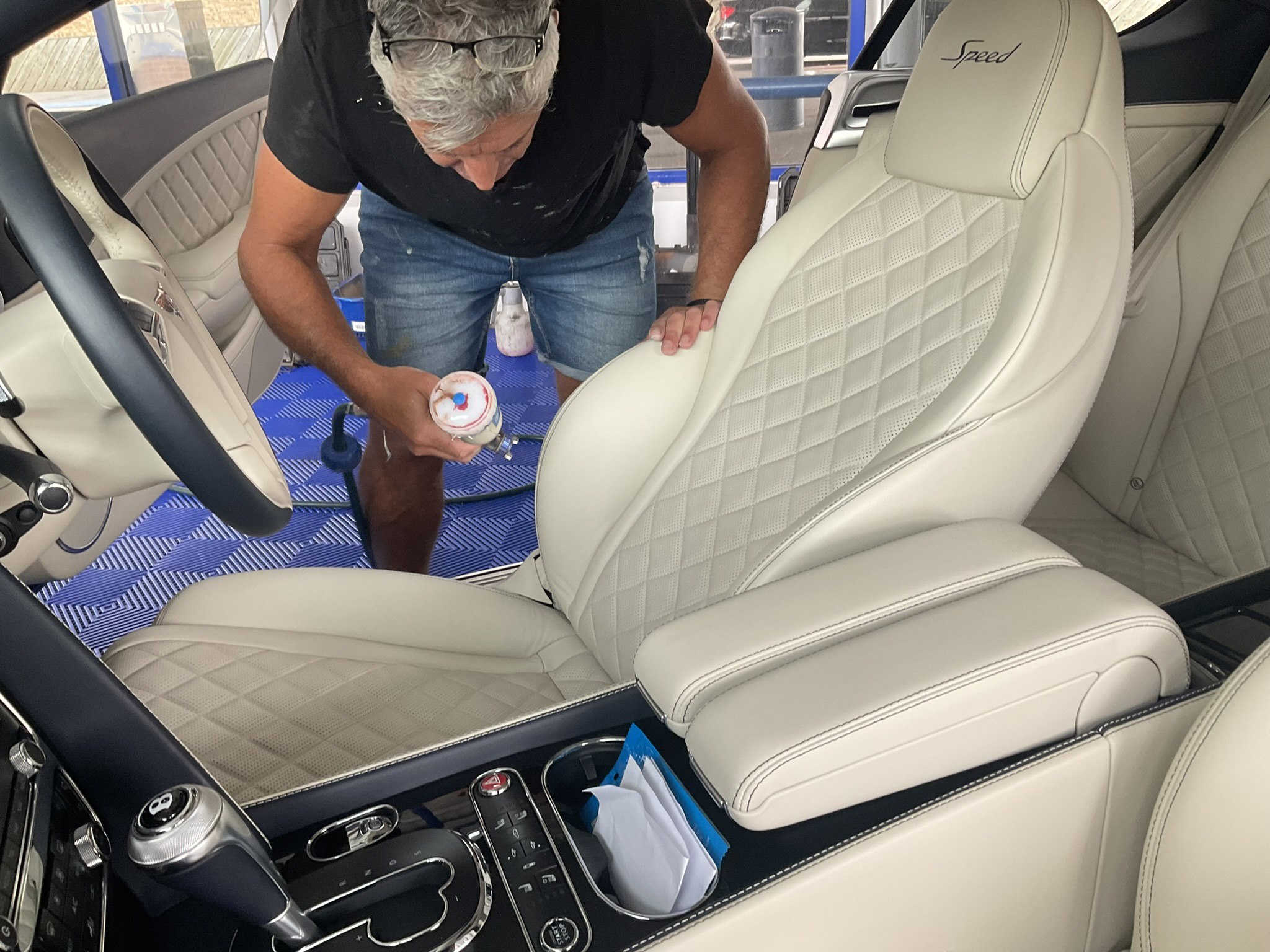
| Whole interior - Excluding steering wheel. | £2472 |
| Whole interior - with single colour piping. Excluding steering wheel, dashboard, headlining. | £2970 |
| Steering Wheels | |
| Brand New Hard-wearing Technique (Badly worn steering wheels will need recovering) | £246 |
| Extras | Prices |
|---|---|
| Replacement leather panel including re-padding | £840 |
| Large surface scratches | £170 |
| Cigarette burns on leather, vinyl, plastic | £174 |
| Door panel, single without repair | £174 |
| Door panel, single with small repair | £222 |
| Four door cards without repairs | £420 |
| Gear stick/handbrake gaiter | £100 |
| Leather gear knob | £100 |
| Centre arm-rest | £174 |
| Dashboard holes 1-8 (up to 20mm) Not all dashboards can be done! | £372 |
| Dashboard scratches Not all dashboards can be done! | £198-£372 |
| Cracks in dashboard (sun damage) | P.O.A. |
| Small repair to trim | £125-£222 |
| Service | Price | Offer Price |
|---|---|---|
| Smell of Leather (Odour Blocks) Guaranteed to last a minimum of 1 year, Leather odour blocks are attached under seats - Leather fragrance is introduced into air vents - Aromatek Leather |
£60.50 | |
Contacted the team due to an incident with some paint stains on our leather seats. The advice over the phone was really helpful and when i arrived with the car they sorted the problem on the spot. Would definitely recommend.
Worn, cracked and faded leather recoloured,
problem solved!
Not sure what you need? Get in touch and we'll talk you through it.
Talk to us Today! Talk to us Today!Advice is free
Most leather staining isn’t from neglect -- it’s from ordinary things you’d never think to worry about.
Hair gel and styling products absorb into headrests over time, leaving dark patches that are difficult to remove without professional treatment.
Blue jeans are one of the most common culprits. Indigo dye transfers into natural leather on contact -- particularly on the driver’s seat bolster. The darker and newer the jeans, the more they transfer. Jean rivets catch people out too; the metal studs on back pockets are harder than leather and will scratch the surface.
Suntan lotion is a particular problem in summer. It’s formulated to penetrate skin -- and leather is skin. Get into the car wearing shorts with lotion on your legs and it soaks straight in. Worse, most parents apply factor 50 to their children before a day out and put them straight in the back seat. The result can be handprints and smear marks across the rear upholstery that won’t wipe off.
If you’re returning a lease car, any of these can be flagged at inspection -- they’re not classified as fair wear and tear.
Prevention is better than cure. If you want to protect your interior against future staining, we offer leather and fabric coatings as part of our interior detailing and ceramic coating services.
While the car is with us, we can also carry out carpet repairs -- burns, cuts, staining and worn patches. Prices on request.
With modern techniques, yes you can! There are some colours we would not recommend. Going from black to light, or light to black is not recommended, but otherwise it is possible. It works best on vintage cars, but modern cars can be done two. So if you bought a convertible with black leather, and want that 1950s look red leather interior, it can be done. Formerly, we would recommend purchasing a new leather set and getting a trimmer to replace it for you, but recolouring can be done at roughly a quarter of the price.
You probably don't need your car re-trimmed. At most, we usually send a car to the trimmer to replace a few panels in the driver's seat. You can buy entire pattern sets for many cars and replace the entire interior, but the work involved makes this expensive. The whole point of our service is that we can make old leather look like new by refinishing and recolouring it. It's far more cost-effective.
We can recolour anything that looks like leather. Truth is, not everything in a car that looks like leather, actually is leather. Door cards, dashboards and backs of seats are often PVC, but recolouring them is the same process. The only issue we are weary of is cracked dashboards in older cars. If they have cracked in the sunlight, it's because the foam underneath has dried out and become brittle. The best solution for this is a replacement. ...but send us a video, and we'll take a look.
This happens on quite a few sports cars, the seat can be re-padded by a car trimmer.