What is the best way to clean a soft top roof?

Quick answer: Pre-rinse the hood, apply a dedicated soft-top shampoo, and let it soak for 10-15 minutes. Scrub with a stiff brush, working gently around the stitching with a nail brush or toothbrush, then rinse thoroughly and repeat until the suds run clear and the stains are gone. Let it dry fully, look it over for missed spots, then apply a weather-proofer. Avoid harsh cleaners, and don't forget to clean the drains, latches and rubbers while you are at it.
There is really only one way to clean a fabric roof properly, and there are no shortcuts -- that includes pinning your hopes on an automated car wash. Roll your sleeves up: the greener and dirtier the hood, the more work you have ahead of you. The good news is that the technique itself is simple. It is the elbow grease, the patience and the repetition that separate a hood that comes up clean from one that stays patchy.
What you will need
You do not need a van full of kit for this. A few honest tools, used properly, beat a shelf of specialist sprays used half-heartedly:
- A shampoo suitable for cleaning fabric roofs.
- A stiff brush -- a coarse sponge will do, but a brush is far better.
- A hosepipe, or good access to a steady water supply.
- Rubber gloves and old clothes, because these cleaners are not kind to your hands.
We recommend a hood cleaning kit from AutoGlym, or the cleaning products from Renovo, who specialise in cabriolet roofs. Don't expect magic from the cleaners that come in those kits, though. They are better than ordinary car shampoo and they do break down algae and lichen, but they are not head and shoulders above the alternatives. Household cleaner or white vinegar will get the job done too, and the difference is small unless you reach for something genuinely harsh. Harsh products stain and burn rubbers, metal trim and the roof fabric itself, so leave those well alone.
Rinse, soap, soak
Start by rinsing the roof until it is thoroughly wet, top to bottom. A dry hood resists the shampoo; a wet one lets it spread and sink in. Apply the shampoo generously, then leave it to soak for 10-15 minutes. That dwell time is doing the heavy lifting, softening the green and loosening the algae before you ever touch the brush. Skip the soak to save time and you simply move that time to the scrubbing stage, where it is harder work.
On a hot day, keep an eye on it. If the shampoo dries on the fabric it stops working and can leave its own marks, so re-wet the panels if they start to go dry before the soak is up.
Brush harder than you think
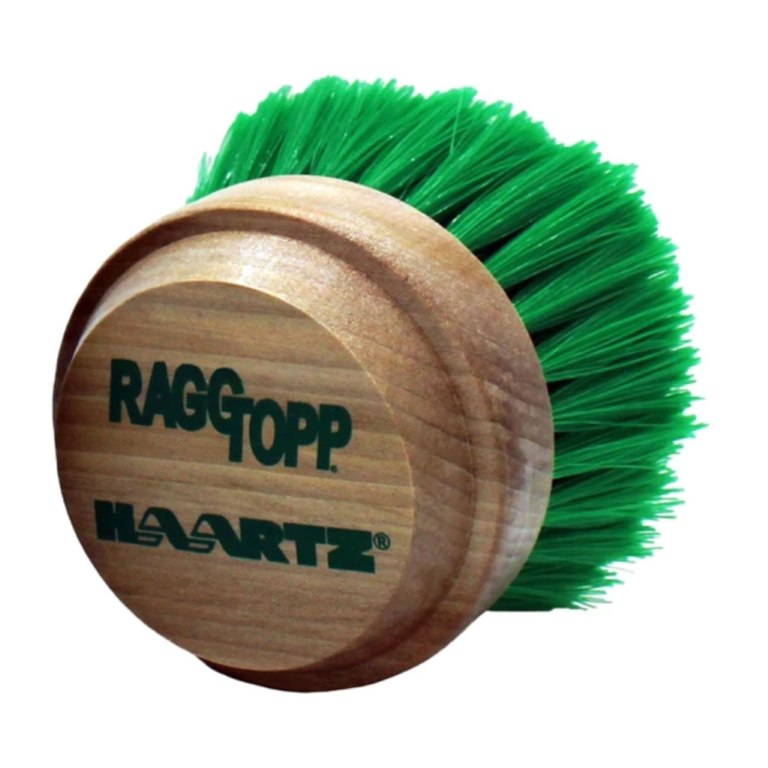
Most of the advice online tells you to use a "soft brush" -- but nobody ever says what a soft brush actually is. Use a good stiff brush. A household scrubbing brush or a carpet brush is fine. These can feel alarmingly coarse, and if that worries you, pick a natural-bristle one; they are a little softer on the hand and the fabric. Keep the brush flat against the panel rather than digging in with the tip, don't lean your whole weight on it, and it will be perfectly safe on the main panels of the roof.
This is the part people get wrong most often. They treat the fabric as though it is delicate silk, tickle it with something far too soft, and wonder why the green is still there a week later. We use mechanical brushes in the workshop that are every bit as stiff as a household scrubbing brush, and on sound fabric they cause no damage at all. Matt scrubbed a badly neglected MX-5 hood for the best part of an hour with a brush like that recently; the owner had been gingerly dabbing at it with a sponge for months and getting nowhere. The fabric came up clean and undamaged. Timid brushing is the enemy here, not firm brushing.
Go gentler around the stitching, mind, because that is exactly where the moss and the worst of the dirt build up. A nail brush is perfect for those seams, and a stiff old toothbrush will reach into the tight corners and the channels the bigger brush can't.
Scrub, rinse, repeat
Once you have worked over the whole roof you should be looking at a brown-green, foamy mess. That is a good sign: it means the dirt is lifting out of the fabric rather than sitting on top of it. Give the hood a proper rinse, watch the muck run off, and then start again from the top.
There is a lot of rinsing involved -- more than most people expect. Rinse until the water runs clear, apply more shampoo, and go again. Each pass pulls out a little more, and the colour of the suds is your gauge. Keep going until your scrubbing produces bright white suds and nothing else. At that point you may be finished.
We say "may" deliberately, because a wet hood lies to you. Let it dry fully and then look it over in good light for stains, spots and stubborn patches of lichen. You often simply cannot see them while the fabric is dark and damp. If you find a few leftover spots, you will need to go again, and here is the catch: the moment you wet the hood, those spots vanish from view. The fix is a trick we use ourselves -- put a dab of washing-up liquid on each spot while the hood is bone dry, then wet the roof. The marked areas foam up and show you precisely where to put the brush.
This is a job, not a quick wash
Cleaning a hood properly is hard, physical work, and it is worth being honest with yourself about that before you start. If your roof is heavily soiled with plenty of established green, accept that you are not going to finish in a single afternoon. Plan to break it up over a couple of days, or even a few weekends, rather than rushing one pass and calling it done. A hood half-cleaned in a hurry looks worse than one cleaned thoroughly in stages.
It is messy work too. Wear old clothes and rubber gloves, keep the cleaners off your skin, and be prepared for the run-off to find every patch of paving and decking nearby. This combination of repeated passes, dwell times, physical scrubbing and proper drying between rounds is exactly why a thorough hood clean takes us a fair chunk of a working day in the workshop, with the right brushes and water supply to hand. It is doable at home; it just rarely turns out to be the half-hour job people imagine.
After it dries: weather-proof, don't reach for the dye
Don't be disheartened if the hood dries out looking patchy or faded. That faded, chalky look is normal on clean, bare fabric, and it tempts a lot of people into thinking the colour is gone for good. It usually isn't. Once you put a weather-proofer on, the whole hood darkens and the colour evens up again, often dramatically. A weather-proofer will not hide dirt, though -- if anything it highlights any patches you missed, so it is also a useful final check on your cleaning.
This is why we tell people not to rush into re-dyeing with roof dye. Plenty of hoods that look beyond saving when dry come back to life with nothing more than a thorough clean and a good weather-proofer. Dye is a bigger commitment and a separate decision; treat it as a last resort, not the default. Once you are genuinely happy with how clean the fabric is, keep it that way with a weather-proofer and the next clean will be far easier.
Don't forget the parts you can't see
It is easy to fixate on the green fabric on top and ignore everything underneath it. Clean the rubbers, the latches, the roof mechanism and the drainage channels around the scuttle, where the hood folds away when it is stored. A spotless hood sitting on a dirty, blocked mechanism does not stay clean for long, and clogged drains are a far more common cause of damp carpets than the fabric itself. While you are down there, check those channels are running freely.
If the roof has specific contamination over and above the general green -- tree sap, bird droppings, or dried industrial fallout -- deal with those spots first, before you start the main shampoo wash. They respond to different treatment, and trying to shift them in the middle of a general clean tends to spread them rather than remove them.
Cleaning is only one part of keeping a soft-top in good order. For the full picture of what professional soft-top care involves -- weatherproofing, algae removal, colour restoration, repairs and the rest -- we have covered each area in its own detail.