Why does my car leak when it rains?

Quick answer: Most rain leaks trace to one of four causes: ageing seals and adhesives, blocked drains around the sunroof, the scuttle and inside the doors, aftermarket modifications that pierce membranes or disturb grommets, and past repairs or windscreen replacements that leave bungs or seals out of position. On older cars, two or three of these can happen at once.
All cars will leak eventually. The points of ingress are almost unlimited, but the causes fall into four categories.
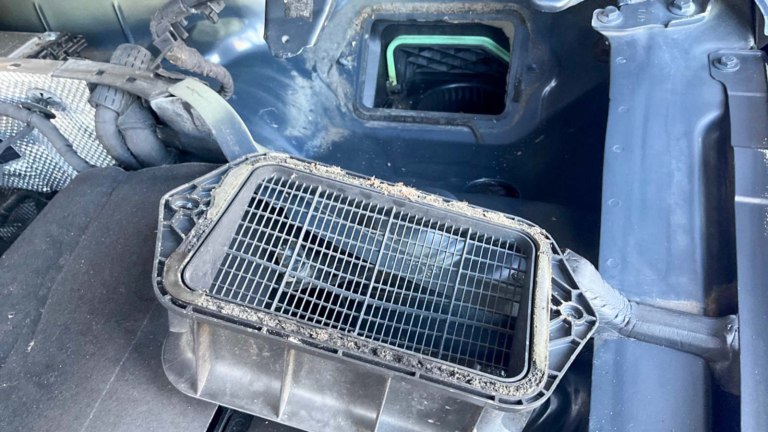
Age
Between eight and twelve years of age, the plastic and rubber parts that keep water out begin to fail. A typical car contains dozens of grommets, bungs, washers, gaskets, membranes and seals, and over time they harden, compress, shrink, crack, split or disintegrate. Sealants and adhesives behave the same way.
Because all these rubber parts were fitted in the same factory in the same week, they age at the same rate. This is why cars often spring several leaks at once: if one door membrane is leaking, the other three are usually close behind. We routinely recommend replacing all four while the door cards are off.
The drainage pipes that carry water from around a sunroof are a good example. They are soft neoprene tubes that run water out under the wheel arches. Over a decade they can shrink by as much as four inches, popping off their connectors, and those connectors, made of nylon, may themselves have gone brittle.
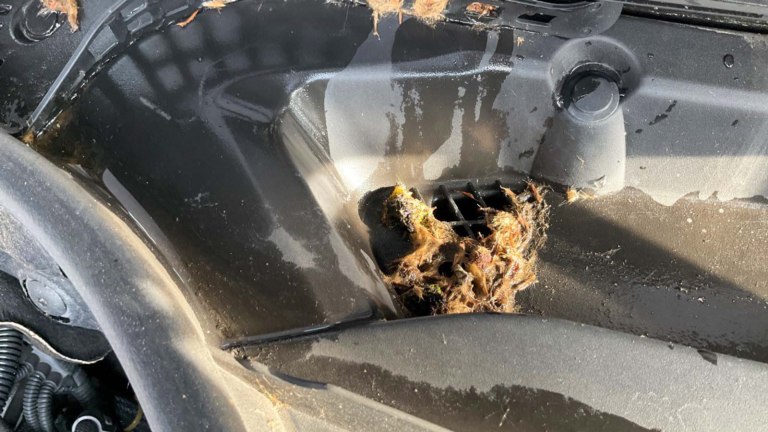
Blockages
Cars are not sealed boxes. They are full of deliberate holes: some let air in and out; others channel water away and drop it clear of the bodywork. Every one of these pathways can silt up.
The sunroof system above is one example. Another is the door drainage; water that passes down inside the door exits through holes at the bottom edge. A third is the trough under the windscreen, beneath the scuttle plate.
Over time these routes block with leaf litter, grit and road debris. Water backs up, and instead of exiting the car where it should, it overflows into the holes designed to admit air. The windscreen trough is the classic case: it has two drain holes, one each side, and if either blocks, the trough fills and water spills into the pollen filter housing and on through to the passenger footwells.
A smashed side window is a surprising cause of blockage. When the glass is replaced, old shards at the bottom of the door are easily missed; they then block the door drains, and the door fills with water the next time it rains. The characteristic symptom (a sloshing or gurgling sound from inside the door when you corner after rain) is covered in its own article.
Modifications
Most modification-driven leaks come from extra electrical equipment: sensors, cameras, dash cams, and most commonly audio systems. The install work often sits outside the manufacturer's original waterproofing envelope.
The fitters drill fresh holes, remove factory bungs, tuck cables under door rubbers, thread multiple wires through a single grommet meant for one, and sometimes cut clean through a waterproof door membrane to accommodate a larger speaker. Any one of these creates a path for water. Most aftermarket installers are not thinking about what happens when it rains.
Repairs
Less commonly, we see leaks on cars that have been repaired after a crash. A serious impact can twist the bodywork, crack welds, and introduce a dozen small problems a repairer cannot easily see.
Even a competent repair can leave something out of place. Modern bodywork has access holes for tools and bungs that are not always obvious; miss one, or put a rubber seal on the wrong way round, and water finds the gap. In fairness to the repair trade, the orientation of small parts is rarely marked.
The upside: if the repair was carried out under insurance, the insurer usually takes responsibility for any subsequent leak.
For a full overview of how the detection process unfolds (what equipment we use and in what order), see what does car water leak detection involve? For a closer look at the physical entry points themselves (where water gets in and why), see what are the most common places water gets into a car?
Once water has entered through any of these routes, the carpets can be wetter than they look; foam underlay holds water long after the surface feels dry.
One final category deserves its own mention. Replacement windscreens are one of the most frequent causes of leaks we see, and we have covered them in their own article.
One common response to any of these causes is to apply silicone sealant over wherever the water appears to be coming in. It almost never resolves the problem; the sealant covers one exit path while the water finds another, and it makes diagnosis harder for whoever investigates next.
For a full account of the secondary damage that builds up when a leak is left unaddressed (mould, corrosion, electrical faults), see what damage does a car water leak cause if left untreated?. For help finding someone to locate and fix the source, see who fixes water leaks in cars?