Why is my BMW car leaking water into the passenger footwell when it rains?

Quick answer: On UK-spec BMWs, water often enters the passenger footwell through the bulkhead blanking plate - the orange plastic disk that seals off the unused left-hand-drive steering column hole. Its rubber seal perishes with age, and the scuttle behind it silts up with leaves, fills with water, and overflows past the plate into the cabin. You almost never see water dripping; you find several gallons already soaked into the underlay.
BMWs leak in all the usual places -- door membranes (including blocked door drains, which produce a sloshing sound from inside the front doors after rain), rear vents, pollen filters, replacement windscreens, sunroofs. But one fault is specific to the marque and hard to track down without knowing about it.
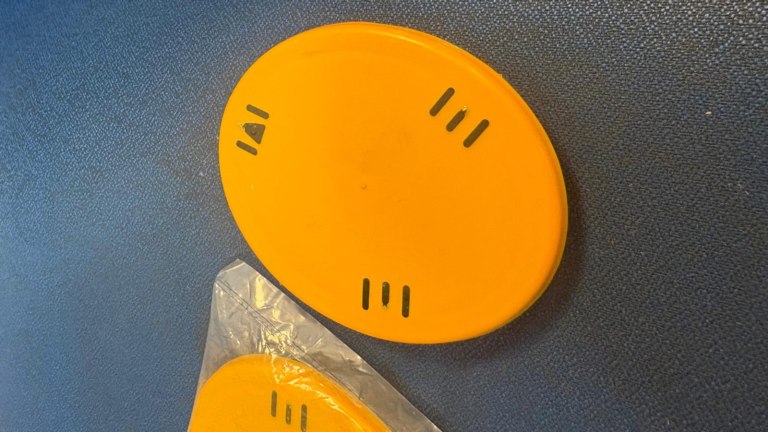
The bulkhead blanking plate
The main bulkhead between the engine bay and the cabin is designed once for both markets. Left-hand and right-hand drive cars are built on the same shell, with the unused steering column hole sealed off by a blanking plate. On most modern BMWs - 1 series, 3 series, 5 series, 6 series and X series - that plate is an orange plastic disk with a rubber seal.
The seal leaks for two reasons. The neoprene shrinks, hardens and loses its grip on the bulkhead. And the space behind the disk, fed by the scuttle drainage, silts up with leaves and road debris. Once that drain blocks, the cavity fills with water and the perished seal gives up.
The plate sits behind the glove compartment, under carpet and sound-deadening. You cannot see it, and you will not see water arrive from above.
Why the symptom is easy to misread
Most owners notice the problem because the passenger carpet feels damp and assume water is dripping onto it from the dashboard. It isn't. The water is coming up from underneath.
The carpet and underlay can be several inches thick. By the time the surface feels wet, there can be several gallons of water sitting in the floor pan.
ECUs are often mounted under the carpet beneath the passenger seat. They are sealed units and usually survive a short soaking, but they are not designed to sit submerged, and they are expensive to replace when they fail.
We regularly see cars that have been to a dealership or local garage first. The common failed repair is someone gumming the plate up with sealant without clearing the scuttle behind it. The drain is still blocked, the cavity still fills, and the water just finds another route out.
The solution
The interior has to be decontaminated and dried before the leak itself is rectified. The passenger seat comes out so the carpet can be lifted and any standing water extracted from the floor pan. The affected areas are treated with an antimicrobial to kill off mould and bacteria before anything else happens.
The old blanking plate comes out, the scuttle is cleared of leaves, silt and debris, and a new plate is fitted - we keep these in stock because of how often we replace them. The car is then dried thoroughly, all affected electrics are tested, and the carpet and seat go back in.
For a full walkthrough of how the detection process works -- from the first water test through to confirmed source -- see what does car water leak detection involve?