How long until I can drive my car after a ceramic coating?

Quick answer: Collect your car the next day and it will be safe to drive straight away. A ceramic coating sets enough to drive within about 12-24 hours, then keeps hardening for up to a week as it fully cures. Just keep it away from car shampoo and jet-wash chemicals for the first seven days.
This is one of the most common questions we get once a coating is booked in, and the honest answer is more relaxed than most people expect. We like you to leave the car with us overnight and collect it the next morning. By then it has had at least fifteen hours to set, it is well past the point where a passing shower matters, and you can drive it home and use it normally.
The worry behind the question is almost always the same: that driving the car too soon will somehow ruin a coating you have just paid for. It is a fair thing to wonder, but it conflates two different things -- the initial set, which happens fast, and the full chemical cure, which happens slowly and quietly in the background while you carry on with your week.
Why we keep the car overnight
The overnight stay is as much about our quality control as it is about cure time. Tom, our operations manager, books coatings so the work is finished well before the end of the day; we then get to inspect the finish under the workshop lights in the afternoon and again under fresh daylight the next morning. A coating that looked flawless at 5pm can reveal a faint high spot or a missed edge once the morning light rakes across it from a different angle. Catching that before you arrive is far easier than calling you back.
A typical timeline looks like this: the coating goes on before 5pm, it flashes off and is levelled within its working window, then it sits undisturbed in a clean, dry bay all night. You collect at around 9am. That fifteen-hour head start is the single biggest reason we almost never have to think about weather, washing or accidental contact in those first critical hours -- the car never leaves the controlled environment until it is genuinely ready.
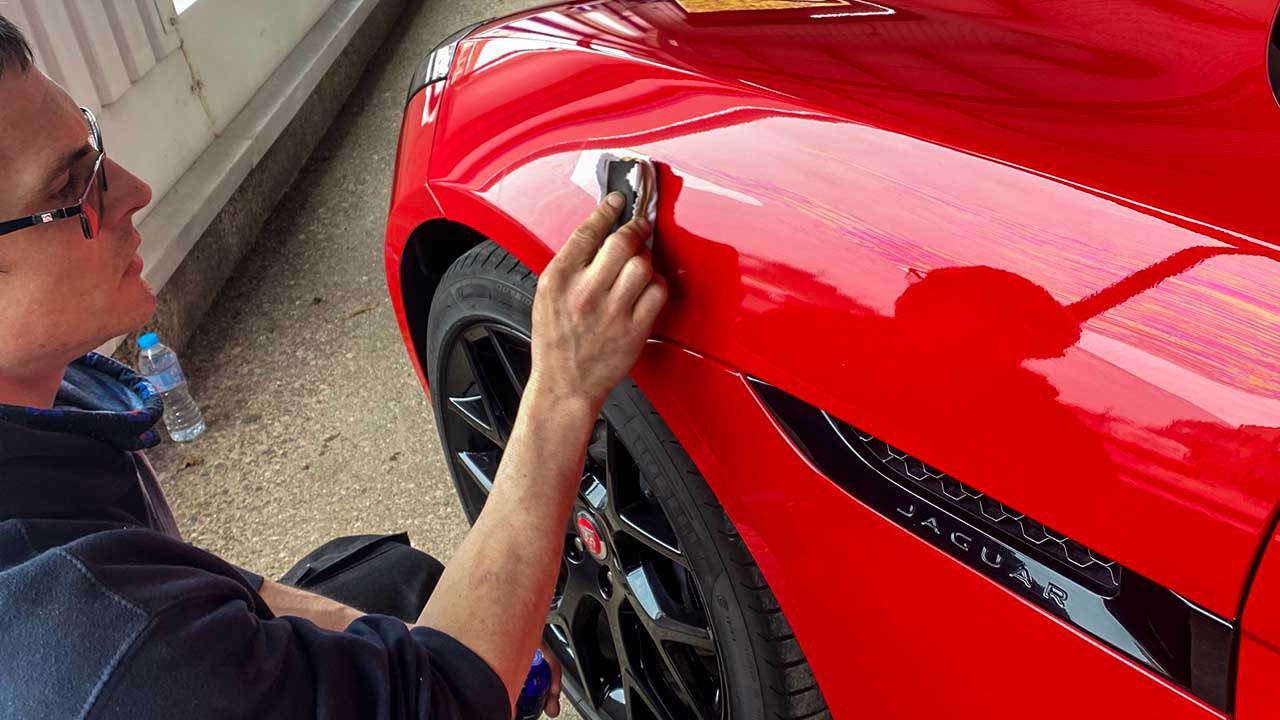
Set versus cure: two different clocks
It helps to separate the two stages, because the confusion between them is where most of the anxiety comes from.
The initial set is the coating hardening from a liquid film into a solid, bonded layer. This is the part that has to happen before the car can safely face the road, and it is largely done within twelve to twenty-four hours. Once it has set, the coating is already hydrophobic -- water beads and rolls off rather than soaking in.
The full cure is the slower chemistry. The coating continues cross-linking and reaching its maximum hardness and chemical resistance over roughly five to fourteen days. You do not have to do anything to make this happen; it happens on its own. The car is perfectly drivable throughout. All "fully cured" means is that the coating has reached the peak of its resistance to detergents and contaminants.
What a decade of coated cars has actually taught us
There is real truth to the idea of cure time -- we see it with our own eyes. Walk into the workshop on a morning after a coating and the car often looks noticeably deeper and glassier than it did the evening before, as the film settles and clarifies overnight. So the cure is not a myth.
But the practical risk of driving before full cure is far smaller than the internet would have you believe. We have coated hundreds of cars over the last decade. We have been caught out by sudden summer downpours while shuffling freshly coated cars around the yard, and we have yet to trace a single coating failure back to the car being driven or rained on before it had "fully" cured. The coating is set hard enough to look after itself long before it reaches its chemical peak. Stay away from harsh chemicals in that first week and you will be fine.
The first week: what to leave alone
The one genuine rule for the first seven days is to keep aggressive cleaning products off the paint. Car shampoos and especially traffic film removers are alkaline enough to interfere with a coating that is still cross-linking. The likelihood of real harm is slim, but it is the one avoidable thing, so avoid it.
- Don't wash the car with shampoo or TFR for at least seven days.
- Don't wipe or rub the paint to remove dirt or rain spots.
- Don't book it in for a machine polish or anything abrasive.
- Don't worry about normal driving, parking or daily use -- none of that matters.
You should not need to wash it anyway, since the car leaves us spotless. If something genuinely unfortunate happens -- a building-site lorry drops clay across the road and your car wears it home, say -- don't panic and don't reach for a cloth. A plain rinse with a jet wash is fine; it is the chemicals you are keeping away, not the water.
What about rain?
Rain is the thing people fret about most, and it is almost never a problem. Once the coating has set -- which it has long before you collect the car -- it is hydrophobic by design. Rain beads up and runs off, which is precisely what the coating is built to do.
The only thing worth doing is nothing: let the surface air dry rather than chasing water spots with a towel. Wiping wet paint in that first week is more likely to mark it than the rain ever would. If you get caught in a serious downpour the day you collect and it nags at you, there is no harm in mentioning it next time you speak to us, but in practice it is a non-event.
The honest bottom line
The full chemical cure is real and it does take up to a fortnight, but it does not gate your driving. The car is safe to use from the moment you collect it the next morning. Drive it normally, don't take a cloth or shampoo to it for a week, and let any rain do exactly what the coating was made to deal with. After that, ordinary maintenance is all it asks for, and the protection you paid for keeps developing quietly in the background.