Can you polish off oxidization?

Quick answer: Yes -- oxidised ("dead") paint polishes off. Machine polishing lifts it quickest, but a hand polish works too. Use a product like Autoglym Super Resin Polish (a synthetic wax with cleaning abrasives) or a pure polish such as T-Cut Original Restorer: apply, let it haze, then buff. More pressure gives more cut; regular hand polishing keeps oxidation at bay. The catch: it only works while the dead layer is shallow. Once oxidation has eaten through most of the clear coat, polishing alone will not bring it back.
What oxidation actually is
Oxidation is what happens when UV light, oxygen and airborne contaminants break down the top layer of your paintwork. On a modern clear-over-base car, the damage sits on the clear coat: that thin, sacrificial layer of lacquer is the part going milky, not the colour underneath. On older solid-colour cars there is no lacquer to take the hit, so oxidation attacks the colour layer directly. That is why a faded red Mk1 Escort goes chalky and pink long before it goes anywhere near the primer.
The reason polishing works at all comes down to how that dead layer behaves. The oxidised film is soft and loosely bonded to the sound paint beneath it -- textbook dead paint. A mild abrasive shears it off in a fine dust and leaves the healthy layer below intact. You are not so much grinding the paint down as wiping away the part that has already died.
Signs your paint has oxidised
The first tell is colour that looks chalky, milky or flat under daylight. Horizontal panels go first -- bonnet, roof and boot lid take the most direct UV, so they fade while the sides still look respectable. A car that looks fine in the supermarket car park can be visibly two-tone the moment you get it on the ramp under our workshop lights.
Two quick checks confirm it. Wipe a clean microfibre or a cotton bud across a dull panel: if it picks up colour rather than dust, that is the dead layer lifting. And watch how water behaves. On sound paint it beads and rolls; on oxidised paint it pools, sheets and runs off flat. Once you start polishing, coloured residue on the pad or applicator is the final proof that you are shifting dead paint rather than buffing a clean surface.
Hand polish or machine polish?
Both work, and the right choice is really about how far gone the car is and how much time you want to spend. Hand polishing is slow and physical, but it is almost impossible to do real damage with: you simply cannot generate enough heat or cut by hand to burn through a panel in normal use. Machine polishing, usually with a dual action polisher, cuts through oxidation far quicker and leaves a much more uniform finish, because the pad keeps the abrasive working evenly instead of following the dips and pressure of your hand.
The trade-off is control. A rotary machine in unpractised hands generates heat fast, and heat plus a thin clear coat is how you strike through to colour or primer on an edge. That is why the DIY advice you will read everywhere is "start with a DA, keep it moving, stay off the edges." It is sound advice, and it is also why so many enthusiastic first attempts end with a holographic finish and a phone call to a workshop. If the car is badly gone and you want the shine back in a weekend rather than a month of Sundays, machine is the answer; if you just want to keep a tidy car tidy, a hand polish once or twice a year is plenty.
Products that shift oxidation
Two categories do the heavy lifting. Polish-wax combinations -- Autoglym Super Resin Polish is the standard example -- carry mild abrasives to lift the dead layer plus a synthetic wax that leaves a protective film behind in the same pass. Pure polishes and cutting products, T-Cut Original Restorer being the most well-known, are stronger on oxidation but leave no protection at all; you must top them with a wax or sealant afterwards or the bare paint starts oxidising again almost immediately.
Which you reach for depends on severity. Light chalkiness across a couple of panels? A combination product is plenty, and it does the protecting for you. Heavy, ingrained oxidation where the colour has gone flat across whole panels? Start with a dedicated cutting compound to knock the worst of it back, then refine with a finishing polish so you are not left with the dull, hazy micro-marring that aggressive compounds leave behind. Acid-led damage from bird droppings follows the same treatment but with far more urgency, because it is actively etching rather than slowly fading; can you remove bird poop etching? covers that specific case.
How we polish off oxidation
The sequence matters more than the product. Wash and dry the car thoroughly first: polishing over a dirty panel grinds grit through the clear coat and lays in swirls rather than lifting the dead paint cleanly. Work one panel at a time, out of direct sun, so the product hazes on your schedule and not the weather's. Apply with a sponge or foam pad, cover the panel evenly, and let it haze according to the label rather than a stopwatch -- humidity and temperature change the timing every visit.
Buff off with a clean microfibre, turning to a fresh face often so you are not just redistributing the dead paint you have lifted. Then inspect under strong, raking light, because oxidation hides under flat daylight and only shows when light skims across the panel at an angle. Repeat on the stubborn areas, and finish with a wax or sealant to lock the result in. If the marks came from a specific contaminant rather than general fading -- sap, tar, water spots -- the same method applies with minor tweaks; can you polish out stains? walks through each one.
Where polishing stops working
This is the part the YouTube tutorials gloss over. Polishing only removes oxidation that sits in the top of the clear coat or, on single-stage paint, the very surface of the colour. Catch it early and machine polishing restores the clarity completely. Leave it for years and the oxidation eats deeper, until the dead layer is most of the film thickness you have left.
At that point the warning sign is colour weeping onto your cloth from edges and horizontal panels: that is not dead lacquer any more, it is the base colour itself coming away because the clear coat protecting it has gone. No amount of polishing brings that back. The options narrow to wet sanding, which levels the surface aggressively but spends clear coat you cannot replace, and on the worst panels a respray. A paint depth gauge in trained hands settles the argument before anyone commits: it reads the film thickness in microns, so we know whether there is enough lacquer left to correct or whether we would be polishing our way through to primer. Tom, our operations manager, would rather quote a respray honestly than burn through a panel chasing a finish that was never recoverable.
Four ways people get it wrong
- Leaning hard into corners and body lines, where the paint is thinnest and the clear coat is most easily struck through to primer (see the Colt Galant below)
- Using a pure cutting product and walking away, leaving bare paint with no protection so the oxidation is back within weeks
- Machine polishing a panel that has not been washed, where one grit particle trapped in the pad drags swirls across the whole panel
- Polishing a brand-new car that does not need it, spending clear coat you can never get back to fix a problem that was not there
A true story from the old days
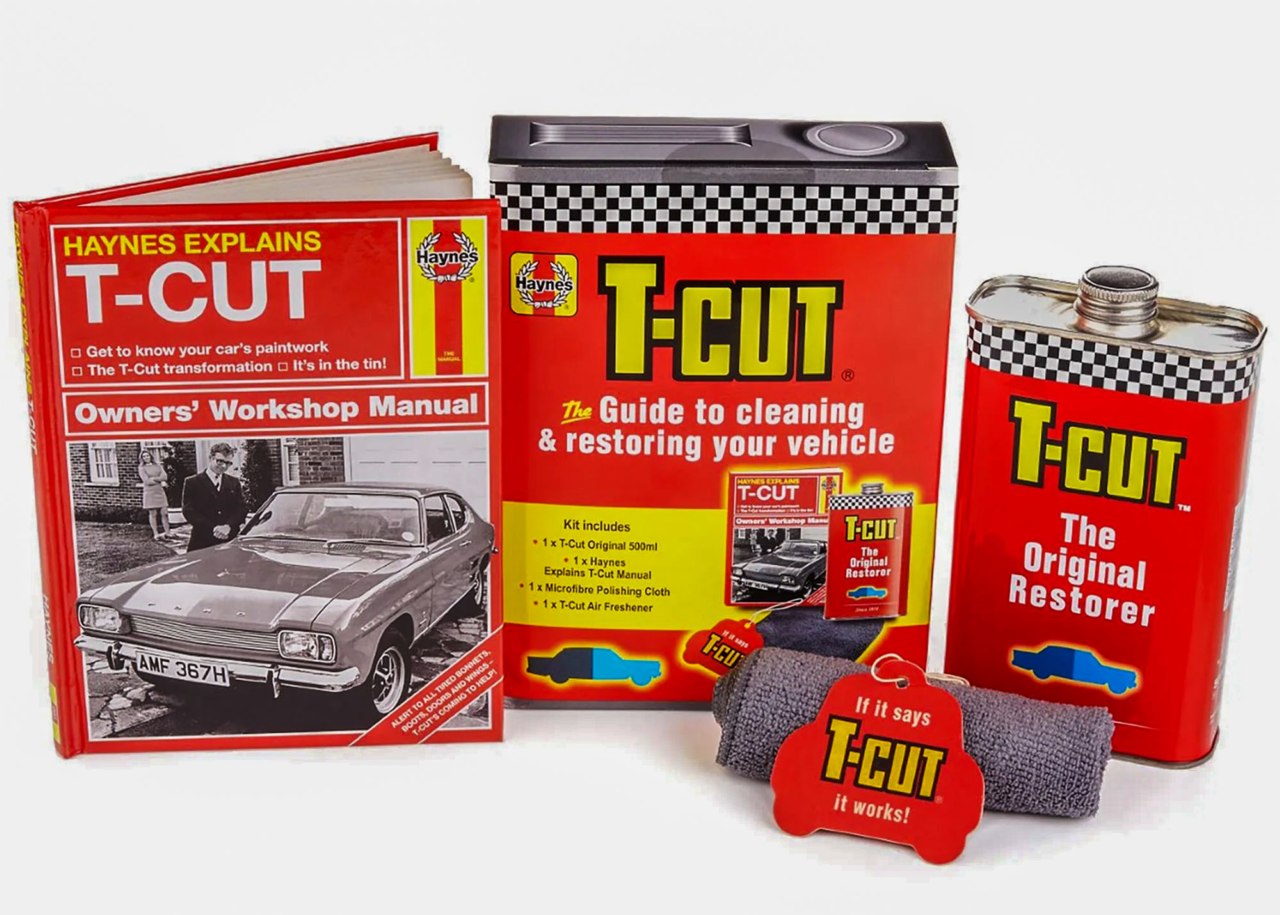
Some time in the late 1980s, the dealership one of us was working at took a red Colt Galant in part-exchange. It was about 15 years old, and the old fella who owned it had hand-polished it with T-Cut, religiously, every Sunday without fail for the entire time he had owned it. The flat panels were immaculate -- genuinely better than cars half its age. But on every corner and hard edge of the bodywork he had polished clean through the colour to the grey primer, a thin bright line of it tracing every swage and wheel arch. He had done everything right except know when to stop. The moral has stuck with us ever since: regular polishing beats oxidation, but moderation beats enthusiasm, and the edges are always where the trouble starts.