What is paintwork restoration?

Quick answer: Paintwork restoration brings tired paint back to a deep gloss. It starts with a thorough wash and decontamination (tar, fallout, clay), then machine polishing in one or more stages to remove oxidation, swirls and light marks. Heavier defects may get local wet-sanding or touch-ins, and the finish is sealed with wax, sealant or a ceramic coating. The aim is a dramatic improvement, not respray-level perfection.
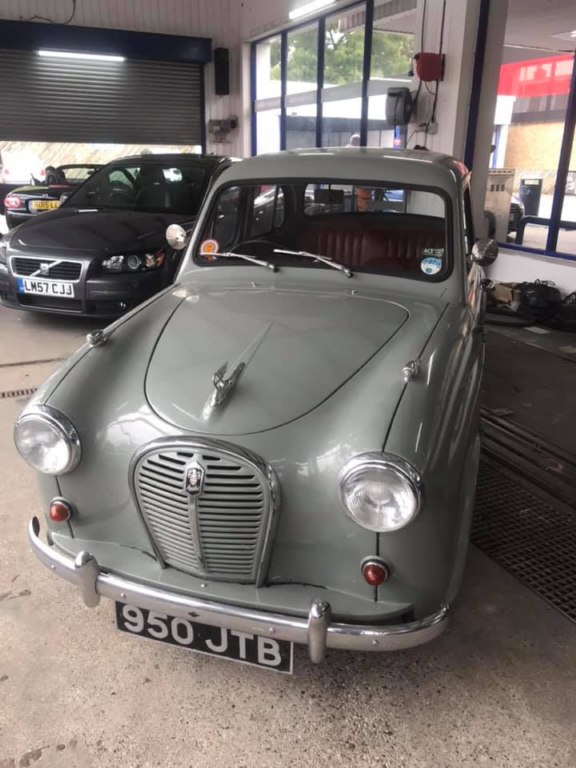
Paintwork restoration combines machine polishing, paintwork correction and often cosmetic repair, carried out specifically to revive a car rather than refinish it. It is a practical middle path between living with dull, marked paint and committing to a full respray. Where ordinary correction tidies a finish that is already in reasonable shape, restoration is the term we reach for when paint has been neglected, weathered or badly maintained, and needs bringing back to a condition you would actually be happy to stand next to.
The scope is deliberately broad. A restoration job might roll several disciplines into one visit: full decontamination, multi-stage machine correction, localised wet-sanding on the worst panels, a stone chip touched in here and there, then a protective layer to lock the result in. It is closer to a rescue than a tidy-up, and the starting point dictates how far each of those steps has to go.
How restoration differs from a respray
A respray strips back or covers the original paintwork and lays down new base and clear coats. Restoration keeps the existing paint and works with what is already there: removing a measured amount of clear coat to level out defects, then protecting what remains.
The difference is mainly the time and cost involved, but the original-paint route is often worth it -- especially on vintage cars with original or mostly original paintwork, where a respray would strip away some of the charm. Keeping the paintwork original has real merit, since it can make the car more valuable; the same fundamentals -- why cars need polishing -- apply whether the car is being restored or just maintained.
There is a finite-resource point worth understanding here too. Factory clear coat is typically only a few thousandths of a millimetre thick, and every correction stage removes a little of it. A respray resets that budget; a restoration spends from it. Part of the skill is knowing how much you can safely take, which is why we lean on paint-depth readings rather than guesswork before any aggressive cutting begins.
When paintwork restoration is worth it
Vintage and classic cars with original or period paint are the obvious case, and the same goes for expensive, desirable or luxury cars, including sports cars that will one day be classics. Daily-driven cars showing heavy swirl marks or hazing also benefit, as do cars with widespread but shallow scratches rather than deep gouges. Restoration is a common choice for vehicles being prepared for sale where a respray cost is not justified, and for cars that have simply been washed badly for years and have lost their depth.
It is less obviously worth it where the paint has already been resprayed cheaply, where lacquer is peeling or failing, or where the colour layer itself has gone. At that point you are no longer restoring paint, you are propping up a finish that needs replacing, and we would say so rather than take the work on.
The typical restoration process
Every car is a bit different, but the sequence we follow usually looks like this:
We start with a safe wash and dry using pH-neutral shampoo so existing dirt is not ground in, then decontaminate with tar remover, fallout remover and a clay bar to lift bonded contaminants. The paint goes under a strong inspection light, often with depth readings to check what is safe to cut. Machine polishing follows in one, two or more stages depending on defect severity, with spot wet-sanding for isolated deeper marks where there is enough clear coat to allow it. The job closes with a panel wipe to strip polishing oils, then wax, sealant or ceramic coating to protect the result.
Tom, our operations manager, takes the view that the inspection stage matters more than the polishing itself. On a neglected estate car that came in looking uniformly grey, the swirls turned out to be shallow across most panels but the bonnet had been polished thin years before by someone chasing a scratch. Reading the paint first meant we corrected the bonnet gently and saved the cutting for the doors and wings, which had the depth to take it. Skip that step and the easy assumption -- "it all looks the same, cut it all the same" -- is how you burn through an edge.
What restoration can and cannot fix
Restoration can transform dull, oxidised, swirled and lightly scratched paint. It can remove most wash marks, hazing and holograms left by previous poor polishing, and it brings back the depth and reflection that makes a colour look "wet" again. It typically cannot fix deep stone chips, dents, cracked lacquer, or scratches that have broken through the clear coat into the colour layer; those need cosmetic repair or localised refinishing.
The honest target is a dramatic improvement. If you want flawless, factory-new paint across every panel, a respray is the route. If you want your existing paint looking its genuine best, that is restoration, and the gap between the two is usually smaller than people expect once the work is done.
Why it isn't the same as ordinary polishing
A single-stage polish is a light refresh. Restoration is heavier work: it removes a measurable amount of clear coat, takes longer per panel, and uses more aggressive cutting compounds before stepping down to finer finishing polishes. The step-down matters as much as the cut. A compound that levels a defect leaves its own micro-marring, so each coarse stage has to be refined out by a finer one, or the paint ends up clear but hazy under direct light. For the relationship between the products used, see our note on wax and compound and the wider answer on paintwork correction.
Protecting the work afterwards
Once the paint has been levelled, it needs sealing. Options include traditional carnauba wax, a synthetic sealant, or a longer-lasting ceramic coating. Without protection, the freshly exposed clear coat is more vulnerable to UV, fallout and water spotting, and the gloss you just paid for starts dulling sooner than it should. We typically carry out paintwork restoration alongside work on other parts of the car, such as wheels and leather upholstery, so the whole car comes back together at the same level rather than a gleaming body sitting on tired trim.
Common mistakes to avoid
Skipping decontamination is the most common error: polishing over bonded grit drags it across the panel and cuts fresh scratches. Going straight to a heavy cutting compound without checking paint depth first is another, and it is the one that does irreversible damage. Filler-heavy glazes are a quieter trap; they mask defects that reappear at the next wash or first rain, which flatters the handover photos and disappoints the owner a fortnight later. Wax applied over a dusty, un-wiped finish traps residue in the protection layer. And the biggest expectation error is treating restoration as a cut-price respray; it will not match new paint, and being clear about that upfront saves everyone the disappointment.