Can you remove wear lines?

Quick answer: Not fully. Wear lines form where the hood folds or rubs on the frame; the fibres get compressed and abraded, hold dirt, and dry a different shade to the rest of the roof. A deep clean and fresh weather-proofing will lessen them, but once the fibres are scuffed or thinned the lines are permanent. Only a new hood removes them completely.
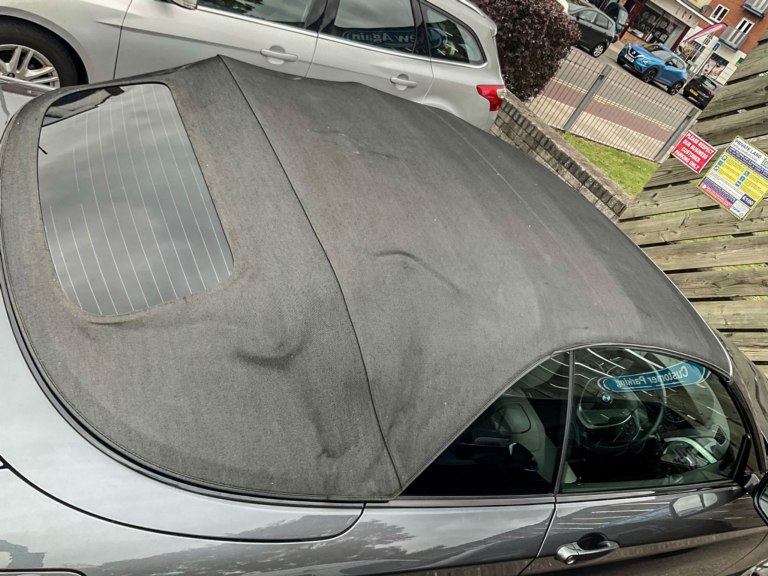
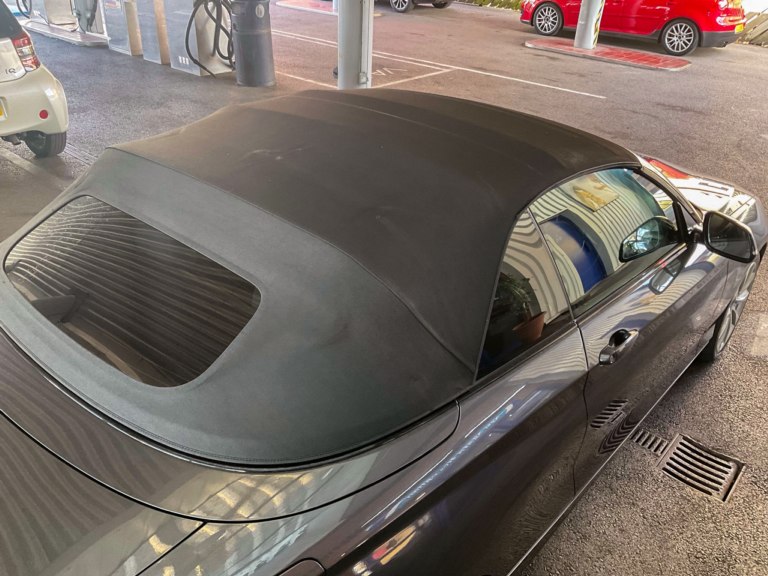
Wear lines aren't a stain and they aren't a discolouration -- they're a texture problem. The fibres along the fold lines have been roughed up by grit and pressure, so they catch and scatter light differently to the rest of the soft-top. To truly remove them you would have to rebuild the texture of the cloth, and that is the one thing no cleaner, brush or coating can do. What you can do is narrow the gap until the lines stop being the first thing you see.
This is one of the questions we field most often at the workshop, usually phrased hopefully: the owner has spotted two pale tramlines running across the folds of an otherwise tidy roof and wants to know whether a good clean will see them off. The honest answer takes a minute to explain, because it depends entirely on what is actually causing the line you are looking at.
Dirt lines versus fibre lines: tell them apart first
Before deciding what can be done, it helps to work out which of two problems you have, because they look similar from the driveway but respond completely differently to cleaning.
A dirt line is contrast caused by muck. Grit, pollen and lichen collect in the valley of a fold because that is where water sits and where the cloth is slightly open. The fold reads darker than the flat panel simply because it is dirtier. Clean it properly and most of the contrast lifts away.
A fibre line is contrast caused by damage. The threads themselves have been crushed flat and frayed by hundreds of folding cycles and by the frame rubbing across them. They now lie at a different angle and reflect light with a duller sheen than the surrounding weave. No amount of cleaning changes that, because there is nothing left to wash out -- the cloth is simply a different texture along that line.
Most tired hoods are a blend of the two. The good news is that the dirt component, which is often the larger share of what you see, comes out. The fibre component is what stays, and it is the part people mean when they ask whether wear lines can be removed.
Why wear lines appear in the first place
Every time the roof is stowed, the fabric folds in exactly the same places. Over hundreds of cycles the fibres at those fold points compress and start to fray. Add road grit working like sandpaper between the layers, pollen settling into the weave, and the steady pressure of the frame rails pressing the cloth against itself, and you get lines that sit lower, look duller and hold dirt more readily than the surrounding panel.
Four things drive it, and they tend to gang up on the same few inches of cloth:
- Mechanical abrasion where the fabric touches the frame or rails.
- Repeated folding that flattens and eventually breaks the weave.
- Trapped dirt and lichen in the compressed fibres, deepening the shade.
- UV exposure, which weakens creased fibres faster than flat ones.
It is worth knowing that the worst wear almost always lands on the fold nearest the rear of the roof, where the cloth doubles back on itself and the frame bears down hardest. That is the line that tends to survive a clean and announce itself when the sun is low.
What genuinely helps, and how much
There is a realistic ladder of improvement here, and it is fair to set expectations honestly rather than promise a reset. A dedicated fabric shaver or lint tool will tidy the loose, raised fibres that fray up out of the weave -- this is a real, visible gain and the safest first move. Careful warmth can coax stray fibres back down so they lie with the rest of the nap. A thorough deep-clean then lifts the embedded dirt out of the fold, taking the dirt-line contrast with it.
The single biggest visual win, though, comes from re-weatherproofing the whole panel, which we will come to in a moment. Taken together these steps move a roof from "tired and patchy" to "uniform and cared-for." What they do not do is restore the crushed weave, so the residual fibre line stays. Most owners, once they see the before-and-after, are happy with that trade.
Why a clean alone rarely hides them
A good convertible roof cleaner takes out the dirt sitting in the crease, and on a roof whose lines are mostly dirt that can look like a near-miracle. But where the fibres are scuffed, the line comes straight back the moment the cloth dries. The water in a wet roof temporarily plumps and darkens the nap, so a freshly washed hood often looks cured -- right up until it dries out and the light catches the damaged weave again. Cleaning removes contrast caused by dirt; it cannot remove contrast caused by texture, and that catches a lot of people out.
How re-weatherproofing closes the gap
Re-weatherproofing the hood darkens the entire fabric evenly, and that even darkening is what does the visual work. By bringing the whole panel down to a deeper, consistent shade, it shrinks the contrast between the worn line and the cloth around it, so the wear marks stop jumping out. You also get water beading again, which keeps rain and grit running off the folds rather than soaking and grinding in -- so the treatment slows future wear at the same time as disguising the existing marks. The lines can still show when light rakes across the roof at a low angle, but day to day, most owners find the improvement well worth it.
What the before-and-after photos actually show
The two images are the same hood before and after cleaning and re-weatherproofing. This one was already very clean when it came in, so the wear marks weren't being exaggerated by trapped dirt -- which makes it a useful, honest example rather than a flattering one. It is a mid-grey fabric, and looking closely it is a bi-colour mix of black and white fibres, so it starts out fairly light. Tom, our operations manager, used a two-year protective coating on this one, and the coating darkened the soft-top considerably; that deeper, uniform tone is what pulls the wear lines back into the background. No roof dye was used at any stage -- the colour change is the coating alone, not pigment painted over the marks.
When a replacement is the only honest answer
There is a point past which no treatment is being straight with you. If the fibres are visibly thinning, if the scrim backing is showing through, or if the fold has actually started to split, then the cloth has failed along that line and nothing topical brings it back. At that stage a replacement roof is the only way to genuinely start fresh. It is a bigger decision than a clean -- it brings in the trim shop, sometimes the frame, and on many cars the bonded rear window too -- but it is the one intervention that actually removes wear lines rather than disguising them. We would always rather tell an owner that early than take money for a coating that was never going to fix a split.
Slowing the next set of lines down
Wherever your roof sits on that scale, the marks form faster on a neglected hood than a maintained one, and the habits that slow them are simple:
- Clean the roof regularly so grit never gets the chance to grind into a fold.
- Keep the fabric weather-proofed so water and dirt run off rather than soaking in.
- Never drop the hood while it is dirty -- give it a rinse first so you aren't folding grit into the creases.
- Avoid leaving the roof folded for weeks on end, and check the frame contact points aren't unusually sharp or worn.
None of this rebuilds a worn line, but it buys years before the next one earns the question.