What is SiO2?

Quick answer: SiO2 (silicon dioxide) is the backbone of most ceramic coatings. It is a glass-forming compound that bonds to your car's clear coat at the molecular level, creating a hard, hydrophobic layer. The raw material is essentially refined sand; The formulation (the resins, solvents and curing system wrapped around it) is what turns it into a coating that actually performs.
Say "silicon dioxide" to most people and you get a blank look; say "sand" and they relax. Both are right. SiO2 is one of the most common compounds on the planet, the main ingredient in glass, quartz and beach sand. What matters for your car is not the raw material (which costs almost nothing) but what a formulator does with it. Turning cheap silica into a liquid that wets out evenly across a panel, cures cleanly without streaks, bonds to the clear coat and stays put for years is the hard part. That is where the money and the chemistry live.
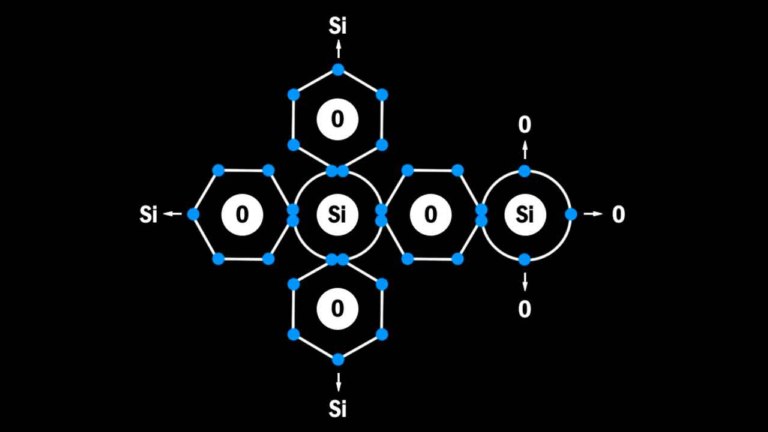
The reason SiO2 works so well on paint comes down to that molecular shape. Each silicon atom sits at the centre of a tetrahedron, sharing electrons with four oxygen atoms. As the coating cures, those units link up into a continuous, glass-like network across the surface. It is the same family of bonds that makes window glass hard and chemically stable. In certain engineered forms that network is also strongly water-repellent, which is why a freshly coated panel sheets water off in seconds rather than holding it in a film.
Silicon, silica and silicone are not the same word
This is where a lot of confusion starts, and it is worth slowing down on because the three terms get used interchangeably in marketing when they describe genuinely different things.
- Silicon: the element (Si). Found in sand, microchips and solar panels.
- Silica / SiO2: silicon dioxide, the hard mineral that forms the backbone of a true ceramic coating.
- Silicones: flexible polymers (often called siloxanes) used to add slickness, gloss and water behaviour.
Our coatings are built on silica / SiO2 chemistry that cures into that hard, glass-like film. Some formulas also fold in organosilicone resins as modifiers. Those do not turn the product into "just silicone"; they fine-tune behaviour: extra slickness, stronger beading, better spread and self-levelling while you apply it. The SiO2 backbone still does the structural work; the siloxanes adjust the feel and handling around it.
It is also why supermarket "ceramic" sprays feel so slippery straight out of the bottle. Many lean heavily on silicone polymers for instant gloss and water repellency. There is nothing wrong with that in a topper, but it is not the same as a coating that cross-links with your paint. One practical footnote the bodyshop side of the trade knows well: fresh, uncured silicone is the classic cause of fisheyes if a panel is about to be sprayed, which is why the word "silicone" makes painters nervous. A fully cured ceramic coating is a different animal: inert and stable. When Matt preps a coated panel that needs respraying, he decontaminates and machine-flats it exactly as he would any other; the cured SiO2 does not behave like wet silicone.
What the SiO2 is actually doing once it cures
Inside the coating, the silica does four jobs at once. It forms the backbone: the SiO2 content is what turns a thin liquid into a solid, glass-like film. It anchors into the paint, where properly prepared clear coat gives the network microscopic peaks and valleys to grip. As it levels, it smooths out tiny surface irregularities, which is what produces the bead and the slick, easy-rinse feel. And the cured structure shrugs off cleaners, traffic film and UV far better than bare clear coat or wax.
The catch is that every one of those jobs depends on preparation. The film is only a few microns thick and perfectly clear, so it copies whatever sits beneath it. Coat over swirls and you lock the swirls in under glass. Under the lights, the hologramming left by a previous machine polish is exactly what a coating would seal in, which is why the correction is the job and the coating is the seal on top.
About those SiO2 percentages on the bottle
Whether the headline number actually matters is worth a dedicated read; see is silica dioxide content important in ceramic coatings? for the short version. The honest summary is that the percentage tells you less than the label implies.
A figure like "70% SiO2" is almost always measured by weight in the concentrate, not the thickness of the layer that ends up on your car. A higher number does not automatically mean a better coating either; the resins, solvents and curing system matter just as much, and a very high silica loading can be harder to lay down cleanly without streaks or high spots unless conditions and technique are controlled. Good manufacturers balance the SiO2 against everything else so the product is durable, glossy and installable; not just impressive on a spec sheet. If a seller quotes a percentage but cannot tell you what that silica is doing in plain English, the number alone is a poor way to choose.
Where the marketing gets ahead of the chemistry
A few patterns crop up often enough to flag. Short-term "ceramic" sprays will proudly print an SiO2 figure while behaving much more like a traditional sealant; genuinely useful as a maintenance topper, but no substitute for a full coating. Some products lean hard on the percentage and on "nano" buzzwords while saying almost nothing about preparation, curing or aftercare, which are the parts that decide whether the coating lasts. And rebadged or white-label retail products sometimes quote bold numbers with no test data or installer training behind them at all. The figure is real; the context is missing.
What SiO2 cannot do, however high the number
It helps to be clear about the limits, because no percentage changes them. A clear, micron-thin layer cannot hide poor paintwork: it shows whatever swirls, sanding marks or dull patches sit underneath. It cannot make paint bulletproof; stone chips and deep scratches are physical impacts that no coating stops. It cannot replace preparation, because without proper decontamination and polishing the network has nothing clean to bond to. And it does not retire the wash bucket: a coated car still collects dirt, it just releases it far more easily and safely than uncoated paint.
Looked at the right way, that is reassuring rather than disappointing. SiO2 is doing exactly what a hard, clear, sacrificial-but-durable layer should: protecting and easing maintenance, not performing miracles. The performance you feel day to day comes from the whole system: correction, decontamination, a well-formulated coating and the right aftercare, with silicon dioxide as the structural heart of it. For the broader question of what a ceramic coating actually protects against, see What are the benefits of a ceramic coating?