

May
27
2025
Updated August 2026I went through the 16 drawbacks the internet lists for ceramic coatings. Most do not survive the question "compared to what?". Here are the two that genuinely do.
I spent a few days putting OpenAI through its paces, feeding it questions about ceramic coatings and watching what came back. The answers looked reasonable on the surface. But I have been doing this for 25 years, Gary for 35, and when you set AI's answers next to actual workshop experience, some of them fall apart. What follows is that stress-test.
I asked: "What are the disadvantages of ceramic coating?"
I have spent a few days messing around with openai.com and to be fair, it's not bad. However, what it is doing is going around scraping information from the internet, and as we all know, the internet is written by 14-year-olds who learned everything they know on the internet.
On the face of it, the answer I got seems reasonable, but let us pick it apart.
Ceramic coatings can provide several benefits for a car, such as protection from the elements and improved gloss, but they also have some drawbacks to consider.
One potential drawback is the cost of applying a ceramic coating. The process can be time-consuming and labor-intensive, and the materials used can be expensive, which can make it a costly option compared to traditional waxes or sealants.
AI-generated content
I think this is half right. Overall, as a package, there is a lot of outlay; it is expensive. But the question you should always ask is: "compared to what?"
1. Ceramic coatings are expensive
We need to compare like-with-like. Much of this cost is the preparation of the car. We -- or any other detailer -- will spend a long time polishing it to make sure the paintwork is pristine before application. We were doing this long before ceramic coatings were ever invented, and depending on the condition of the car when we started, it could be expensive even then.
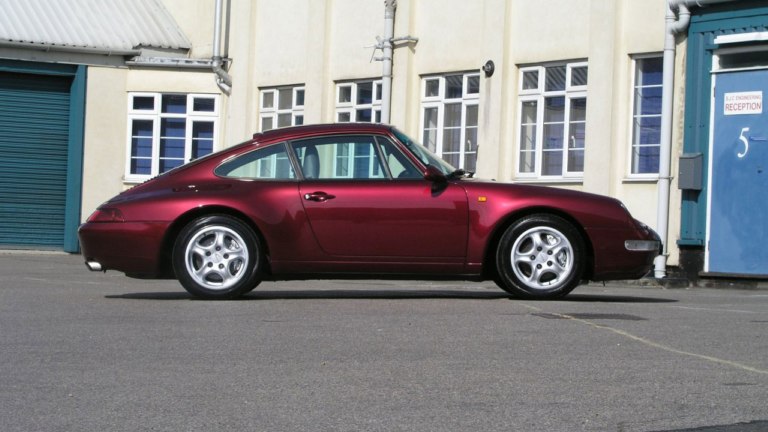
Some of the cars we have polished were finished with products like P21S, which is an expensive wax, but not nearly as expensive as a ceramic coating. However, the cost of preparation will be the same. The difference is that a wax is only going to last months before it needs to be reapplied.
Ceramic coatings are expensive, and I have addressed the reasons why in some detail elsewhere. But compared to traditional waxes and sealants, I think the argument can easily be made that they are better value for money. So it is more accurate to say that the initial outlay is expensive.
We are finding that a lot of our customers are planning on keeping their cars a long time. We have had several who are retiring, have bought their dream car, and never intend to buy another. Others feel that cars are getting expensive, and it is just more friendly to the planet to not treat a car as a disposable item. If you intend to keep your car for the next twenty years or more, then getting a ceramic coating starts to make a lot of sense -- divide the cost by twenty and look at how much it is costing per year.
2. Ceramic coatings last too long
If you like to have the latest model and tend to change cars every three years, then some of the benefits of a ceramic coating don't apply, and it looks more expensive.
Ceramic coatings also require proper preparation and application to achieve the best results. If the coating is not applied correctly, it may not bond properly to the car's paint and could peel or flake off.
AI-generated content
This really shouldn't be a consideration. Yes, ceramic coatings require proper preparation and application -- this is part of the reason they are expensive, and so we would expect it to be done properly.
3. Ceramic coatings peel or flake off
It is true that if they aren't applied properly it will cause problems, but I find it highly unlikely they would crack or flake off. If waxes and oils aren't removed from the paintwork prior to application, the ceramic coating may not bond properly. However, there is enough solvent in the product to cut through and bond to the paintwork. In fact, in all the examples I have seen of incorrect application, the problem is not that it is coming off -- it is that someone put too much on and can't get it off.
You are welcome to go see for yourself. Do a Google search for "Ceramic coatings gone wrong" and you will find that in the vast majority of cases the main problem is that an amateur has managed to get hold of a bottle of ceramic and tried applying it without any training whatsoever.
If you are buying a reputable product from a reputable outlet, you can be assured that the manufacturer has ensured they have the correct environment, the correct equipment, the correct skill levels, and has undergone training, before they are accredited. And in the event that something does go wrong -- it happens -- they have the skills to put it right, no matter the cost to the detailer or how long it takes.
Another potential drawback is that ceramic coatings are generally more durable and long-lasting than traditional waxes or sealants, but they are not permanent. They will eventually need to be reapplied to maintain the protection and shine.
AI-generated content
Again, this is sort of true. I consider ceramic coatings to be permanent in the way paint is permanent. It won't last until the end of time, but it certainly isn't temporary.
4. Ceramic coatings don't last forever
I have already answered the question of how long ceramic coatings really last elsewhere. In short: if you want to retain the same level of protection you get from them when new, for very many years, they do require some maintenance. The good news is that you don't have to start from scratch, and you don't need a whole new coating. They can be maintained with a top-up, and there are products designed to do just that.
One thing the AI does not cover is that ceramic coatings, while tough, are not bulletproof. They are not a magic shield that repels all scratches. Over the years, your car will get some wear and tear, and it will show the signs of age -- it's just that it's likely to happen far less quickly.
When your coating doesn't repel water like it once did, when the car doesn't seem to be staying clean like it had, it may well be time for a top-up. At which point you will probably find you have also picked up a few scuffs, scratches, stone chips and dents, which you should probably get attended to. When this happens will depend on how much you use the car and how much punishment it gets day-to-day.
Finally, ceramic coatings can be more difficult to remove than traditional waxes or sealants if you decide to change products or want to go back to a natural finish on your car's paint.
AI-generated content
This is wrong, bordering on not even wrong. Firstly, because ceramic coatings are next to impossible to remove -- which is rather the point. In the very rare cases where we have had to remove them, it has required using wool polishing pads with very coarse compounds to polish through them to the paint underneath. This is akin to sanding them off. I have heard that you can get them off with caustic, but it's not something we are willing to try.
5. Difficult to remove
The idea of going back to a "natural finish" is a nonsense. Any coating -- even a ceramic coating -- is essentially sealing in the polished paintwork underneath. Most of the shine comes from that preparation. The ceramic does make it shinier, but so does a wax. The ceramic coating also makes it hydrophobic, but so do waxes. Waxes are less shiny, less hydrophobic, and most importantly less tough; it is hard to see why anyone would want to go back.
I have heard the complaint from some dedicated enthusiasts that they really miss polishing and waxing their car on a Sunday afternoon, and so wouldn't have a ceramic coating again. But there is nothing stopping you from applying wax over your ceramic coating. There probably isn't going to be much polishing to do, but if we are looking for downsides of ceramic coatings, this is reaching.
It seems my job is safe for now, even though the AI might have more personality than me and is certainly better at spelling. In the interests of being thorough, I went looking to see if I could find any other objections to ceramic coatings. I found a few more.
6. Not all ceramic coatings are available to everyone
Indeed, this is the case. The crux of this objection is that professional-level coatings are not available to people who aren't professional, so you can't get them yourself and do a DIY coating.
I suppose this is a fair objection, but there are reasons for this, as we will see when we look at some of the other objections.
7. Ceramic coatings are difficult to apply
And here we have an objection which explains why professional coatings are only available to professionals. To be fair, ceramic coatings are not hard to apply -- but they are really easy to make a mess of, so you really want a professional to do it.
8. They can get scratched
Compared to what?
This is an objection I don't really understand, as it isn't a problem unique to cars with ceramic coatings. Any car can get scratched, but a car with a ceramic coating is far less likely to get light scratches, and it is possible that any scratch you do get won't be as bad as if you hadn't had the coating.
It is really hard to see what the objection is because I have yet to see it explained. It is almost as if people write these articles and just copy each other without knowing what they are talking about.
I am going to take a guess and say that the objection is that scratches are harder to polish out and -- once done -- the ceramic coating needs to be re-applied. I can see this may be an issue if you are an enthusiast who wants to do DIY, but it's not really a problem for professionals.
As you might guess, these objections may be coming from amateurs and enthusiasts.
9. They don't last as long as manufacturers claim
I disagree with this completely. What we find, consistently, is that coatings last much longer than the manufacturer claims. I have even written about it.
I do not dispute that some manufacturers are putting out retail-quality products which they claim are just as good as the professional-quality ones. You can buy no end of snake oil on Alibaba.
In the UK, our consumer laws are rather good, and so false or misleading claims are rarer than you might find elsewhere. All the reputable manufacturers closely guard the reputation of their brand and products, and so they tend to err on the side of caution when giving guarantees and warranties.
I have 25 years experience of working with coatings; Gary has 35 years. We mutually agree that, if well maintained, they can last indefinitely. Anyone claiming that ceramic coatings do not last as long as manufacturers claim obviously hasn't had access to good-quality coatings.
10. They are hard to maintain and require more maintenance
We find this claim to be absurd. It is hard to believe that anyone who writes that a ceramic coating requires more frequent washing has any experience with ceramic coatings at all.
Our customers tell us that the major benefit of having a ceramic coating is that it hardly ever needs washing, that the car is practically self-cleaning, and that when they do wash their car, it is really easy.
I think the issue here is that some people -- again, probably enthusiasts -- feel that because they have paid a relatively large amount of money for their shiny coatings, they need to baby it. If you want to keep your paintwork in the pristine, concours condition it was just coated, then maybe this is the way to go.
The truth is, however, that cars get wear from use, and they get wear from washing. There is no avoiding it.
So what we tell our customers: get on with your life, don't worry about it, safe in the knowledge that your car is going to look better and newer than it would if it didn't have a ceramic coating.
11. Ceramic coatings require special soaps and top-up products
As we have been telling people since before ceramic coatings were invented: don't wash your car with dish soap or floor cleaner. Use a car shampoo, designed for cars. They are easy to get hold of and they are cheap.
You should use a 'special soap' on any car, not just one with a ceramic coating. However, as ceramic coatings are tough, inert, and especially resistant to chemicals, I would argue that they stand up better to harsh soaps than cars without a coating.
So, is there an argument here? In truth, there is. Car washes buy their soaps as a concentrate which needs to be diluted. There is a tendency to mix them too strong because it gets the dirt off quicker, but it can also burn paintwork -- or more commonly plastic trim, rubber, and chrome. Potentially, it could also harm a car with a coating, but so would driving your car into a wall. Avoid cheap car wash places, regardless of what you are driving.
As for top-up products: you don't need to apply them as often as wax, and they are easy in application.
12. Water spots
There is some truth to this. Water spots happen on all cars. Because water beads up on cars with a ceramic coating, and water spots are caused by that beading, they are more likely than on a car with flat paintwork.
Water spot removers are available, and it's a problem you need to keep on top of for best results. But that goes for any shiny car. It's a shiny-car problem; it's as it's always been.
What does the damage is what is in the water, not the water. Hard water carries dissolved minerals. The droplet sits there, dries in the sun, the water goes and the minerals stay, and you are left with a ring. Somewhere with soft water you would barely notice it. Round here you will find them on the bonnet by Thursday. The coating cannot help you with this one. It gives the water a surface to sit on; it does not change what is in the water.
The worst of it does not start here. Every so often the Sirocco lifts dust off the Sahara and carries it the whole way to us, and the country wakes up to pink cars. If what lands is grey rather than pink, it has come from Russia. Either way, get rain or a heavy dew on top of it and it behaves a little like cement. It sets rather than rinses. No coating on the market stops that arriving on your paint, and none of them stop it setting once it has. Although in fairness, that is not a drawback of ceramic coatings. That is a drawback of parking outdoors in the wrong week.
13. They make you neglect your maintenance
In complete contradiction to point 10, there is the idea that because they are so easy to clean and need cleaning less often, you might end up neglecting your car.
There is some truth to this. We often give our customers a courtesy call after a year or so to ask them how they are getting on, and one thing we find is they clean their cars a lot less -- less than they probably should.
There was one fella we asked: how often was he now cleaning his car? He thought long and hard before informing us that he hadn't cleaned his car in a whole year. There's no doubt about it, that is neglect.
But is this a bad thing? Apparently not -- we haven't seen the cars suffering for it. I think we can actually call this a benefit of ceramic coating.
14. Ceramic coatings are not suitable for all surfaces
Not suitable for all surfaces: Ceramic coatings are not suitable for use on all surfaces, such as rubber, plastic, or vinyl.
AI-generated content
Compared to what? You generally can't put a long-lasting wax on plastic or rubber -- it leaves ugly chalky marks. However, you actually can put ceramic coatings on plastic.
For rubber and vinyl, we have special coatings which feed them and restore plasticisers lost through evaporation. For fabric hoods, we have speciality coatings which contain extra UV protection and mould inhibitors.
As my Dad used to tell me: "Always use the right tool for the job."
15. You can't put your car through a car wash
You can put a car with a ceramic coating through a car wash. Most manufacturers don't recommend it, but we need to strike a balance here. And when I questioned ChatGPT further, it did seem to compromise.
What to Do Instead:
- Touchless car washes are a better option if you're in a pinch, as they use high-pressure water and detergents without physical contact. But even these aren't ideal for ceramic coatings long-term.
- The best method is a hand wash using the two-bucket method with pH-neutral car shampoo and clean microfiber cloths or mitts. This preserves the coating and avoids swirl marks.
AI-generated content
I cannot stress this enough: all forms of washing introduce micro-scratches. Even so-called "touchless methods" are moving dirt and grit around on your car with high-pressure water. Obviously it will cause less scratching than if you take it to two blokes in the corner of a supermarket car park who have just washed twenty cars with the same bucket of water and a dirty sponge.
Most of our customers are sold on ceramic coatings because they make it so much easier to maintain a clean-looking car. It would be counter-productive to then baby the ceramic coating.
Ceramic coatings are tough, and can stand up to bad washing techniques far better than a car without -- so go ahead. Use a car wash.
It is true that some older car washes which use plastic bristles can be pretty harsh on paintwork. It's also true that the newer 'soft-wash' types can be just as bad if they are poorly maintained by the operator. If car washes are what you want to do, find a well-run, well-maintained car wash in your area and stick with that. If possible, find a touchless wash.
16. Paintwork imperfections are locked in
Imperfections: Ceramic coatings create a semi-permanent layer, so any imperfections present at the time of application will be locked in.
AI-generated content
All cars have imperfections -- even new cars. That's guaranteed.
The first kind is manufacturing imperfections. The more hand-built the car is, the more imperfections you generally find: a little too much orange peel here and there, some stretch marks in the corner of a panel, paint ripples on the edges of a door. There will be something.
The second kind is any damage gained between the car leaving the factory and arriving at the detailer. This could be wash marks introduced by contract valeters at the dealership; the car could have got a scratch on the boat or train during transportation.
Part of the reason for the expense is that you are paying a detailer to correct the worst of these imperfections. But you can't get them all. It's not that we can't find them -- it's that some of them would require a respray. Sometimes a respray is what we have to do.
I will let you into a secret: often we don't tell our customers about some of the very minor imperfections we find. It's a judgement call which depends on the customer, but if we don't think they will notice it, why worry them with it? We know that the average car owner can't see half of what a professional sees. Mr. fifty-something with a Jaguar certainly will not be crawling around on his hands and knees with an inspection light, so why trouble him about a slight paint sag on the bottom of a bumper? Would they really have the bumper resprayed over a blemish you have to lay on your back to see?
A little while ago, we had a Tesla brought to us straight from the dealership. When we did an initial inspection of the car, we found a rather nasty scratch on the sill under the driver's door. This has happened before with a Tesla which had been delivered by transporter, and on the previous occasion the car went back to the dealership to have the panel resprayed. But on this occasion, it wasn't clear who was responsible for the damage, and the owner wanted the car coated quickly because he was going on holiday.
If we could have polished the scratch out, we would have done -- but it was far too deep. So after consulting the customer, we touched in the scratch, tidied it up as best we could, then applied the ceramic coating over the top. Locking it in.
Except it isn't locked in. The panel needs to be repainted, which the customer said he would do at a later date. Repainting would mean sanding it all back, which would remove the coating. Once repainted, and after a suitable amount of time to let the paint fully cure, a new ceramic coating would need to be applied to that panel -- but it is what it is.
A good portion of the cars we coat are used cars. It is what we do: we make cars like new again. Sometimes we can get them looking shinier than when they came out of the factory. Sometimes not. You can't remove all the scratches and wash marks, but you are making a major improvement.
If there is a genuine downside to ceramic coatings -- and polishing a car in general -- it is that making a car shiny can highlight imperfections and make them stand out. Most of the time, the customer will say, "It's not a new car. I can live with the blemish." But if it really bothers them, there is the option to go to the bodyshop; a ceramic coating won't stop you doing that.
So, what did we find?
Not much, is the honest answer. There is a lot of reaching to find downsides to a coating, and it's apparently done to fill an article for the search engines. I hope I have set my readers' minds at ease by laying most of them to rest. Many of them can be dismissed by simply asking: "Compared to what?"
If pressed, here is what we genuinely consider to be the real limitations of a ceramic coating:
- There is a large initial outlay -- but you save money in the long run.
- They take time to apply, so you will have to lose your car for a couple of days -- but there will be less washing and waxing in the future, so you save time in the long run.
Additionally, they aren't indestructible. If your car receives a lot of punishment, they won't protect it like a forcefield. Likewise, they are cost-effective when that cost is spread out over years -- which is what they are for. If you are only going to keep the car for a short time, they may not be for you. Although, even then, we have 3-year ceramic coatings.
Updated: 27th May 2025

Danny Argent -- writer and training officer at New Again.
Over 24 years in the industry, 250+ articles, featured in publications such as Fleet News and Fast Car.
Related Blogs
Here are some more of our latest #ceramic-coating blogs
New Again Now Accredited to Apply Fireball Ceramic Coatings

Aug
08
2025
Officially accredited by Fireball Korea to apply their full professional coating range -- years of real workshop experience behind it.
Read ArticleHow long do ceramic coatings really last?
May
27
2025
Ceramic coatings last between 3 and 10 years. At least that's what the Guarantee says. Do they really last that long, or do they last even longer?
Read ArticleWhat customers actually say after a year with a ceramic coating
Sep
25
2023
Honest customer feedback after 12 months with a ceramic coating -- what held up, what surprised them, and what they'd tell a friend.
Read ArticleDetail a New Car? Yes -- and Here's What You're Actually Paying For
Nov
18
2022
New cars leave the showroom with swirl marks, fingerprints and transport film. Here's what a proper new-car detail actually does.
Read ArticleWhat does it cost to have a car polished? It depends which job you need
Sep
05
2022
Polishing prices range from a light machine buff to full paint correction. The job you need depends on paint condition, not just what you want to spend.
Read ArticleCar Paint Protection De-Fuddled

Jan
05
2022
Ceramic coating, PPF, wax, sealant -- what actually protects your paint and what's just marketing? A plain-English breakdown from our Chelmsford workshop.
Read ArticleCleaning Convertible Car Roofs
Jul
03
2020
Soft-top roofs attract moss, fade and break down without regular cleaning and reproofing. Here's how to keep your hood in good condition.
Read ArticleWhy do people love shiny cars?
Aug
19
2019
Why do we love shiny cars? Having been in thousands and thousands of shiny cars over the years, I think I can finally put this thing to rest.
Read ArticleWhy Everyone at New Again Has Their Own Car Coated
Jul
15
2019
The detailers who apply coatings daily all coat their own cars. That's the honest case for paint protection -- what it does and doesn't do.
Read Article
Share this blog