

Aug
30
2019
Updated July 2026Rivets, dog claws, a flat-pack box on the back seat. Most leather damage comes from things you wouldn't think to avoid. Here's what actually causes it, and how to keep it looking new.
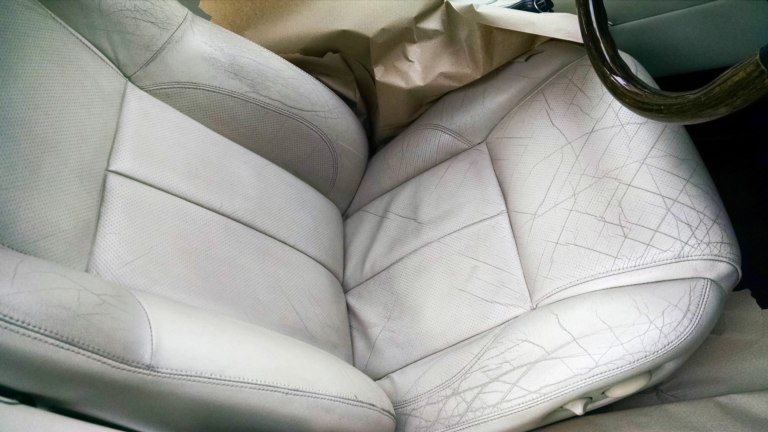
Most leather damage isn't from driving
People assume leather wears out just from being sat on. Mostly it doesn't. It wears out from specific, avoidable things that happen to be sitting on the seat at the time, and once you know what they are, most of it's easy to prevent.
What actually causes the damage
The rivets on a pair of jeans, a jacket zip, or a sharp buckle on a handbag will scuff leather every time they drag across it getting in or out. Dog claws do the same, and so do children's shoe buckles on rear seats when they climb in knees-first. None of it looks dramatic in the moment. It just adds up.
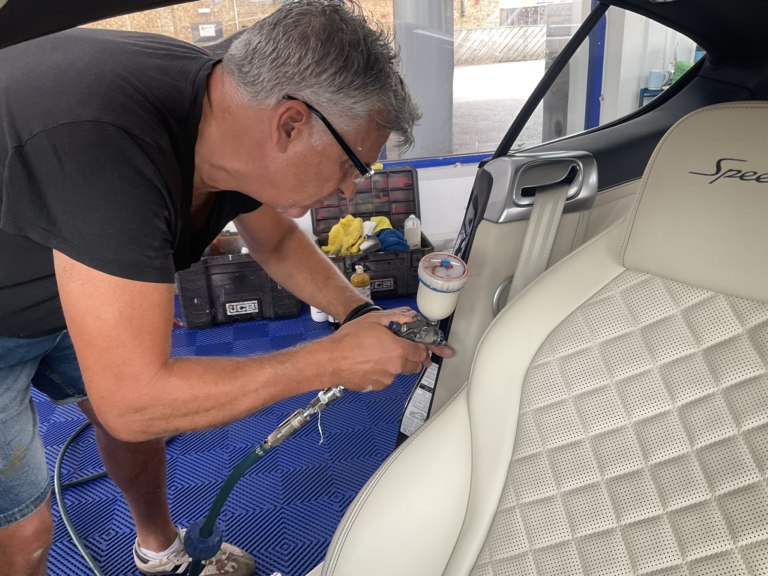
A few causes are easy to miss entirely. A flat-pack box from the shelving aisle, rested on a back seat because the boot was full, presses and marks the leather under its own weight. Cigar and cigarette smoke stains older leather over time, not just the ashtray area. Rear parcel shelves and seat tops in classic cars fade and go brittle from years of UV, long before anyone notices. And if you own a convertible, water getting into the seats with the roof down does more damage than most people expect.
There's also the mechanical stuff nobody thinks about. The padding under the leather shrinks over years, which is why older seats develop wrinkles that have nothing to do with the leather itself. And on tight, low sports cars especially, the door-side edge of the driver's bolster wears from being slid across on every single entry and exit, whether you notice it happening or not.
It's also an air quality question
Leather is an organic material. Left neglected, it can harbour mould and germs the same way any other organic surface can, and a car that's been sitting with dust and dirt worked into the seats isn't doing your air quality any favours either. Keeping the leather itself clean and conditioned is part of keeping the cabin genuinely clean, not just cosmetically tidy.
Conditioning is cheaper than waiting
Once leather starts to dry out and crack, it deteriorates fast, and past a certain point it's a repair job rather than a maintenance one. Regular conditioning with proper feeds, creams and protective coatings keeps the leather flexible and stops it reaching that point in the first place. It's genuinely one of the cheaper things you can do for a car's interior, precisely because the alternative is a repair.
If it's already cracked, torn or badly discoloured, that's a different job. Our leather and carpet repair guide covers what we actually do once damage has already happened, or see a full leather seat restoration example if the leather needs more extensive work.
Getting it looked after properly
We use hard-wearing, flexible products built for the job, the same materials we use when we're repairing and Connollising leather rather than just conditioning it, so there's no mismatch in feel or finish between maintained and repaired areas. Whether your seats just need a proper condition or have started to show real wear, get in touch and we'll tell you honestly which one it is.

Danny Argent, writer and training officer at New Again.
Over 24 years in the industry, 250+ articles, featured in publications such as Fleet News and Fast Car.
Related Blogs
Here are some more of our latest #leather-repair blogs
Leather Car Seat Restoration (Audiogram)
Dec
09
2020
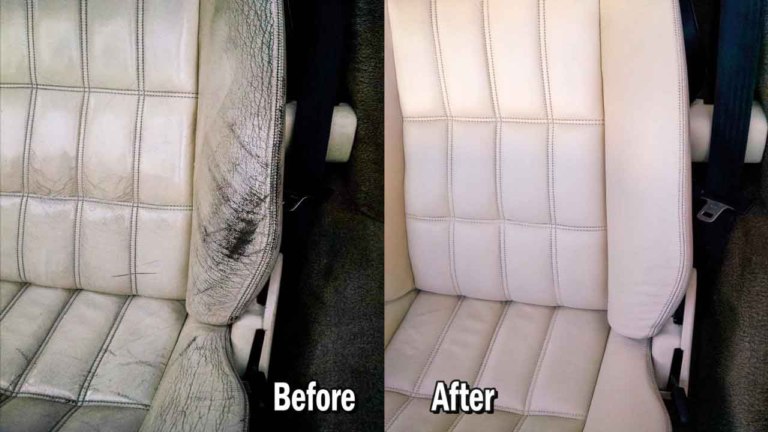
Scuffed or worn leather car seats can often be trimmed and connollised back to life. Here's how the New Again team approach leather restoration.
Read ArticleLeather Seat and Carpet Damage: What We Actually Fix Before a Lease Return
Dec
08
2020
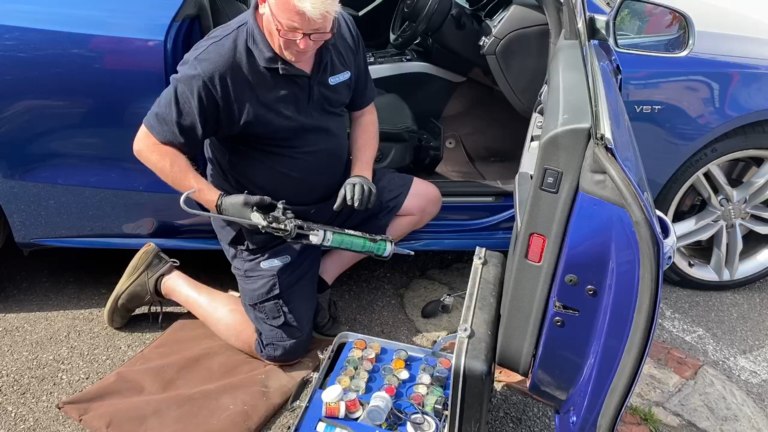
A scuffed bolster, a sliced seat, a hole in the carpet. Here's how we actually tell what each one needs, and why it matters most before a lease car goes back.
Read Article
Share this blog