

Dec
09
2020
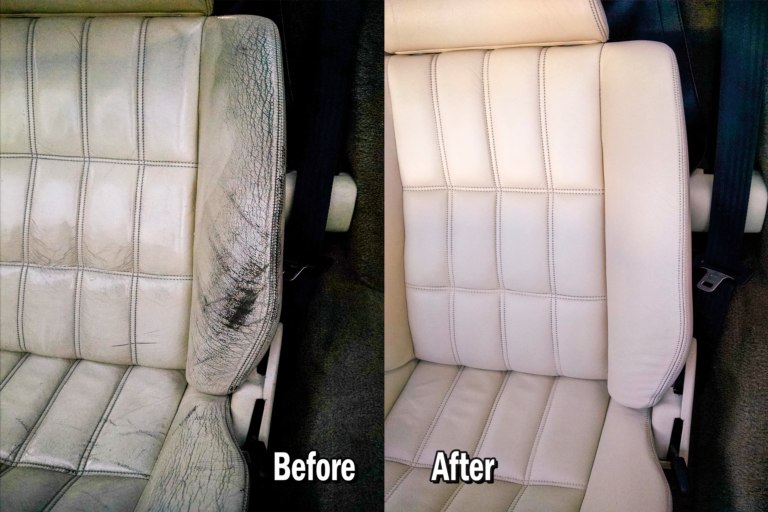
Scuffed or worn leather car seats can often be trimmed and connollised back to life. Here's how the New Again team approach leather restoration.
In this article, we'll explain trimming and connollising and how your leather car seats can be repaired.
We often get phone calls asking us if we do leather car seat restoration. For us, this is a rather open-ended question because damage to leather car seats could be anything from a tiny nick to leather which is completely rotted away.
But generally the answer is "Yes we can repair and restore leather."
We see the full range of damage to leather. Often this is just a scratch or a scuff which requires a fairly minor repair.
This minor damage is usually caused by some sharp object, and it's worth noting how it occurs so you can prevent it happening in the future. It's often caused by those copper rivets or other decoration that you find on jeans, or sometimes zippers on the sleeves of leather jackets. Some damaged is caused by sharp edges on handbags, so you could always blame your wife and insist you get a new watch as compensation for the emotional distress.
We advise against working with children and animals, but if you really must, dogs have sharp claws, and small children will often enter a car knees-first then slide along the rear seat dragging their shoes over it. Thus, buckles and eyelets cause marks and ladders to rear seats on mum's 4x4. And if McDonald's give your children a colouring set, don't let them have it until they get home because pen can be murder to remove from leather. But this probably isn't as bad as the damaged that can be caused by attempts to remove it with a Brillo Pad.
Impulse purchases and B&Q or Ikea can also be dangerous. We have had many customers who have bought shelving or a picture frame and because the boot was full of shopping, they decided to rest it on the back seat where it causes a mark that requires minor repair.
There are other kinds of damage and wear, such as some of those vintage Rolls-Royce have seen a lot of cigars and can become stained, and on cars which are 40-60 years old, sun coming through the rear window can cause the top of the back seat to become faded. There's also been cases where somebody forgot to put the roof down on a convertible car and water has caused damage, and occasionally, on some models, the padding just shrinks and the seats sink causing the soft leather to wrinkle up like a prune. All of these problems can be refurbished.
The most common, however, is just plain old wear and tear. The vast majority of the time this occurs on the door-side edges of the driver's seat, although it may also need to be addressed on door panels, leather steering wheels and gear knobs.
This kind of wear can occur on practically any car depending on how much use the car gets, but is particularly common on sports cars which are low to the ground and rather tight to get into. There's no graceful way to get into many of them, and you often have to drop your bottom down and slide yourself into place and every time you do you are sliding over the leather seat base and upright, causing wear.
Methods of Leather Interior Repair
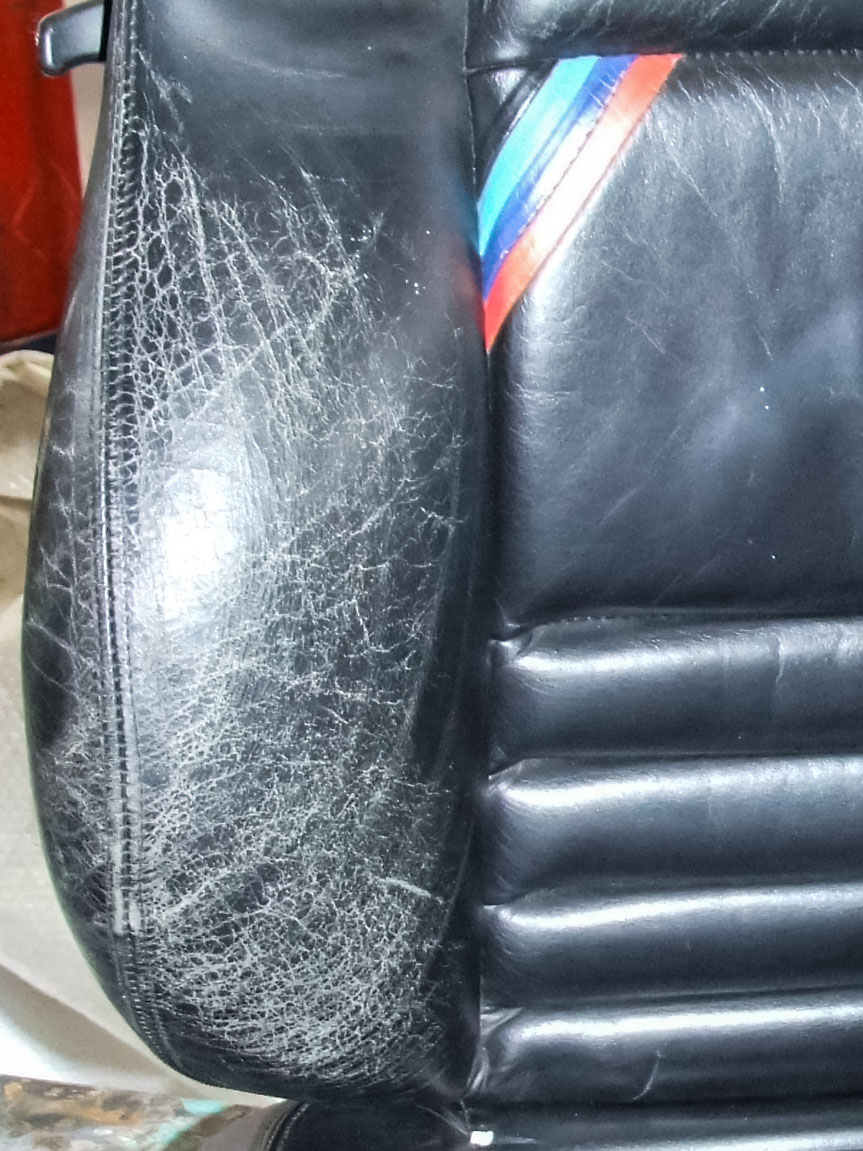
Repairing leather is much like anything else to a point, it can be cleaned, filled, sanded down, covered in a primer and then repainted and varnished.
Of course, while it is the same in principle as redecorating your bathroom, there are some major differences. The materials used are very special. The paints are generally called 'pigments' and are very opaque. Along with the fillers and varnish, they have to be flexible, hard wearing and because your car doesn't come with paint codes for the leather, they need to be colour matched by eye.
But as long as there isn't too much damage to the leather or the stitching, this kind of repair is fairly straightforward. The only question is, how much of the seat to Connollise? When you recolour a seat, it really is like new, so it's usually best to do the whole seat or both front seats, while the rear seat is usually free of much wear and can just be cleaned.
As you may have seen in our previous article, if the car is fairly new, and it's just a nick or scratch, we can sometimes do just the affected area.
If need be, we can also do door panels, dashboards, gear knobs and steering wheels, but it might depend on just how worn they are. For any of these items, if the stitching has worn away, there are deep cracks or holes worn through, then the car will either need to go to the trimmer to have new leather panels sewn in, or in the case of gear knobs or steering wheels, replacement parts sourced. Leather steering wheels are a whole other can of worms... a rare skill which is hard to find.
If you are wondering if your leather can be recoloured, Connollised, repaired or replaced, the best thing to do is simply to ask! You can send us a photo by email, WhatsApp, Facebook or just give us a call and tell us you want to drop by and have us have a look. We look forward to hearing from you.

Danny Argent -- writer and training officer at New Again.
Over 24 years in the industry, 250+ articles, featured in publications such as Fleet News and Fast Car.
Related Blogs
Here are some more of our latest #leather-repair blogs
Leather Seat and Carpet Damage: What We Actually Fix Before a Lease Return
Dec
08
2020
A scuffed bolster, a sliced seat, a hole in the carpet. Here's how we actually tell what each one needs, and why it matters most before a lease car goes back.
Read ArticleWhat Actually Wears Out Car Leather (And How to Stop It)
Aug
30
2019
Rivets, dog claws, a flat-pack box on the back seat. Most leather damage comes from things you wouldn't think to avoid. Here's what actually causes it, and how to keep it looking new.
Read Article
Share this blog