Do ceramic coating work on classic cars?

Quick answer: Yes, ceramic coatings work on classic cars, but the preparation is more involved than for a modern car. Original or early-restoration paint needs assessing before anything else goes near it: thickness, condition, and whether it is single-stage or has a clear coat. Get that right and ceramic protection is one of the best things you can do for a car you intend to keep.
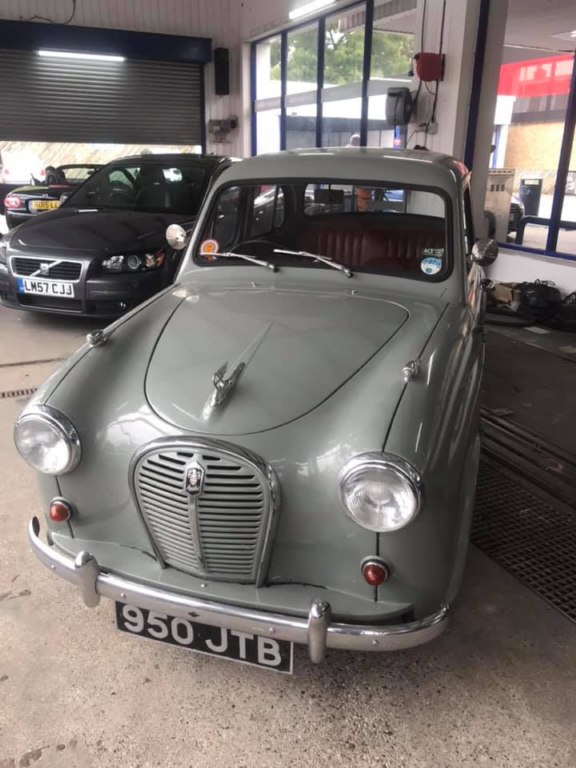
A classic is usually a keeper; often a project someone has spent years and real money on. That makes it exactly the right candidate for a ceramic coating: the car is going nowhere, the owner cares about the finish, and the investment pays back over a long ownership.
The complication is that classic paintwork is not the same as modern paintwork, and treating it the same way is where things go wrong. Understanding the differences is the first job.
Single-stage paint vs. clear coat: why it matters
Modern cars built from roughly the mid-1980s onward have a clear coat: a separate, colourless topcoat over the colour base coat. The ceramic coating bonds to that clear coat, which acts as a sacrificial layer the coating can adhere to and protect.
Cars built before that (the vast majority of what most people would class as a classic) have what is called single-stage paint. The colour and the gloss are in the same layer: one coat of paint, no clear on top. Ceramic coatings still adhere to single-stage paint, but the surface dynamics are different. Single-stage paint tends to be more porous, which means it can absorb certain solvents and chemicals more readily. Some professional coating products are formulated specifically for clear-coat systems and can react poorly with older single-stage paints if applied without consideration. For every other paint type the short answer is yes, as can a ceramic coating be applied to any type of car paint explains.
The practical consequence: product selection matters more on a classic than it does on a modern car, and whichever coating goes on needs to have been tested or used on equivalent paint types before.
Paint thickness and the polishing question
Before any coating, the paint condition has to be assessed. On a modern car we use a paint depth gauge as a matter of course: it tells us whether the car has had accident repairs, and how much polishing the clear coat can take before it starts running thin. The same tool is essential on a classic, but the reading is even more critical.
Original single-stage paint can be surprisingly thick; factory paint application in the 1960s and 1970s was not always consistent, and older cars sometimes have considerable paint depth to work with. Equally, a car that has been polished regularly over 40 or 50 years might have much less material left than it looks. Cutting into paint that is already marginal is not recoverable: the only option at that point is a respray, which defeats the point of preserving original paint.
On an original-paint classic the approach is different from a modern car. The paint may look tired from a distance yet be structurally intact, and there is no spare clear coat to spend. We work a car like that by hand and with very light machine action on the sound sections only, using a finishing compound rather than a cut, and leave anything that looks thin or previously worked alone beyond a hand polish. The result is not a show-car finish, but the paint comes up clean and uniform, the coating goes on without issue, and the car keeps every bit of its original material.
Decontamination on a classic car
Decontamination on a modern car typically involves a pH-neutral wash, an iron fallout remover (the purple spray you see in videos), and a tar remover. All of those products need more care on classic paint.
Iron removers work by reacting with embedded iron particles, converting them to a water-soluble compound. The active agent in most of them is mildly acidic. On modern clear coat that is not a problem. On old single-stage paint, particularly if the lacquer is already crazed or checking in places, acid-based products can lift the paint or cause it to blush. We use a pH-neutral alternative or apply iron remover selectively to affected areas and rinse quickly, rather than leaving it to dwell across the whole car.
Tar and adhesive removers are solvent-based, and solvents dissolve single-stage paint if left in contact long enough. Spot treatment, short dwell time, and immediate rinse is the approach, not blanket application and walking away for five minutes.
Restored vs. original paint
Most of the classics that come to us have been repainted at some point. A full restoration respray on a modern two-stage paint system is straightforward to assess and coat: it behaves much like a new car, albeit sometimes with more surface imperfections from whoever did the spray work. A partial restoration, where some panels are original and some are new, is trickier: you may be dealing with two different paint types on the same car, potentially with different thicknesses and different responses to the same products.
Original unrestored paint (sometimes called a survivor car in the classic car world) needs the most careful approach of all. In certain cases the originality of the paint is a significant part of the car's value; a numbers-matching muscle car with documented original paint can be worth considerably more than the same car resprayed, even in better condition. Coaching customers through that decision is part of the job: we can improve the appearance of original paint, protect it, and slow further oxidation, but we cannot restore it to new without losing the originality. Where to draw that line is the owner's call, not ours.
Which ceramic coating for a classic
Professional ceramic coatings vary considerably in their chemistry and in their requirements for the surface they are applied to. Some high-solids coatings designed for modern clear coat are perfectly safe on single-stage paint and bond well; others are more aggressive and should not go near anything that does not have a proper factory clear coat.
We do not use the same product on every job. The coating we select depends on the paint type, the condition, how the car will be used, and how long the owner wants the protection to last. For a classic that is garaged, rarely driven, and brought out for shows, a coating with good UV resistance and hydrophobic properties is the priority: the car is not going to accumulate heavy road contamination, but UV and damp storage are its enemies. For a classic that gets used regularly, the priorities shift: contamination resistance and ease of maintenance washing become more important.
On single-stage paint specifically, Mike generally favours a coating that is formulated without the high-solvent carrier that some products use to aid levelling on clear coat; those solvents aid bonding on modern paint systems but are unnecessary and potentially counterproductive on single-stage paint where the chemistry already offers good adhesion.
Storage, use patterns, and maintenance
Classic cars are driven differently from modern cars, and that affects what the paint has to deal with. A car that comes out six times a year for shows and Sunday drives accumulates very little road contamination: no motorway soot, minimal brake dust, limited salt exposure. What it does accumulate is dust, occasional bird lime, and the effects of sitting in storage.
Bird lime is one of the more corrosive things that can land on paint, and a ceramic coating's chemical resistance is useful here: the coating takes the attack rather than the paint beneath it. Dust and storage grime rinse off a coated surface more readily than from bare or waxed paint, which matters if the car is only being washed a handful of times a year.
Long storage periods can also lead to water spots from condensation in a non-heated garage. These are easier to remove from a coated surface because the minerals in the water cannot bond directly to the paint; they sit on the coating instead. Left long enough they can still etch into the coating, but the threshold is higher than on unprotected paint.
What a realistic outcome looks like
Coating a classic is not the same job as coating a brand new Porsche. The goal is usually not a show-car machine-polished finish: it is preserving what is there, protecting it from further deterioration, and making it easier to keep clean without aggressive washing that risks introducing swirls into old, soft paint.
A well-executed job on a classic car takes longer than the same size modern car because of the extra assessment, the more careful product choices, and the need to work more conservatively on polishing. The result is usually a car that looks considerably better than it did when it arrived, that is meaningfully protected from UV and environmental contamination, and that can be maintained with careful hand washing rather than regular machine correction.
If you have a classic you want assessed, the starting point is always a proper inspection: paint depth readings, condition check, and a conversation about what you want the finish to look like and how the car is going to be used. For the broader case for ceramic protection, see What are the benefits of a ceramic coating?, and for the question of solid-colour paintwork specifically, the glossary entry explains how that paint type differs from metallic finishes in its behaviour and protection needs.