Door Membrane

Quick answer: A door membrane is the plastic or foam sheet sealed behind a door card that acts as a water barrier, stopping rain that gets past the window seals from soaking the door trims and carpets inside the car. On a convertible, the waterproof layer under the fabric roof is a different part: see hood membrane.
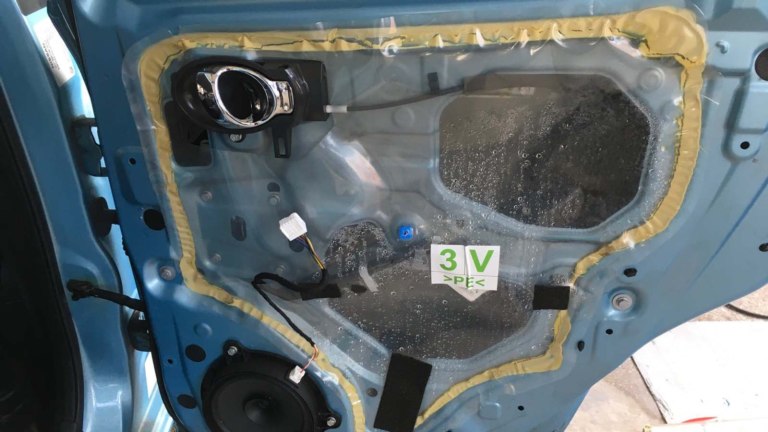
A door membrane might also be called a 'moisture barrier', 'water barrier' or 'splash guard', but we call them membranes because until recently almost all of them were little more than a polythene sheet attached to the inside of the door using a sticky adhesive.
As it is older cars that tend to leak, we can expect that cars with this style of barrier will be in use for many years to come.
The problem with this style of door membrane is that over time the polythene can shrink, which then pulls at the adhesive laterally, causing it to pull away completely, allowing water to pass. Polythene membranes can also crack and split with age.
We have found they are often damaged during repairs and modification of the vehicle. Mechanics and technicians accessing the sound system, electric windows or locking mechanism may just cut holes in them to gain access, not realizing they serve a vital purpose of preventing water entering the car.
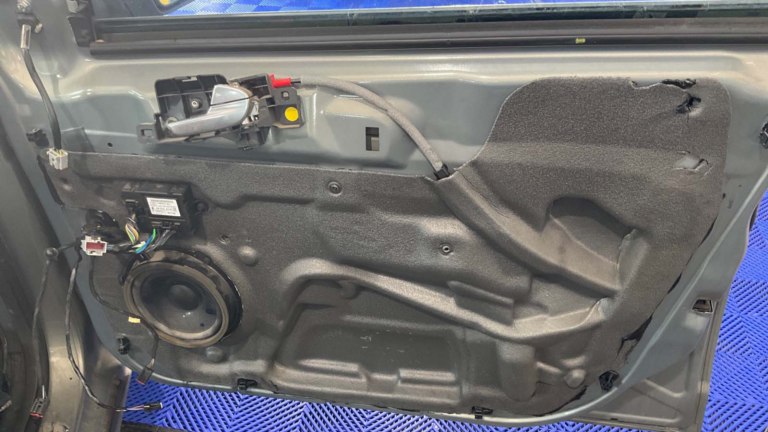
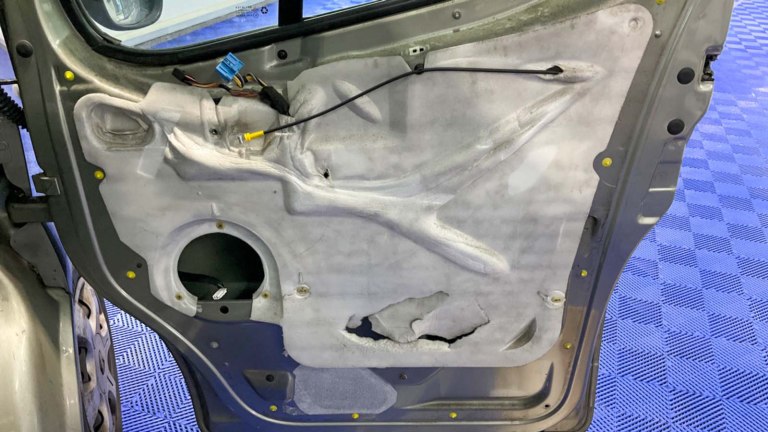
More recently, moulded foam membranes have become more common. These are still glued in place with a sealant which can perish, however, the membrane its self is less likely to shrink or split.
Newer cars more often use a pressed metal panel in the same place, and that moves the fault. Metal does not shrink, split or tear; what perishes is the seal or gasket holding it to the door, so the part to inspect is the joint rather than the sheet. The name has outlived the material: on plenty of modern doors there is no membrane there at all.
An advantage of the polythene sheet type is that if they did need to be replaced, it was possible for technicians to make their own. Manufacturers might charge up to £50 pounds for what amounted to a sheet of plastic which only cost a few pence for us to make, thereby saving customers significant money.
The problem with the moulded type is that they are practically impossible to remove from the adhesive without destroying them, and they can be costly to replace. However, it is still possible to make many of them from foam sheeting by using the broken one as a template. Because the foam is soft, it will often mould its self around fittings and features of the inner door.
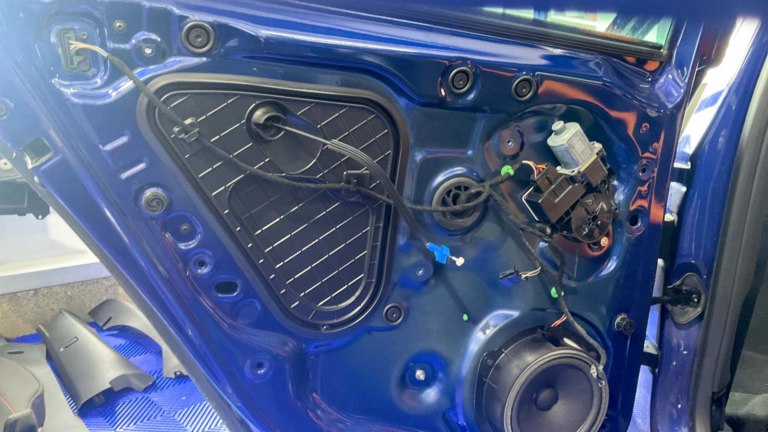
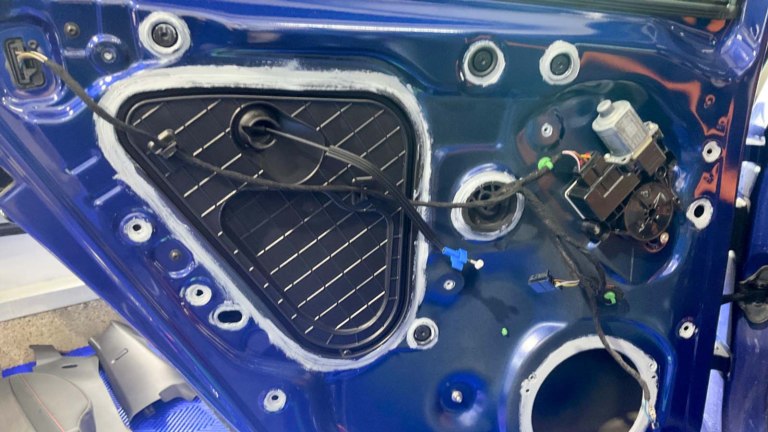
Metal membranes have been used by Volkswagen for a long time and are becoming more common, along with hard plastic types.
Although these don't perish or shrink, and they are often screwed in place, any sealant or gaskets designed to waterproof them will still perish.
It is a simple enough job to seal them back in place using a quality heatproof sealant, although this style comes with its own problems as various motors and electrical units are attached to them.
The main cause for any part of a door membrane to fail is heat. Your car can get very hot when left in the sun, which will cook all the solvents and plasticizers out of the adhesive. For this reason, you may find all of your door membranes start to leak at the same time. Or it may be on just the side of the car which is normally parked in the sun. Either way, if one is leaking, we would recommend you have all fixed, as it's likely the others will leak soon. This could mean your car getting wet all over again. As drying the car can be a large part of the cost in restoring a rain damaged vehicle, it doesn't make sense to take the risk.
What it means
A door membrane is the hidden water barrier behind your door trim. From the factory, most doors are designed so that some rainwater passes the outer window seals and runs down inside the door. The membrane - usually a shaped plastic sheet or foam liner - is bonded to the inner metal skin so that this water cannot cross into the car's interior. Instead, it is guided down to the bottom of the door and out through drain holes, keeping the door card, speakers and carpets dry.
Why it matters
The door membrane is what keeps water in the door rather than in the car. Doors are built to let rain in and drain it back out again, and the membrane is the barrier separating that wet cavity from the cabin. Missing, torn or badly sealed, it lets water running down inside the door escape into the interior instead, where it soaks door cards, footwell carpets and underlay.
Keeping water on the correct side of that barrier matters for diagnosis too. A sound membrane means water goes where the manufacturer intended, into the cavity and out through the drains, which is what makes a wet footwell a meaningful symptom rather than a routine one. Many doors also house speakers, looms and control modules, so a failed membrane drips onto precisely the parts that distort, corrode and fault.
Most of these failures are made rather than born. Whenever a door card comes off for a window regulator, a lock or a speaker, the membrane gets cut or peeled back, and if it is not refitted and resealed properly the leak follows not long after.
Where the door membrane appears in reports
Any leak report that reaches the door will mention it, alongside bodyshop notes and trim estimates. Typical comments include membrane split behind door card, door membrane missing, water passing failed membrane into footwell or refit and reseal door membrane after repair. It is a frequent suspect when front or rear footwells are wet and door drains are otherwise clear.
Our own case files show the four ways it goes. On a Ford Fiesta the factory seal had simply perished with age. On a Renault Clio somebody had punched through it to reach the door and never made it good, which happens often enough that it is worth saying plainly: the membrane is a water barrier, not a factory dust sheet. On a Vauxhall Astra the drain holes in the bottom of the door were blocked, so the door filled and pushed water past a membrane that was also starting to come away. And a SEAT Leon is the counter-example: the membranes tested as leaking but were not the main source of the water, and we replaced them anyway, because that is the job they are there to do.
Context
The door membrane works alongside window rubbers, outer weatherstrips and door drains as part of the car's water management system. On many cars, especially those with frameless glass or complex door shapes, some water entering the door is normal - the key is that it is controlled and drained, not allowed into the cabin. When investigating leaks, a specialist will often remove the door card, inspect the membrane for gaps around cables, speakers and clips, and water test the door to see whether the membrane is doing its job. Once a membrane has been cut or disturbed, it should be carefully resealed or replaced using appropriate materials rather than tape-and-hope fixes. When the membrane fails and the door's drain holes are also blocked, water pools inside the door cavity: you'll hear it as a sloshing or gurgling sound when turning after rain.
Common mistakes
- Removing a door card for repair work and ripping or discarding the membrane, then wondering why the footwell is now wet.
- Trying to seal a split membrane with random tape or silicone blobs instead of properly replacing or re-bonding it.
- Assuming window seals must be "gone" whenever water is seen inside a door, forgetting that the membrane is the main barrier to the cabin.
- Checking carpets and outer rubbers for leaks but never looking behind the door card, missing obvious holes or gaps in the membrane.
For a wider guide to all the main places water gets into a car (not just door membranes but scuttle drains, rear vents, sunroof pipes and windscreen seals) see what are the most common places water gets into a car?