- Home
- Knowledge Base
- Glossary
- Wash Marks
Wash Marks

Quick answer: Wash marks are the fine, light scratches put into your car's clearcoat by washing and drying - the "swirl" lines you see in sunlight that come from dirty sponges, brushes or poor wash technique.
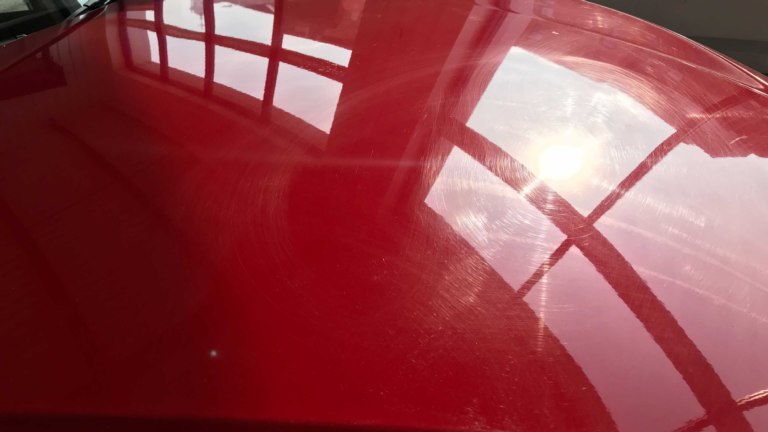
Wash marks are fine scratches which are caused as a result of washing. On close examination of the surface of the paintwork, there are hundreds of thousands of fine scratches in all direction which catch the light when seen from any angle, giving the paintwork a slightly frosted effect. There are multiple ways during the washing process where scratches can be introduced to your car and although most of these can be mitigated or removed all together, wash marks are inevitable.
You wash your car because it has dirt and grit on it, and the only way to remove the dirt and grit is with some agitation. However, agitation, even when done with the utmost care, will move grit over the surface of your car, causing scratches.
What it means
Wash marks are the fine scratches that build up in your car's clearcoat from everyday washing and drying. They are usually caused by gritty sponges, stiff brushes, dirty wash mitts or wiping dust off a dry car. Under petrol station lights or bright sun they show as circles or spider-web patterns around the light source, even though the car may have just been washed and looks clean from a distance.
Why it matters
Every wash done wrong leaves a little more behind. One session is invisible; a couple of years of the same sponge and the same bucket build a haze that stops even a fairly new car looking deep or glossy, and because it creeps up gradually most owners only notice once it is bad.
Fixing it costs more than avoiding it. Wash marks are cut into the clearcoat rather than sitting on top as dirt, so shifting them means machine polishing or full correction, while prevention is a bucket, a mitt and a drying routine. The distance between those two is the whole argument for getting the wash right in the first instance.
Where wash marks show first
Look at detailing inspections, paint correction quotes and lease return appraisals and the term is everywhere: light wash marring, swirl marks from washing, vehicle covered in wash scratches. Bonnet, roof, boot lid and door tops show them first, because they are the areas most frequently wiped and washed.
Context
Wash marks sit in the same family as swirl marks, micro-marring and holograms. They are usually created by hand washing and drying, rather than by machine polishing. Detailers often demonstrate the issue by shining a strong inspection lamp at the paint to show the pattern of marks. Correction typically involves one or more stages of machine polishing, followed by protection such as wax, sealant or ceramic coating and advice on safer wash methods to slow future damage.
Common mistakes
- Using the same sponge or brush for years, letting it fill with grit that acts like sandpaper on the paint.
- Wiping dust or pollen off a dry car with a dry cloth, which grinds dirt into the clearcoat and creates fresh wash marks.
- Taking a newly corrected car back through harsh automatic car washes that quickly reintroduce wash marring.
- Expecting a hand polish or "colour restorer" to fix heavy wash marks on its own, when proper machine polishing is really required.