Gary explains why mould in a car is a genuine health risk, how it spreads, how to find the hidden water causing it, and what to do about it. Includes the steep-slope trick for finding water you cannot see, the air conditioning in winter tip, and why parking the car and leaving it makes things worse.
You have found mould in your car and you are not sure how serious it is. Gary's answer: more serious than most people think, and easier to deal with than most people fear, as long as you approach it the right way.
How Mould Gets Into You
Most people see mould and think they will give it a wipe. The problem is how mould moves. Think about sitting in a room and bashing a cushion: you can see the particles drifting through a shaft of sunlight. That is how mould spreads. Spores become airborne and are breathed in. You cannot see them, and you do not always connect the symptoms to the source. Gary has dealt with people who had been driving a car with mould in it for months and had persistent flu-like symptoms without realising why.
If there is visible mould, or even just a persistent musty smell, wear a mask and gloves before you start cleaning. This is not excessive: it is the same precaution you would take with any other airborne hazard.
The Right Product
You need an anti-mould product without bleach. The bleach-based ones designed for outdoor walls and building work will damage seat belts, fabric and plastics. Read the label carefully: some products use alternative names for bleach. What you want is the type sold for treating bedroom window frames or bathroom tiles: anti-microbial, bleach-free, safe for interior surfaces.
Spray it on, wipe with a wrung-out microfibre cloth from a hot bucket of water, and clean everywhere the mould has appeared: including pulling the seatbelts all the way out if they are affected. Then dry the treated area. If it is a boot carpet, take it out and leave it in the garage to dry properly.
Why You Have Mould, and How to Find the Water
Occasionally mould comes from condensation alone: a car full of wet passengers, parked up for a week or two with no ventilation. But in Gary's experience that is unusual. If you have mould, there is almost always water getting into the car somewhere.
The main places to check: under all four footwell carpets (front and back) and in the boot under the spare wheel. The carpet in a car is three or four inches thick with trunking and wiring underneath: water fills from the bottom upwards and the surface may feel only slightly damp while there is a significant amount below. Push your hand under the edge of the carpet and feel, rather than just pressing on top.
One useful trick: park the car on a steep slope for an hour and then check the rear footwells. Water that was spread flat will have run to one end and become easier to find. Also check the side compartments in the boot with a torch.
Do Not Park It and Leave It
If you find mould and cannot deal with it immediately, do not just park the car and leave it. Mould needs still air, darkness, something organic and a damp atmosphere. A parked car with water in it provides all four conditions perfectly. The mould will multiply. Gary's advice: clean what you can find now, keep air moving through the car, and deal with the water source as soon as possible.
Ventilation and Prevention
Run the air conditioning in winter: not to cool the car, but to dry the air. Air conditioning dehumidifies as it runs, which is exactly what a damp car needs. It is also good for the AC system itself to run occasionally in winter. Put the heat on at the same time if you need to; the two work together.
Make sure the rear vents are not blocked by bags or coats on the back seat: air needs to move all the way through the car to do any good. And check the pollen filter. A blocked pollen filter significantly reduces how much air the ventilation system can push through. They are inexpensive and easy to replace; if the car is persistently damp and steaming up, a new pollen filter is one of the first things to try.
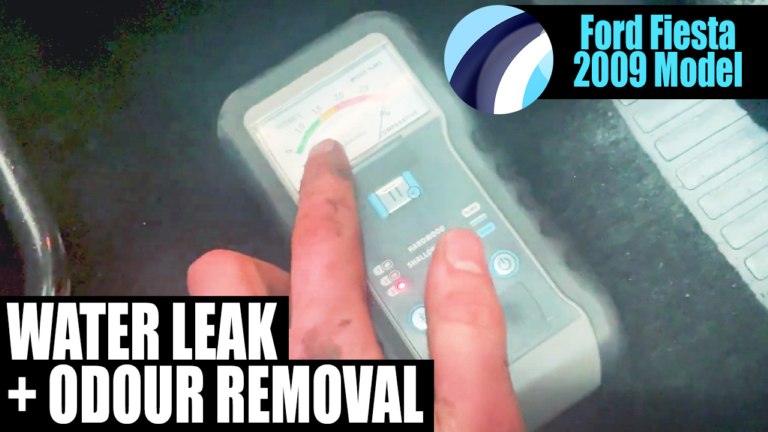
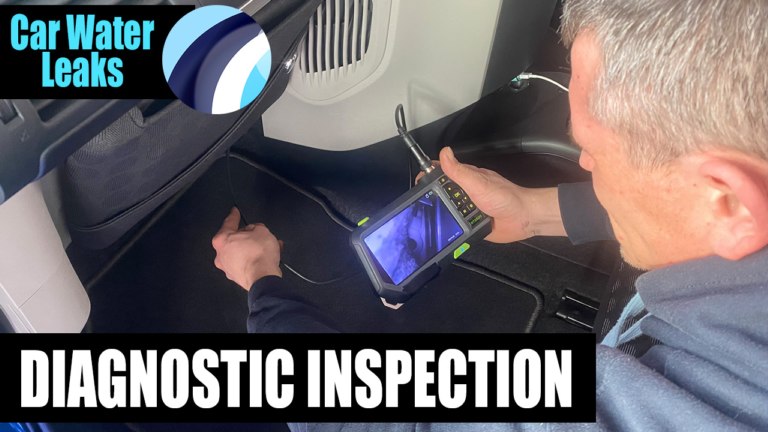
If you have found water and need it properly dried and decontaminated, see our carpet drying service and water leak diagnosis.



Share this video