Full water leak case study: 28-point check, blocked sunroof drain pipes, door membrane removal and resealing, antimicrobial fogging, suction extraction and overnight hot-air blower drying. Two cars shown; rain-arch test before collection.
Gary walks through a complete water leak service on a car that came in with wet carpets and no obvious source. The owner had no idea where the water was coming from; this video is the walkthrough of how we find it, fix it and dry it out.
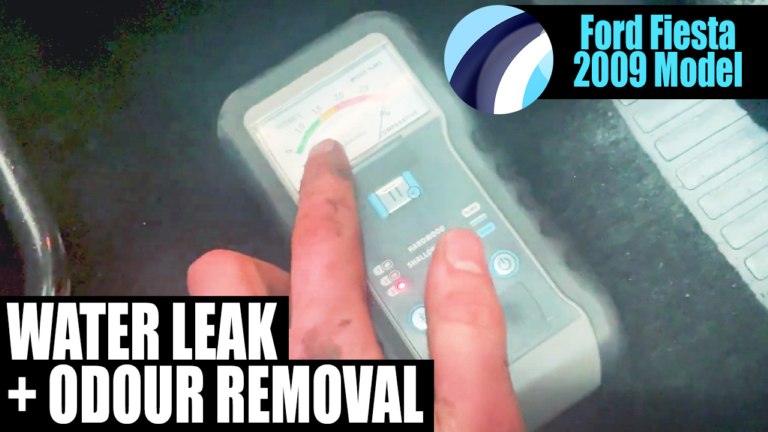
How much water is actually in there
Most people who find wet carpet think they are dealing with a small amount of moisture. They are not. Water fills the foam underneath the carpet from the bottom up; by the time you notice damp on the surface there can already be two to four gallons sitting below. Gary demonstrates this by lifting the carpet on two cars: one with a blocked sunroof drain, one with a leaking windscreen. On the BMW shown for comparison, Gary estimated five gallons in the foam. The damp smell and steamed-up windows that owners report are the result of all that water sitting there, sometimes for months.
What the 28-point check found on this car
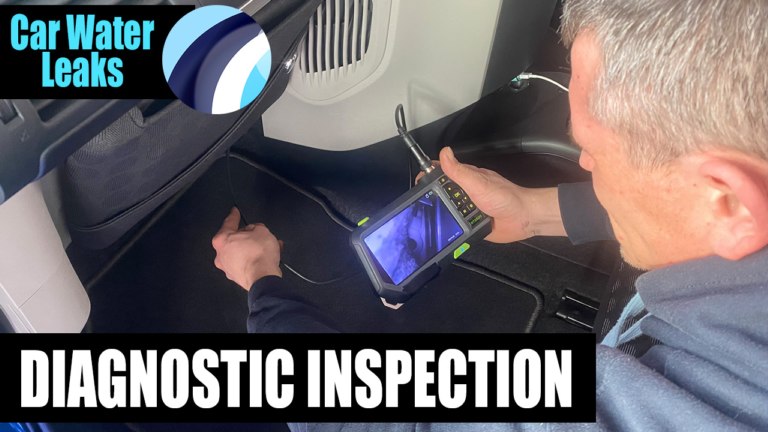
Water was coming in on the footwell with no visible drips. The 28-point check identified two separate sources.
The first was the sunroof cassette drain. Most people do not realise the sunroof panel slides into a plastic cassette behind the headlining; the cassette has four drain points, one at each corner, each running down a rubber pipe inside the A-pillar and out through the wheel arch. Debris had built up in the recess around the sunroof over years of not being cleaned. The drain had blocked further down inside the arch box section; unblocking it and flushing with drain cleaner cleared it completely.
The second source was the door membranes. On this car, two or three doors were letting water past. The membrane is a sheet inside each door, between the outer metalwork and the interior trim, designed to stop water and condensation reaching the cabin. Over time, the adhesive lifts at the corners; a small split was found on one door where water was tracking down the glass on the inside, running along the ledge and dripping out near the speaker. Gary removed the membrane, resealed it using a template approach where the original could be saved, and addressed the split.
Antimicrobial treatment
The customer had found mould and cleaned the visible surface himself with an antimicrobial product before driving the car in. Gary notes that surface cleaning gets only what you can see; the fogging machine sprays antimicrobial product as a fine mist throughout the interior, reaching under seats and into areas that cannot be reached by hand. The battery was disconnected before any water work or fogging. An electronic unit found near standing water was treated with contact cleaner and checked before reassembly.
Extraction and drying
Suction extraction pulls water from the surface and the top layer of foam; Gary ran the machine for over an hour on one side to pull out as much as possible before blowing. A home vacuum can extract some water from the surface but will not reach the foam below; Gary demonstrates this directly.
The drying stage uses an 8-inch pipe connected to a three-phase hot-air blower; Gary describes it as equivalent to three powerful fan heaters but at higher velocity, which is what penetrates foam. It runs overnight with the pipe directed under the bulkhead and the back of the carpet lifted to allow air circulation. On this car, the foam was fully dry by morning. A rain-arch test was carried out before the car was returned to the customer.
See our car water leak diagnosis page for details on the 28-point check, and water leak repair service for the full fix, extraction and drying.




Share this video