A Mini Cooper S convertible brought out of lockdown storage: dirty green roof, jet wash marks in the fabric, compressed rubbers letting water past the boot panel and potentially into the battery area. Two-part video: the assessment and the result. Cost: £332 for the roof clean and coat, £120 for rubbers and drain flush.
A Mini Cooper S brought out after being in storage through lockdown. The roof is dirty, green, and somebody at some point went over it with a jet washer: you can see the zigzag marks where the nozzle went too close. Gary's first concern is whether those marks are in the dirt or in the fabric. On closer inspection: mostly the dirt, with a bit of wear at the fold lines. It came up well.
The Real Leak Route
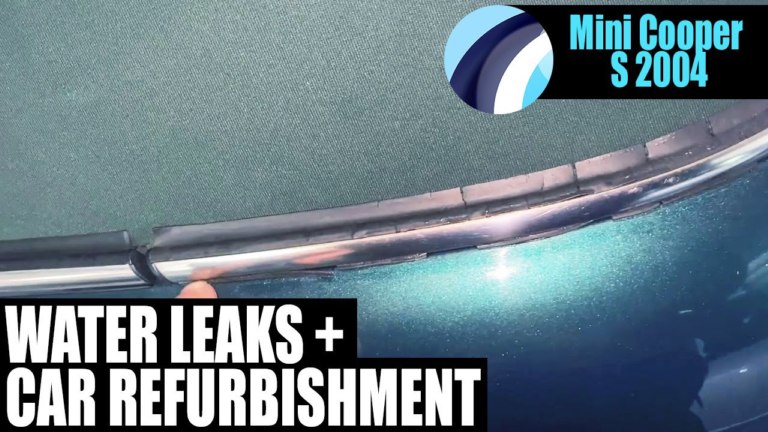
The roof itself is not usually where convertibles let water in. On this Mini, the boot rubber was so compressed and dirty that water was weeping over the top of it, running behind the boot panel and potentially reaching the battery compartment underneath. Gary shows the Mini-specific clip mechanism that lifts the roof panel (most Mini owners do not know it exists) and the state of the rubber underneath it. The drain gutter channel was blocked solid with compacted grit and organic matter.
We cleaned all the rubbers, flushed the drain gutters front and back with drain cleaner, and applied a neoprene conditioning product to every seal on the car: boot, doors, roof. The boot carpet had got a little damp where the water was weeping in; we removed it and dried it. Caught in time.
The Roof
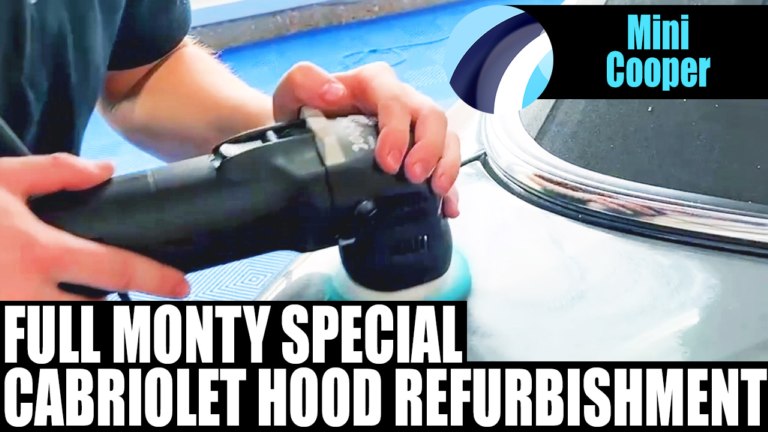
The jet wash marks were a concern going in. Some of them proved to be in the dirt, not the fabric: the jet washer had zigzagged the grime into a pattern rather than cutting through the material. There is still some wear at the fold lines where the grit had been grinding through, but the overall result was much better than expected. A two-year hydrophobic nano-coating went on after cleaning.
The total cost: £332 for the roof clean and coat, £120 for the rubber conditioning and drain flush. Gary's point on value: a replacement aftermarket roof runs £1,000-£2,000. The service history record of a professionally cleaned and coated roof also adds to the car's appeal when the owner eventually sells: buyers looking for a convertible want to know the roof has been looked after.
Mini-Specific Notes
Minis tend to weep water around the door seals as well as the boot area. We did all the door seals on this one as part of the same job. The water path in (over the compressed boot rubber, behind the panel, potentially to the battery) is one we see regularly on this model. Most owners do not realise the car has any water in it until the battery starts playing up or the boot carpet is visibly damp.
DIY Maintenance Between Professional Cleans
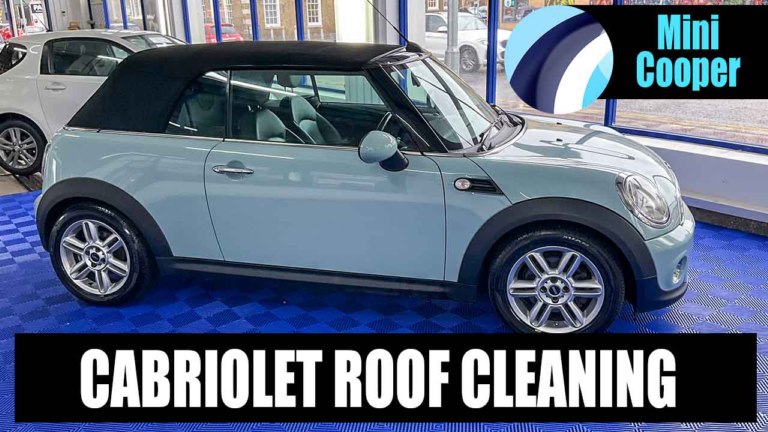
We recommend a professional clean and reproof every couple of years. In between, a convertible roof cleaning kit (Renovo, AutoGlym, Raggtop are all good; Renovo is the one we trust most as they specialise in hoods) will maintain the roof. Get a detergent formulated for organic matter removal and a weatherproof coating, plus a couple of scrubbing brushes. Wet the roof down with a hosepipe, apply the soap, brush firmly (take care around stitching), rinse, and repeat until the soap bubbles run clear. Keep pressure washers well away.
Once clean and re-waterproofed, water should bead and roll off immediately. Once dust lands, the beading effect reduces, but that does not mean the waterproofing has gone. Press your hand on the fabric: if it is still mostly dry after rain, the coat is holding. If the fabric is sopping wet, it is time for a reproof.
What Neoprene Does
The outer fabric is not the waterproof layer: it is there for appearance. Under it is a neoprene membrane (the same material as a wetsuit) that does the actual waterproofing. The fabric can get wet and that is fine. What matters is keeping the neoprene seals around the roof edges clean and supple: they are what keep the water out of the car, and they fail when they get compressed, dirty and dry.


Share this video