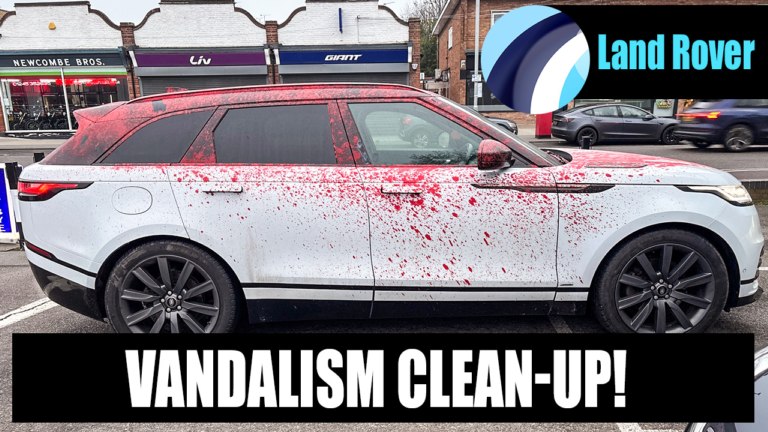
Neighbour painted their fence, building site nearby, industrial fallout; whatever landed on your car, the first rule is the same: don't rub it. Gary explains what each type of contamination needs and how to handle the insurance or building company side.
You have found your car covered in something: overspray from a neighbour painting their fence, concrete from a building site, industrial fallout from a nearby factory, or something you cannot even identify. Whatever it is, the first rule is the same: do not rub it.
It is a natural instinct. There is something on your car, you want it off. But rubbing concrete or grit across the paintwork drags the hard particles straight through the lacquer and creates scratches you then also have to deal with. Stop, watch this video, and call us before you do anything else.
What We Use on Each Type
Concrete and cement need to be dissolved, not scraped. We use an acid wash: spray it over the contaminated area, let it break down the alkali that binds the gritty particles together, then jet it off. Spray, jet, spray, jet, repeat until there is no grit left. Then if there are scratches from any rubbing already done, we buff those out.
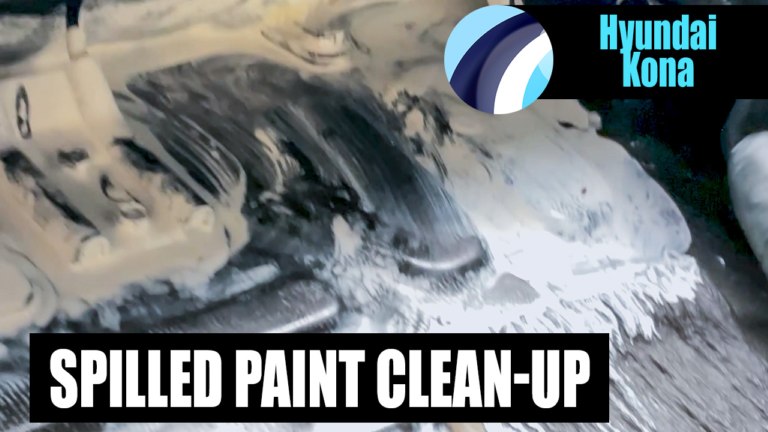
Paint overspray is different: a solvent safe for car paintwork dissolves it without the acid approach. Metal filings from industrial fallout need different specialist products again. The treatment depends on what is on the car, which is why calling us first and not experimenting at home is the right move.
One thing worth knowing about concrete: mortar (the stuff used for brickwork) usually comes off relatively easily with our products. The concrete used in commercial building, the high-strength mixes with additives for skyscrapers and structural work, is a different matter. We sometimes do not know exactly what is in it, but it can be significantly more resistant and take more passes to shift. That can affect the cost, which is relevant if you are deciding whether to involve insurance.
Insurance and the Building Company
If someone else is responsible (a builder, a decorator, a groundworks crew) contact them first before calling your insurance company. If they accept responsibility, they can engage us directly: they call us, we get the car, we deal with them. That is the cleanest route. Going to your insurer first and then going back to the builder creates a more complicated situation where it can become partially your responsibility to manage.
If you are paying yourself, call your insurance company before bringing the car in: tell them you do not want to make a claim right now but you may need to. Most exterior fallout jobs we can handle without involving insurance at all. But if it turns out to be more complex (a grill full of concrete that needs replacing rather than cleaning, for example) you want the option to call them back and make a claim. You can do that at any point; the key is registering it early.
We do a significant number of these jobs through insurance companies. If yours goes that way, they will contact us and we handle it from there. See our exterior fallout removal service for more detail, or give us a call and describe what has happened: we will tell you how straightforward or otherwise it is likely to be.


Share this video