Dec
08
2020
Updated July 2026A scuffed bolster, a sliced seat, a hole in the carpet. Here's how we actually tell what each one needs, and why it matters most before a lease car goes back.
Not every mark needs the same fix
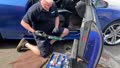
A car came in for a pre-return inspection: leather seat with a nasty slice in the bolster, and a hole worn through the carpet. Both needed sorting before it went back to the lease company, but they needed completely different treatment, and that's really the point of this one. Leather and carpet damage isn't one problem with one fix. What it actually needs depends on what's actually wrong.
Leather: scuff, cut, or gone through?
Most of what comes in falls into one of three categories, and they're not the same job.
A scuff or worn patch, the kind you get on a driver's bolster from years of getting in and out, usually just needs recolouring. No filler, no sanding, just a proper colour match and a fresh coat.
A cut or slice is a different job. Something's actually sliced into the leather, so it opens up and stands proud rather than lying flat. That gets filled with a flexible filler, sanded back flat, then colour-matched and finished the same way as a scuff.
Leather that's rotted through, or worn so far the stitching's gone, is past recolouring. At that point it needs a new panel of leather sewn in by a trimmer, not a surface repair. If the leather underneath is still sound, it's almost always worth repairing rather than replacing the seat. Once it's actually gone, no amount of filler fixes that.
Getting the colour right is the hard part
Most cars do carry a trim code somewhere, usually a sticker in the door jamb, glovebox or spare wheel well, sometimes just encoded into the VIN. But a code only tells you the original colour name, not the exact shade of the leather sitting in front of us after years of fading, wear and sun exposure. That's why the actual match still gets mixed by eye every time, and cream and lighter colours are genuinely difficult to get right.
Once the colour's right, we generally recolour the whole seat rather than just the damaged patch; a blended repair on part of a seat is never quite invisible, and doing the whole seat gets you a result that actually looks new rather than obviously patched.
Carpet: usually one of two causes
We see a lot of carpet holes, and it's usually one of two things. Most of the time it's ladies driving in high heels, where the heel pokes straight through the same spot over and over. The rest are cigarette burns.
The repair is the same regardless of cause: prime the area, cover it with a sealant, then blow colour-matched fibres onto the sealant. Done properly it's practically invisible, and it holds up to daily use afterwards rather than looking like a patch job.
Why the eBay recolouring kits don't work
We've lost count of the cars that come in after someone's tried a leather recolouring kit bought online first. The pattern is always the same. The rubberised paint starts peeling within weeks, and it was rarely a good colour match to begin with, so you're left with a peeling patch in roughly the right shade rather than an actual repair.
The paint we use is the same type of pigment used at the factory, applied by someone whose whole job is matching leather colour by eye, which is a genuinely different skill to spraying a bottle of something from an auction site onto a seat and hoping for the best. It's not a job that rewards a second attempt with cheaper materials; if the first go peels, the leather usually needs more prep work to put right than if it had been left alone.
Why this matters most before a lease return
If you're keeping the car, a scuff or a small carpet hole is a cosmetic call, fix it whenever you like. If the car's going back to a lease company, it's a different calculation entirely. Lease companies typically charge for the cost of repair on leather damage, but carpet holes often get charged at full replacement cost, which can run into the thousands once the carpet's out and the car's stripped down to fit it. We see this pairing constantly at pre-return inspections: sort the leather and the carpet before hand-back, not after that invoice arrives.
If you're not sure whether something's a quick recolour or a bigger job, send a photo rather than guessing. Our leather recolouring and repair service covers everything from a single scuff to a full interior recolour.

Danny Argent, writer and training officer at New Again.
Over 24 years in the industry, 250+ articles, featured in publications such as Fleet News and Fast Car.
Related Blogs
Here are some more of our latest #leather-repair blogs
Leather Car Seat Restoration (Audiogram)
Dec
09
2020
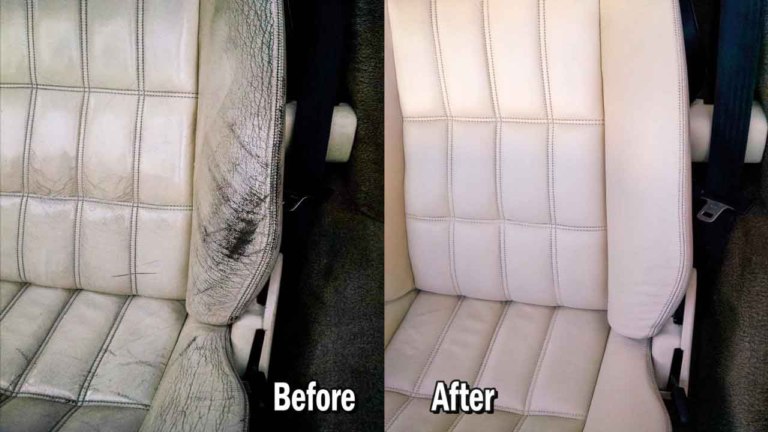
Scuffed or worn leather car seats can often be trimmed and connollised back to life. Here's how the New Again team approach leather restoration.
Read ArticleWhat Actually Wears Out Car Leather (And How to Stop It)
Aug
30
2019
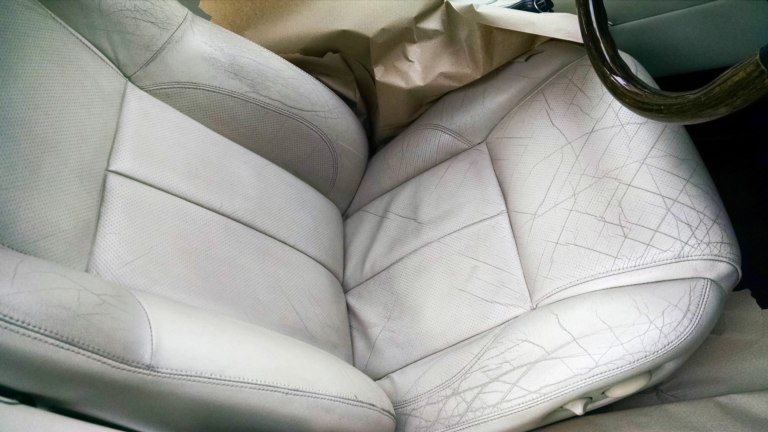
Rivets, dog claws, a flat-pack box on the back seat. Most leather damage comes from things you wouldn't think to avoid. Here's what actually causes it, and how to keep it looking new.
Read Article
Share this blog