.JPG)

Mar
05
2020
Bird droppings acid-etch clear coat in hours -- and heat speeds it up. We explain the damage, the science, and how to minimise the risk.
Bird droppings acid-etch clear coat in hours -- and heat speeds it up. We explain the damage, the science, and how to minimise the risk.
I am unfortunate enough that I have to park my car under a large sycamore tree most of the time. If it isn’t bad enough that I have to suffer this, it so happens that two of my neighbours are pigeon-fanciers.
I don’t want to bash pigeon fancying; a pass-time which Wikipedia lists as “an art and science” which dates back 10,000 years, I’m sure they are lovely people and this is a noble sport, but pigeons make a mess.
The proximity of the two pigeon lofts to where I park my car sees to attract a wealth of wildlife, from foxes and hawks, to every wild pigeon with a wide radius, many of which sit in that sycamore tree, ogling the sexy show pigeons and pooping on my car.
It’s a constant battle, the struggle is real, and it is something the car care companies have put no small amount of effort into solving because there is no doubt, bird dropping can do serious damage to car paintwork.
I can’t actually give you a definitive answer on this, only our own opinion. Over the years I have been told that it’s acidic, I have been told it’s caustic, I have been told it can be acidic or caustic depending on the bird’s diet, and more recent research by AutoGlym has come up with a completely different suggestion which is that it has something to do with how paint softens, expands and contracts in the sun and that it might mould its self around the bird mess.
There might be some truth to that… sometimes, maybe.
However, this doesn’t tally with our experience. We are in little doubt that it’s corrosive, that it can permeate into the paintwork, and become reactivated when moisture from rain or dew wets the car’s paintwork.
Many years ago I did an article on paintwork correction with a real-world example of a black Porsche which had a bird poop etching on the bonnet. For the article, I took photos before and after. The area was wet-sanded and the whole car was polished to a high shine. By the time we were done, there was no trace of the etched area.
Several months later, the owner brought the car back and asked us if we could remove a mark on his bonnet, which looked strangely familiar to me. So, I checked the photographs and the shape was identical to the one we had removed before.
I contacted an OEM paint expert in America who gave the answer which explains all - the acid from the droppings had soaked deep into the pores of the paint where over the course of months in the sun and the rain had continued to slowly eat away at the binders in the clear coat.
So, it is that expert’s considered opinion that bird poops are acid bombs.
In fact, if you google the question of why bird-poop is corrosive, virtually all say it's acid, with some even stating it has a level between 3ph and 4ph.
There are several products on the market designed to neutralize the corrosive effects of bird etching. I can only assume they are or base in nature, which goes for most soaps. And while and washing liberally with a car shampoos will help, that’s what everybody does, and yet we still see that acid etching can return, so it seems these neutralizing products must have a special secret sauce.
The one we have used over the years is Supagard should you be asking for a recommendation, but I’m sure most of the common brands are much the same. However, we are talking about a “Neutralizer”, and we cannot guarantee that a “Cleaner” or “Remover” does the same thing, it probably doesn’t as these are usually strong detergents.
Once the mess is cleaned off and neutralized, then if there is any etching into the paintwork, then it can be polished out using a technique called wet-sanding. We will take a very fine sandpaper and take off the very top surface of the damaged clear-coat before polishing is smooth.
The short answer is that it is more resistant than the factory finish on your car, but nothing is completely immune to a harsh acid.
The acrylic and polymer sealants are quite resistant, however, like paint, they have binders in them which can break down when exposed to acid.
It is going to be much the same story with ceramic sealants. Ceramic is highly resistant to acid, but the resins which hold it together are not immune.
Having said all that, they are more resistant and give you a bigger window in which to remove the bird mess before visible damage is done.
The moral of the story is to remove bird poop as soon as you see it on your car. The quicker you get it off, the less chance there is for it to cause damage.
Having some kind of coating on your car will definitely help, be it a modern ceramic sealant, a acrylic/polymer sealant, or even just a good coat of wax which can act as a sacrificial barrier.
If you really care about your paintwork, then we recommend that you do as the car enthusiasts do, which is to keep a small kit in the boot of your car. You probably already have an ice scraper and some de-icer. You may also have some glass cleaner and a clean cloth. It certainly won’t do you any harm or be much of an expense to get some baby wipes, or car wipes and neutralizer.

Danny Argent -- writer and training officer at New Again.
Over 24 years in the industry, 250+ articles, featured in publications such as Fleet News and Fast Car.
Here are some more of our latest #car-detailing blogs
Snake oil still exists in the car care industry. Here's what we've learned to watch for after years of testing products in our workshop.
Read Article
Dad's list of tools, spares and emergency kit every son, daughter or partner should carry in the car -- built from years of hard lessons.
Read Article
Detailing and valeting overlap, but in the UK they've diverged. Here's what each term actually covers and why the difference matters.
Read Article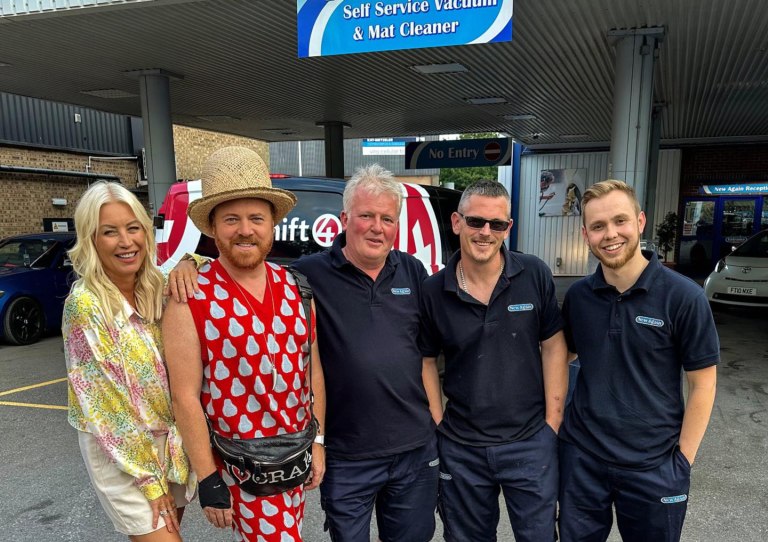
Keith Lemon and Denise van Outen visited our Chelmsford workshop to film Shopping with Keith Lemon -- we handed over the jet wash.
Read Article
Thinking of going pro with detailing? Here's why most enthusiasts shouldn't -- the realities of costs, clients, and margins most forums won't tell you.
Read Article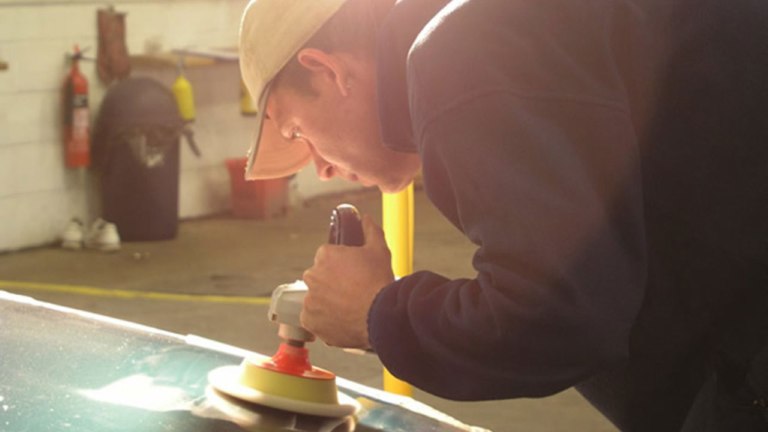
Detailing isn't just a fancy valet. Here's what we actually do to a car, step by step, and why even a brand-new one usually needs it.
Read Article
Share this blog