

Aug
27
2019
Lease recharge bills can run to thousands. Workshop advice on the wear and tear items that catch drivers out -- and what to fix before handback.
In the many years we’ve inspected cars before lease return, we’ve given lots of advice, often after-the-fact, from people who have returned lease cars and are now unhappy. While leasing a car is very cost-effective, the part where you have to actually give the car back is little understood and this can lead to additional costs if you are not informed and prepared.
So, the return date for your lease car is coming up, and you’ve got one or two pieces of damage that concern you. You could keep your fingers crossed and hope the lease company don’t see them, or you could shop around and see if you can get them fixed before it goes back.
Here’s some useful advice to help you avoid unexpected charges for excess wear and tear.
Start With Your Lease Company
The first thing to do is to understand how it all works. So call your lease company and ask them a few simple questions:
- Do they have a list of the charges they make to give you an idea?
- Do they adhere to the BVRLA or do they work to their own set of standards for fair wear and tear? Just a little note on that subject: the British Vehicle Rental and Leasing Association publish a guide that spells out what counts as fair wear and tear and, of course, excess wear and tear. It covers things like missing keys, scuffs on wheels, cigarette burn holes in seats, dirty seats and carpets, scuffed bumpers, small dents, chips on stone chip screen, incorrect tyres, missing locking wheel nut or even missing parcel shelves and a whole lot more.
- Ask them, do they work to a threshold? Some lease companies work to a figure; let’s say £100 or £200 or £500. For example: if you have a scuffed wheel and the recharge for that would be £60, and maybe a broken front numberplate at £26, that’s a recharge total of £86. If your lease company was working to a threshold of £100 they are very unlikely to send you a bill. However, if you had forgotten to return the spare key, which is usually valued at somewhere between £200 and £250, then you would very likely get charged for all three because you’ve gone over that threshold.
- How do they process your car? In other words, do they send an inspector out to check it and then advise you on what you need to do, or do they send a driver to collect it and then check it back at their compound? Some lease companies send out an inspector who will inspect your car and then advise you on what is acceptable and what isn’t, and the likely costs or recharge prices. Some lease companies will send out a driver who, although will check the car, the car will still go back to the lease company’s compound (usually sited at a large car auction) and then they simply send you the bill for anything deemed more than fair wear and tear. Most lease companies do the latter. To be fair to them, it is very difficult to do the first one: inspecting your car in a car park without space around it on a rainy and possibly windy and dark day is virtually impossible. And the lease company can’t afford to take in cars with lots of scuffs and dents and scratches and damage, which greatly affects their value. Let’s not forget they have supplied a car for two to three years and their profit sits in the car value until it’s sold.
- What is the Abort Mission charge? That means if they send an inspector out with a view to collecting it the following day, what would they charge if you wanted to keep the car for a couple more weeks to get the repairs done? Some lease companies will charge you maybe £100 to £150 for the driver to come out again in a couple of weeks, plus the rental charge.
So now you have the threshold that your lease company work to, a list of the likely charges for the damage, a copy of the standard (this consists of an A5 booklet with pictures and measurements of acceptable dent sizes and scratches as well as a checklist and lots of useful information); or they may simply send you a link to an online version of it. And the rules of the game. Also, a roll of masking tape.
Clean It, Then Check It Properly
The next job is to get your car cleaned properly: I mean all the seals and no stains on seats and the door shuts and jams preferably. It’s a good idea to do this yourself, as you may notice a few bits and pieces you never noticed before.
At this point, you might be thinking you know your car. You know what bits of damage are on there and all you’re concerned about is those. Sorry to say, but you are probably wrong: unless you’re cleaning your car regularly, and I mean cleaning it yourself most weekends, then I can tell you from experience that you definitely don’t know your car.
So now you’ve admitted that it’s not you that really cleans it, you had better get checking. This usually works better with two people: one holding the checklist, looking and writing down what you have found; the other doing most of the checking and putting a piece of tape on the things that may or may not be fair wear and tear. Once everything is checked, you can simply compare it with what the charges might be.
If your car is in very good condition, you might decide just to give it back. But if, as most people will find, you’ve got five or six things in question: a scuffed bumper, a missing spare key, a dent on the roof, or even signs of a previous repair, then you may want to do something about it.
Getting the Right Advice on Repairs
Here’s some more advice: be very careful where you take advice. Most people in the car industry mean well, but they haven’t actually got a clue about this particular subject. If you call a PDR dent man (that’s paintless dent removal) to come round and look at it, they would very likely advise you on the dents they think you should do. However, they probably have never seen an invoice from the lease company or a Fair Wear and Tear guide of any description. The same goes for all the other repair people, from the alloy wheel refurb people, to the smart repair guys and even the body shops.
So at this point, unless you know an expert; I mean a genuinely unbiased person that has spent years helping people return their cars, who will actually look at your contract; then I’m afraid you’ll just have to rely on yourself or your friend to actually read the small print, or you can call some lease companies who will allow you to email them pictures.
Now you have to decide on the appropriate repairs, and this is where it can be a bit more tricky. You may have seen a van with smart repairs, bumper scuff removal, dent removal, alloy wheel repairs etc. These people are generally running round the dealers doing the small repairs on cars that are coming up for sale, and some dealers can be a little bit forgiving on themselves. A simple scuff on the bumper can be repaired in a morning or an afternoon, and if done properly, can be perfectly acceptable.
However, smart repair only stretches so far, and this is where the trouble starts. The work constantly pushes the smart repair technician past his limits, and I’m afraid beyond. Yes, they are spraying into doors, bonnets and boots as well as big panels that, in my humble opinion, should be carried out in a proper body shop.
Although it’s very tempting to save some money and get a repair done a bit cheaper, you will very likely get charged by the lease company for a sub-standard repair. If you’ve got a scuff through the paintwork on a big panel, I would definitely get at least two or three opinions on the correct solution before going ahead and taking the cheaper option; it may not be the cheaper option in the end. In fact, to make things even worse, the lease company will often have to make a bigger recharge than they may have done in the first place. To be fair to them, they now can’t see what kind of damage is underneath a sub-standard repair.
Do’s and Don’ts Before You Hand It Back
Don’t put the wrong tyres on the car. If you are responsible for tyre wear and tear, check with your lease company as to the kind of tyres you can put on. We have seen many people with budget tyres fitted because they were cheaper.
Make sure all repairs are done to the guide acceptable standard. The BVRLA guideline says any repairs you make before handing the car back must be professional standard, done by a repairer who’ll give you a full transferable warranty on their work.
Obvious evidence of poor repair, such as flaking paint, preparation marks, paint contamination, poor finish and badly matched paint, is not acceptable.
This doesn’t actually mean that you can’t touch in the odd stone chip or use a little bit of T-Cut to remove some scratches, or in some instances remove some paint that may have been rubbed onto your bumper from another car. What they are actually saying is that you can’t repair something unless it’s done properly.
Don’t think that a repair is acceptable because you’ve had it done on the insurance; it can turn out to be sub-standard too. You might be thinking that’s the lease company’s responsibility. Well, I can tell you from experience that some lease companies may take the trouble to find out whether you’d had it done at an approved body shop; however, if that was a year or two ago, how do they know if you haven’t had it repaired again by your uncle Fred?
If you read the small print in your contract, you will see that it’s your responsibility to make sure any repairs are done properly. So if when you check the car you see evidence of a repair that was done at the garage or bodyshop a couple of years ago, take it back and get them to put it right. These kinds of things can cost a lot of money to put right at your expense.
In summary
- Call your lease company.
- Clean your car properly inside and out yourself.
- Check your car in good lighting: get a friend to help you, and use a checklist.
- Be careful who you take advice from. If you get advice from the lease company, make sure it’s in writing or you can see it in print somewhere.
- If you’re going to get repairs done, make sure the repair company guarantees their work and that the guarantee is transferable.
- Take pictures of what you find; make sure you have something to show scale, like a ten pence piece in the picture. Some lease companies will allow you to send them in and give good advice.
I hope this all helps you and remember, although it can be a minefield, the lease companies are not out there to get you as some people might tell you. In fact, they can be quite the opposite: they can be very, very helpful, so if in doubt, give them a call, and if you don’t get help, call them again.
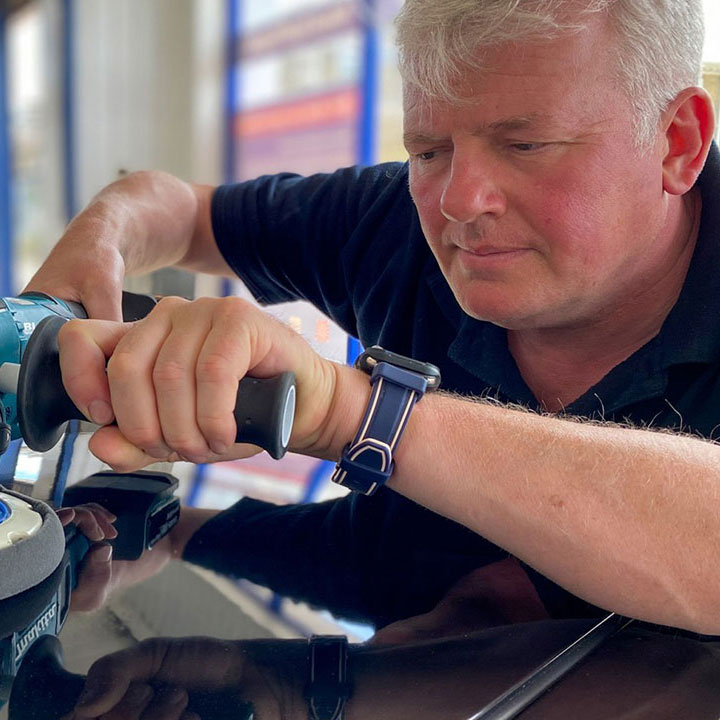
Gary Wray - founder of New Again, with decades in the trade.
Lease return and smart repair specialist; featured on television alongside motoring journalists.
Related Blogs
Here are some more of our latest #end-of-lease blogs
Leather Seat and Carpet Damage: What We Actually Fix Before a Lease Return
Dec
08
2020
A scuffed bolster, a sliced seat, a hole in the carpet. Here's how we actually tell what each one needs, and why it matters most before a lease car goes back.
Read ArticleReturning your Lease car : Is the Lease Company is out to get you?

Sep
09
2019
Lease recharges feel unfair -- sometimes they are. Here's how to tell a genuine damage claim from an inflated bill before you hand the car back.
Read ArticleWhy So Many People Lease, and What Nobody Warns Them About the Handback
Jul
01
2019
Leasing looks simple until the car goes back. Here's the real reason people choose it, and the handback numbers nobody explains upfront.
Read Article
Share this blog