Can I use a polisher as a buffer?

Quick answer: Yes -- "polisher" and "buffer" are two words for the same idea, but the machines behind those words are not equal. A basic polisher is fine for spreading and wiping off wax. A dual-action machine, with the right pads and compound, can genuinely correct paint. Leave rotary polishers to trained hands: they mark paint and leave holograms in seconds.
People walk into a motor factor, see a shelf of round spinning machines, and assume one will do the lot. The words do not help. "Buffer" and "polisher" get used interchangeably, as we cover in the difference between a buffer and a polisher, and that loose language hides a real gap in what each machine can actually do. The honest answer to "can I use a polisher as a buffer?" is yes, but only because they were never different jobs to begin with. The question that matters is which machine, and whether it suits the work in front of you.
To make that concrete, here are two machines you can buy off the same retailer's shelf -- Halfords -- that look broadly similar and cost wildly different amounts to use well.
The cheap polisher: a wax spreader, and a good one
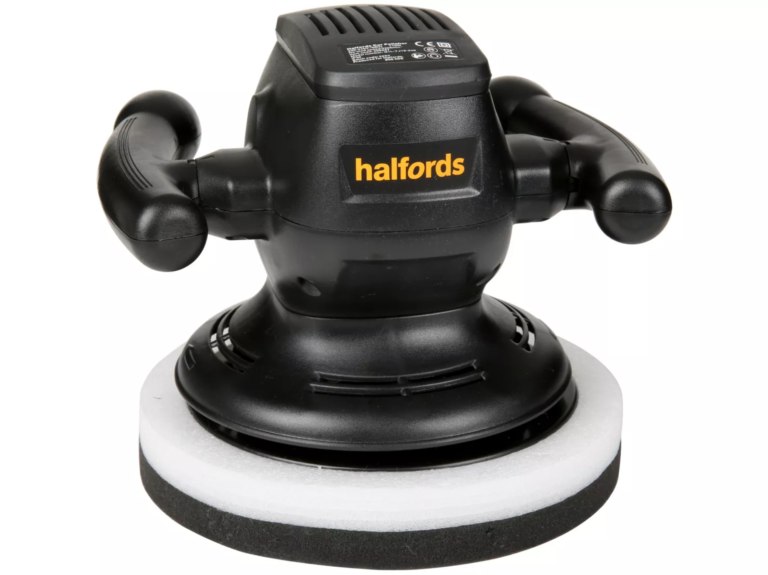
This is the machine most people picture. It is light, it is cheap, and it does one thing well: it takes the labour out of applying and removing polishes and waxes that were designed to be worked by hand. The broad pad spreads pressure evenly across a wide area, which keeps the risk of marking paint low. Foam or wool bonnets slip over the head to lay product down and buff residue off.
For what it is, it earns its keep. Pair it with a decent hand polish -- Super Resin Polish is the obvious one -- and you will lift light oxidation and shift faint wash marks, and the paint will look brighter for the effort. Used regularly through the year, it keeps a car looking cared for.
It is not a machine we reach for here at New Again. We tend to polish by hand on the jobs where this machine would otherwise sit, and faffing with a low-powered head would only slow us down. But we are quick to recommend one for the right person. Tom, our operations manager, often points anyone with limited mobility, or anyone who finds wiping a coat of wax off hard on the arms and shoulders, straight at a machine like this. It is a sensible, low-risk bit of kit. What it will not do -- and what its low spinning speed and fixed pad were never built to do -- is correct paint.
The dual-action machine: same shape, different animal
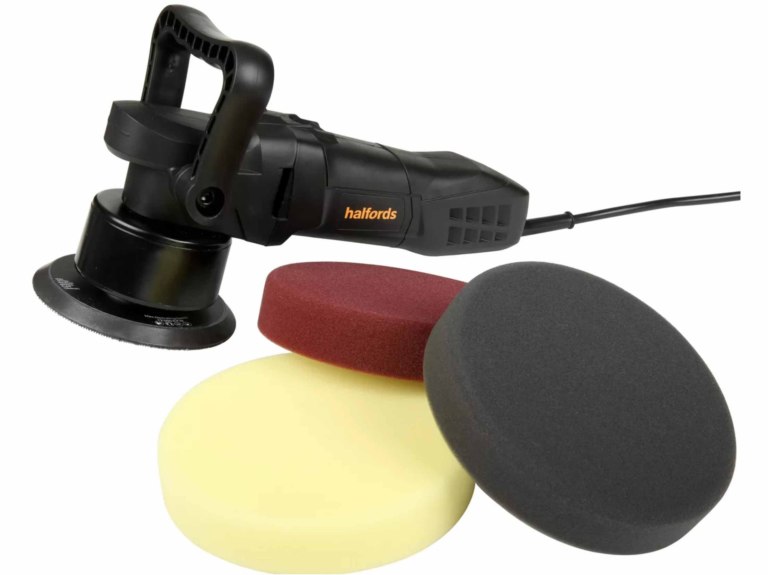
A dual-action machine sits on the same shelf and, to the untrained eye, looks like the cheaper polisher's slightly pricier cousin. It is not. It accepts a range of buffing pads which, matched to the right compound and polish, open the door to genuine paintwork correction. The dual-action motion -- the head spins while also oscillating on an offset -- spreads heat and abrasion so it is far harder to burn through paint or dig in, which is why it also tends to reduce the swirl marks a clumsy hand might otherwise introduce.
Here is the catch, and it is the catch with every capable tool: owning it does not hand you the skill to use it. That part takes time, and it takes more time than most people budget for. Pad choice, compound choice, the order you work the panels in, how you read the paint as it clears, when to switch to a finer pad, how to keep a machine flat and moving -- none of that is on the box.
There are endless videos on machine polishing on YouTube, and they are a fine place to start. But if you want to take machine polishing seriously, book a hands-on course. Most run on the maker's own products and machine, and an afternoon with someone watching over your shoulder will teach you more than a week of clips. Once the technique is in your hands, a DA like this will clear wash marks and light scratches cleanly, without the tell-tale buffer trails that mark out the inexperienced.
Be honest with yourself about the maths
A fair number of people land on this page hoping to skip a professional bill by buying a machine and doing the work themselves. That can be the right call -- but only if you go in with your eyes open. The machine is the cheap part. Pads wear out and need replacing across the cut-and-refine range; compounds and polishes are an ongoing cost; you will want masking tape, a decent light to read the finish under, and somewhere clean and dust-free to work. Then there is the time: a first full correction on a single car, done properly, can swallow a weekend, and the early attempts rarely come out the way the videos promise.
None of that is meant to put you off if it is a craft you want to learn -- plenty of people enjoy it, and the results reward practice. It is meant to be honest. If the goal is simply a clean, glossy car and not a new hobby, the cheap polisher and a good hand polish will get you a long way for very little outlay and almost no risk.
Whatever you do, do not buy a rotary
If there is one line to take from all of this, it is this: do not try to correct your own paint with a rotary polisher. Look closely at Halfords' range -- and the range at any consumer motor factor -- and you will notice they sell dual-action and random-orbital machines, not rotaries. That is not an accident. A rotary spins in one direction at speed, building heat fast, and in unpractised hands it marks paint quicker than it corrects it. Getting a swirl-free finish out of one is harder still, and it is the tool that does the most damage soonest when the technique is not there.
We see the evidence of that regularly. A good slice of the correction work that comes through our doors is not original wash damage at all -- it is deep holograms from a rotary used too hot or held too long in one spot, the kind that flare in every direction the moment the car turns under a streetlight. Sorting that out almost always takes us longer than the paint's original problem ever would have. A rotary is a professional's tool that punishes the learning curve in a way the paint cannot always recover from. Leave it to trained hands.