What is the difference between car buffer and polisher?

Quick answer: There is no real difference -- a "buffer" is just an older, informal word for a machine polisher. The correct trade term is machine polisher or orbital polisher. The distinction that actually matters is between a rotary and a dual-action (DA / random-orbital) machine. A powerful dual-action handles both cutting and finishing; lightweight hobby machines are fine for light work or applying products but won't manage heavy correction.
The same machine, two words
"Buffer" and "polisher" describe one tool. The split is generational and regional more than technical: older hands and the American trade lean on "buffer," while "machine polisher" or "orbital polisher" is the term you will see on the box and in any modern detailing course. Strictly, buffing is a direct synonym for machine polishing, so a buffer is a polisher and nothing more.
Where the words do drift apart is in describing the stage of work rather than the machine. People say "buffing" for the aggressive cutting pass that removes defects with an abrasive pad and compound, and "polishing" for the refining pass that brings the paint back to clarity and gloss. The same machine does both jobs if it has the power and the right pads. If the vocabulary is still settling, our car polishing definitions guide lays out the key terms in plain English.
What actually separates one machine from another
Once you get past the label, there is a genuine gap between tools built for heavy correction and those built for finishing. Power, torque and throw size decide what a machine can realistically handle, not the name printed on the housing.
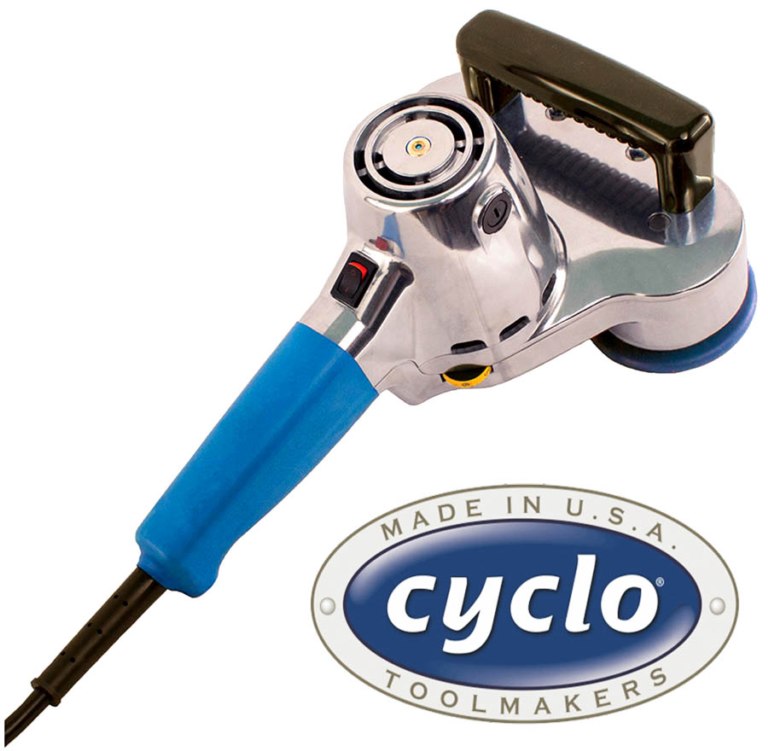
Heavy-correction tools are capable dual-action or rotary machines with enough torque to drive cutting compounds and generate the friction heat the abrasives need to break down. Finishing-only tools are lighter enthusiast machines that lack the grunt for aggressive compounds but apply and remove polishes and waxes well. Then there are dedicated finishers: purpose-built random-orbital machines like the Cyclo that excel at the final polish rather than the cut.
Rotary, dual-action or random-orbital?
This is the comparison worth understanding, because it is the one that changes results on the panel.
A rotary polisher spins the pad on a single fixed axis. It is the traditional trade tool: fast and aggressive, with the cutting power to flatten serious defects. It also bites hard, builds heat in one spot, and will leave holograms or buffer trails the moment the operator's technique slips. A dual-action spins and oscillates on an offset, which spreads the heat across a wider area and makes the machine far more forgiving. A random-orbital is a sub-type of dual-action: the pad moves in an irregular, non-repeating pattern, so it almost never leaves the swirl-pattern marks a rotary can.
The practical upshot is that a beginner can pick up a dual-action and do safe, useful work the same afternoon. A rotary rewards practice and punishes everything else.
Can one machine do everything?
A powerful long-throw random-orbital with plenty of torque can cover the whole job. Run it at speed with a cutting pad and it corrects; dial the speed down with a soft finishing pad and it refines as happily as it cut. That versatility is why most professional detailers own at least one heavyweight dual-action alongside a smaller finishing tool, rather than chasing a separate machine for every stage.
A note from the workshop on heat
The thing that catches people out is not which word they use; it is heat. Tom, our operations manager, points out that the fastest way to ruin a panel with any machine is to dwell in one place, especially on a sharp body line or panel edge where the clear coat is thinnest. We had a Golf GTI come in once that an owner had tried to correct himself with a borrowed rotary: he had burnt straight through the clear on the leading edge of the bonnet, which meant a respray of that panel rather than a polish. The machine was not the problem. Sitting in one spot at full speed was. A dual-action would have made the same mistake much harder to make, which is exactly why it is the machine we reach for first on customer cars.
What a lightweight buffer is good for
Most motor factors sell enthusiast machines aimed at light machine polishing: the sort of job that takes the sting out of hand polishing without asking for a trade-grade tool. Within their limits they are genuinely useful. These lighter tools handle applying and removing polishes, glazes and waxes; light marring and swirl reduction on soft paint; carpet-brush attachment work for interior cleaning; and weekend maintenance detailing rather than full correction.
What a lightweight buffer will not do
A well-built enthusiast polisher with good pads is a lovely bit of kit, but it has a ceiling. It will not shift serious defects, and it cannot leave the paint hologram-free to a trade standard; that is a job for a capable dual-action used with technique that avoids buffer trails and holograms.
Specifically, deep scratches that need wet-sanding, heavy oxidation on neglected paint, hologram removal after a rotary pass, and full-panel correction on hard clear coats all sit outside what these machines can deliver. For the lighter end of the spectrum, what hand polishing achieves without any machine at all, the picture is honestly modest.
Buying the right tool
Pick the machine for the job you actually do, not the job you imagine doing. If you are maintaining a clean modern car, a light enthusiast polisher plus a good pad set will do everything you need. If you plan on tackling paintwork correction or removing meaningful defects, spend the money on a capable long-throw dual-action; it is the one machine that genuinely spans cutting and finishing. Don't buy a rotary unless you are prepared to practise, because it is the fastest route to burnt paint in untrained hands.
For the pad side of the setup, what foam, wool and microfibre pads each do, do you need to use pads to polish a car? covers the options. And before any machine touches the panel, a proper wash and decontamination pass protects the paint: how to prepare a car for polishing walks through the full pre-polish sequence.