Algae

Quick answer: Algae is the slimy green film that grows on neglected areas of a car - especially soft tops, rubbers and trims - making them look dirty and holding moisture against the surface until it is properly cleaned away.
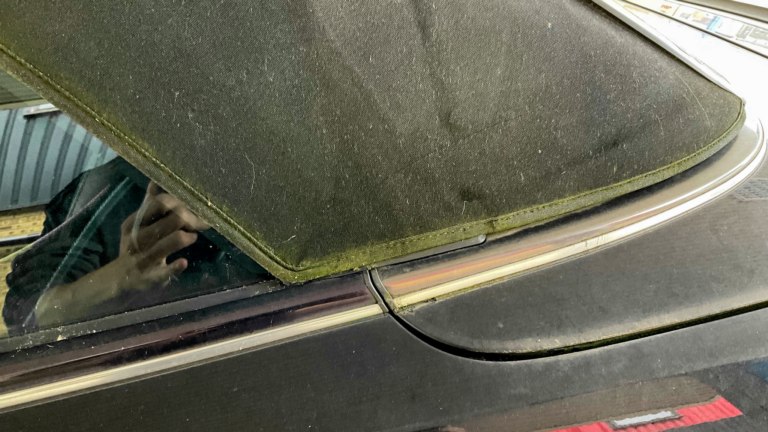
Algae can grow where dirt collects on your roof, especially when weatherproofing has worn off and the roof is allowed to remain damp.
On some cars, the tape around the seams and edges may contain natural fibres and is particularly prone to algae (as shown in the photo), from there, algae can grow very rapidly causing much of the car's roof to turn green in a short space of time.
Technically, this powdery greening is made up of cyanobacteria and fungus, making it a lichen. However, it is generally referred to by people as 'algae' or 'roof green'.
What it means
Algae is the thin green film you see on cars that have been left damp and dirty, especially under trees or on north-facing drives. On vehicles it tends to appear on fabric and mohair soft tops, window rubbers, gutter trims, wiper arms and other textured areas that stay wet longer than flat paintwork. It often feels slightly slimy when wet and can leave streaks or patches that make roofs and trims look dull and dirty.
Why it matters
Green film is the organism arriving, not dirt settling. It establishes wherever a surface stays damp long enough, which on most cars means fabric roofs, window rubbers, gutters and trim joins rather than the panels themselves, and it will keep spreading while those areas stay wet.
Damage comes from what it holds rather than what it is. Algae keeps water and grime pressed against fabrics, rubbers and seams for far longer than they would otherwise stay wet, and prolonged staining can shadow pale roofs and trims in a way that takes serious cleaning to lift. Left alone it is also the opening act, since a flat slimy film is what moss and lichen colonise next, and both are more firmly attached and much harder to remove.
Where algae takes hold first
Soft tops, glass surrounds and roof edges are where it appears first. Common sites are the top and shoulders of fabric roofs, the base of window rubbers, inside roof gutters, around tailgate channels and along trim joins. Inspection and detailing reports record it as algae on soft top and rubbers, green algae build-up in gutters or algae staining on roof edges.
Context
Algae is part of the same family of biological contamination as moss, lichen and mould, but it usually appears first as a relatively flat, slimy film. On soft tops it is often the layer you see before moss clumps form. Proper treatment involves pre-soaking with suitable cleaners, gentle but thorough agitation and controlled rinsing, followed by appropriate protection such as fabric roof proofer or trim dressing. On paintwork, careful decontamination and protection help stop algae getting a foothold again. Because algae likes damp, shaded areas, good drainage and regular cleaning are just as important as the products used. In the workshop, the cars that arrive worst affected have usually spent a wet winter on a shaded, north-facing drive. A pre-soak with a dedicated roof cleaner makes the difference between algae lifting cleanly and having to work back over the same areas.
Common mistakes
- Blasting algae with very strong TFR or harsh household cleaners, which can bleach or weaken fabrics, rubbers and plastics.
- Scrubbing aggressively with stiff brushes on soft tops and rubbers, damaging fibres and seals while only partly shifting the algae.
- Assuming a quick wash will cure heavy algae build-up, instead of planning a careful, staged clean followed by the right protection.
- Ignoring early algae growth on roofs and trims until it thickens into moss and lichen, making restoration more difficult and time consuming.