Soft Top

Quick answer: A soft top is a convertible roof made from flexible material, usually fabric or vinyl, that folds or retracts so the car can be driven open or closed, and needs specialist cleaning and care to stay waterproof and tidy.
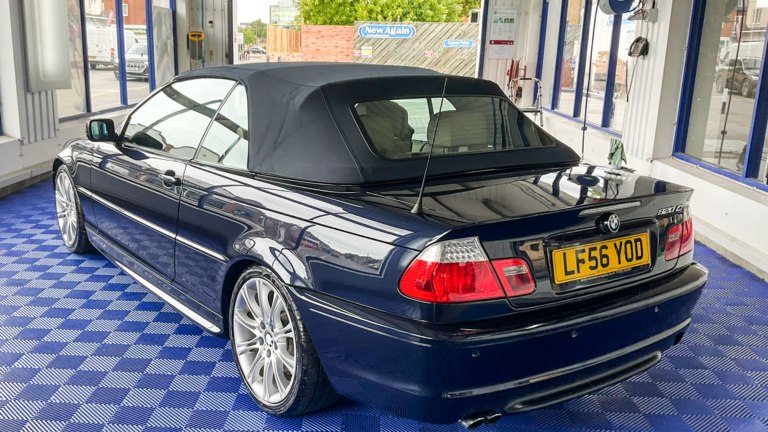
Soft top refers to any vehicle which has a convertible roof which has a soft covering of fabric or vinyl, which folds down to make the car open topped.
While all soft tops are convertibles, not all convertibles are soft tops, as there are removable hard tops and retractable hard tops which are also convertibles. However, in the mind of the public, 'soft top' has become the generic name for convertible and cabriolet vehicles.
What it means
A soft top is the flexible roof fitted to many convertibles, cabriolets and roadsters. Instead of a fixed metal roof, the car has a folding frame covered with fabric (often mohair or canvas-style material) or vinyl. The soft top includes the outer skin, stitched seams, rear window (glass or plastic), inner lining, frame and the rubber seals and gutters that keep water out when the roof is raised. When lowered, the soft top folds into a compartment behind the seats or into the boot, giving full open-air driving.
Why it matters
A soft top does the same job as a metal roof, so a sound one with good seals keeps rain, wind and noise out and makes the car usable all year rather than only on the good days. It is also the most visible panel on the car. A soft top is a large, uninterrupted area, and green algae, staining or fading will make an otherwise tidy convertible look neglected in a way a scuffed bumper never quite manages.
It is a common source of leaks for the straightforward reason that there is more to go wrong: seams, stitching, seals, gutters and drains all offer water a route into the cabin or the boot. It also wants different care from paint. Fabric tops need dedicated cleaners and proofers, while vinyl is closer to plastic trim and is cleaned and dressed rather than polished. Treating either of them like bodywork is how most soft tops get damaged.
How soft tops get described
Sales listings, inspection reports and detailing or repair menus all use the term. Common phrases include soft top needs clean and reproof, soft top green with algae, soft top leaking at rear corners or soft top mechanism not operating. Specialists often distinguish between fabric soft tops (mohair, canvas-style) and vinyl soft tops because they use different products and methods for cleaning, proofing and repair.
Context
Soft tops are one of the main roof types on open cars, alongside retractable hard tops, removable hard tops and removable roof panels. A typical soft top has multiple layers of fabric or vinyl, stitched seams and a frame that folds in a set pattern. Over time, UV, weather and abrasion can fade the surface, flatten the pile, weaken waterproofing and age the stitching and seals. Proper care usually involves vacuuming, gentle but thorough cleaning to remove algae and road film, then using the correct roof proofer or dressing to restore water repellency and help keep dirt from sticking. In the workshop, we find a quick water bead test tells you most of what you need to know: if the fabric absorbs moisture rather than repelling it, the proofer has given up regardless of how the roof looks from the outside. Because the soft top sits at the boundary between exterior detailing and water-leak diagnosis, attention to gutters, seals and drains is just as important as the visible roof material.
Common mistakes
- Washing a soft top with strong TFR, household cleaners or stiff brushes, which can damage fibres, stitching and waterproofing on fabric roofs or dry out and crack vinyl.
- Ignoring green algae, bird stains or tree sap until they become permanent stains or start holding moisture against the roof and stitching.
- Assuming a leaking soft top always means the fabric has failed, when the real culprit is often blocked drains, dirty seals or perished stitching at seams.
- Operating a powered soft top when it is frozen, low on battery voltage or clearly obstructed, risking damage to the frame, motors and sensors.