Roof Green

Quick answer: Roof green is the informal way of describing a convertible or fabric roof that has gone green with algae, moss and general biological growth, making it look tired and often holding moisture and dirt against the material.
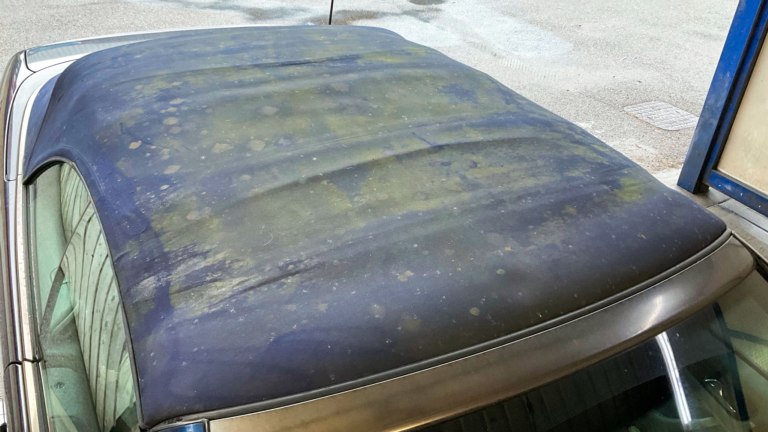
Green roof is the name given to the collection of algae, moss and lichen which collects on a roof and creates green patches.
A new or well maintained roof has weatherproofing with mould inhibitors, and is clean and therefore a sterile environment where organic matter cannot grow. But as the waterproofing wears off, the roof can remain soggy and trap moisture. As dirt and dust collects on the roof, it creates a perfect environment for growing. The good news is, with a bit of scrubbing and some elbow grease, that this can all be washed out and your soft top restored.
What it means
Roof green is a shorthand way of saying a soft top or fabric roof has gone green with growth. It usually means a mixture of green algae film, soft moss in the crevices and sometimes tougher lichen spots. This tends to happen on cars that live outside, especially under trees or in damp, shaded areas, and have not had the roof cleaned and protected regularly. Instead of looking like a clean fabric or mohair roof, the surface is visibly green and patchy, sometimes with small tufts and speckles you can see from several metres away.
Why it matters
Ask a trader what kills a convertible's value and the roof comes up before the paint. Roof green is the trade shorthand for that whole picture, and it works as a single verdict on condition rather than as the name of any one organism; algae, moss and lichen all sit underneath it.
Severity is what the phrase is really measuring. A light green film cleans off in an afternoon, while years of established growth means repeated sessions, patient agitation and an acceptance that some shadowing may never fully lift. Constant damp around seams and drains is the other half of the problem, because a roof that never dries out invites water ingress as well as staining. That gap between a quick clean and a full recovery is why the condition is worth catching early.
Where roof green gets written down
Inspection notes, detailing quotes and conversations about older convertibles and cabriolets all use the phrase: roof green with algae and moss, roof very green, needs deep clean, or roof green, recommend clean and reproof. It covers mohair and fabric soft tops, some vinyl roofs and occasionally textured hard roof trims left damp for years.
Context
Roof green is essentially a summary of biological contamination on a roof. It sits in the same family as algae, moss and lichen, but used as a single phrase to describe the overall condition. Treating a roof that has gone green usually involves thorough vacuuming, careful use of roof-safe cleaners, repeated rinsing and patient agitation, often over more than one session. Once the growth is removed as far as safely possible, a dedicated fabric roof proofer or suitable vinyl dressing is applied to help repel water and slow down future contamination. Because the same conditions that cause roof green can also affect drains and seals, a proper job also checks gutters, drainage and stitching while the roof is being restored. In our workshop a green roof almost always means the drains need attention too; the same organic build-up that colonises the fabric tends to settle in the gutters and eventually slows drainage to the point where water backs up into the lining.
Common mistakes
- Trying to cure heavy roof green in a single, aggressive wash with strong TFR or household cleaners, which can bleach or weaken the roof material.
- Scrubbing a green roof with very stiff brushes or scouring pads, damaging fibres and stitching while the deeper growth remains.
- Cleaning off the worst of the green but skipping the proofing stage, so the roof quickly reabsorbs water and the algae and moss come straight back.
- Ignoring a green roof for years, allowing growth to dig in, drains to block and leaks to develop into the cabin and boot area.