Scuttle

Quick answer: The scuttle is the panel and cavity at the base of the windscreen, under the plastic grille and wipers, where rainwater and fresh air are collected and drained away. If its drains block or seams fail, water can overflow into the heater intake, bulkhead and front footwells.
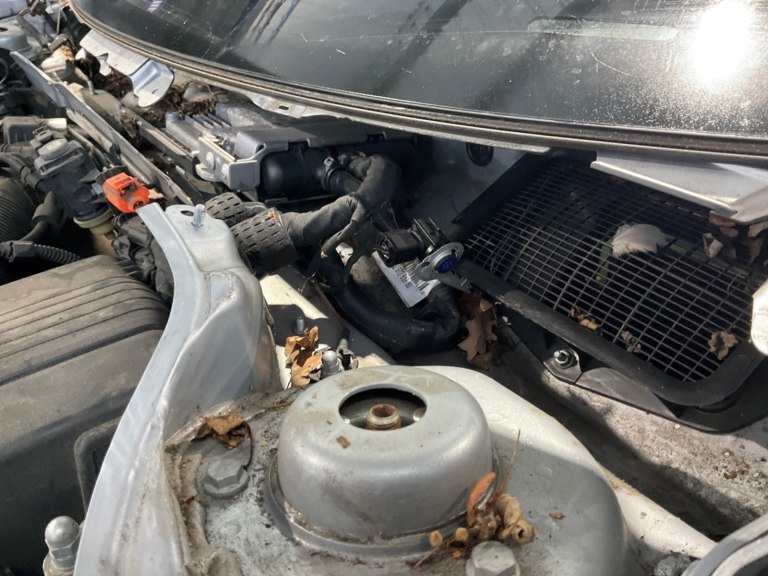
A scuttle is a metal bucket, and in relation to cars, it is a metal trough in the engine compartment, welded to the bulkhead, underneath the windscreen.
This is where you find the windscreen wiper motors, some other electrical controllers, and the vent to the pollen filter. Many of the holes that go through the bulkhead to allow air vents and wires to pass from the engine compartment to the passenger compartment, are within the scuttle, in order to give them a little additional weather protection.
The scuttle often has a scuttle-plate over the top to reduce the amount of water and leaf litter getting in, and has drainage holes at the bottom, to allow water out.
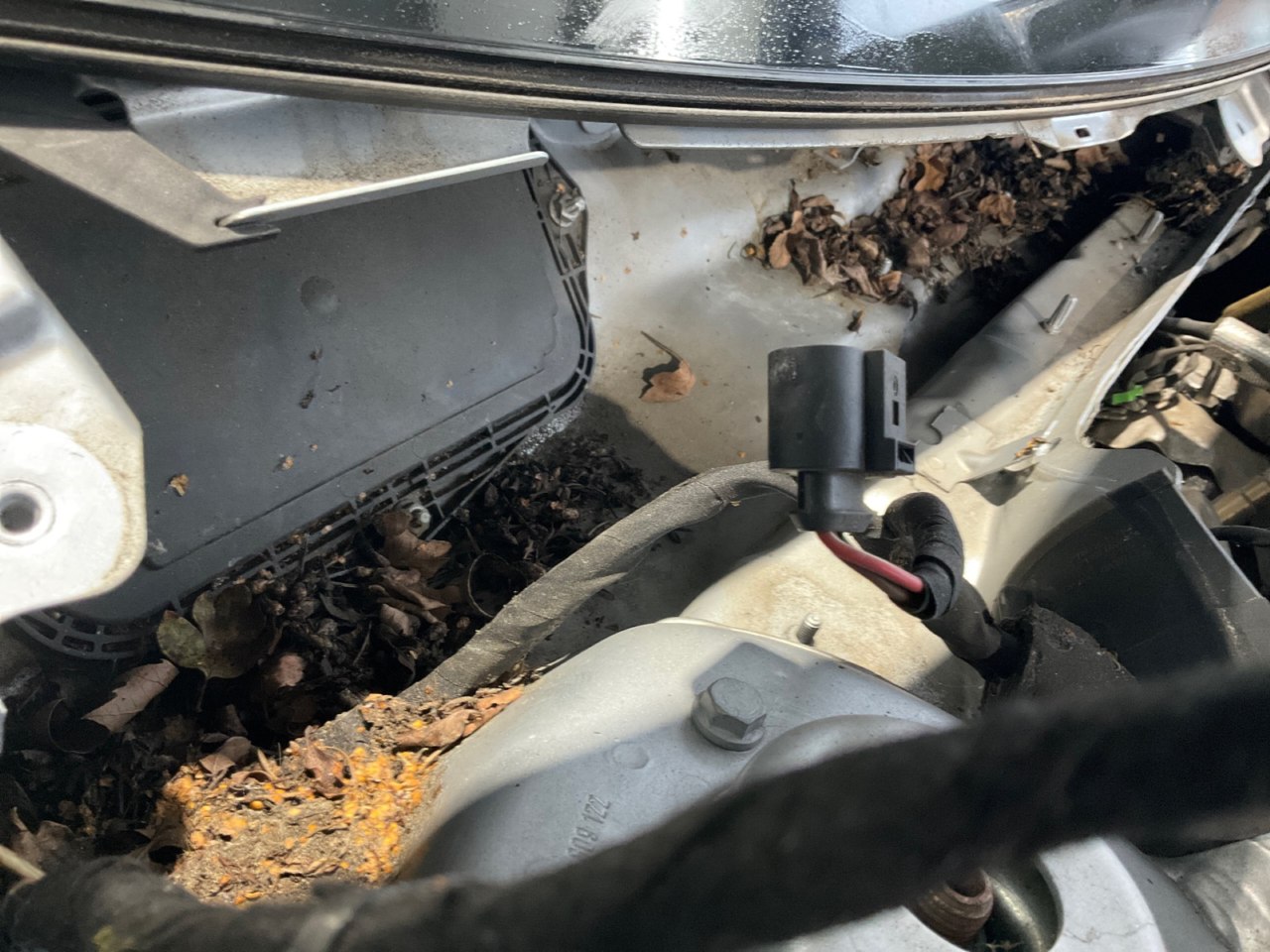
This area should be cleaned fairly regularly to remove a build up of dead leaves because if the drainage holes become blocked, the scuttle can fill up with water and overflow into the cabin, usually through the pollen filter.
On convertible cars, the area that the roof folds down into can also be referred to as a back scuttle, and can suffer similar problems to the front scuttle.
What it means
The scuttle is the strip of bodywork between the windscreen and the engine bay. On most modern cars it is a boxed section or tray under a plastic cover that carries the wiper spindles. Rain that lands at the base of the screen falls into this area, then should run through designed drain holes and out under the car. The scuttle also houses the heater and ventilation intake and, on many cars, the pollen filter, so it is where outside air first enters the cabin system.
Why it matters
The scuttle is one of the most common sources of a wet front footwell. When its drains block with leaves, mud and moss the tray fills, and once it fills the water finds another way out: through the heater intake, through grommets, or along seams into the bulkhead and down into the footwells. That is why a car can have perfectly sound door and roof seals and still soak the driver's carpet.
What makes it worse than an ordinary leak is what sits nearby. Wiring, fuse boxes and control units are often mounted on or close to the bulkhead, so water escaping the scuttle area drips onto exactly the parts that corrode and fault. Left alone, standing water and rotting debris also work on seams, spot welds and the screen aperture, which in time reaches structure and windscreen bonding. There is an air quality angle as well: a damp scuttle packed with decaying leaves sits directly upstream of the heater intake and pollen filter, and it is a reliable cause of musty smells and windows that will not clear.
Where does the scuttle come up?
Leak reports, inspection notes and technical bulletins all name the scuttle. Typical comments include blocked scuttle drains, clear and test, water entering via scuttle into heater intake, scuttle area heavily contaminated with leaves or corrosion present around scuttle seams and screen aperture. When customers report wet front carpets with no obvious door or roof leak, the scuttle and its drains are regular suspects. Our own case files show the same three routes. On a Vauxhall Vectra the drains were blocked and the trough filled until it reached the level of the pollen filter and overflowed into the cabin; on a Renault Clio the blocked scuttle sent water down the bulkhead and into the air conditioning unit. A Peugeot 207 is the useful counter-example: its drains were clear, but the scuttle plate no longer sealed and the pollen filter cover beneath it had dropped open, so a scuttle does not have to be blocked to leak.
Context
The scuttle is a key part of the car's front water management system, working with the windscreen, bulkhead, drainage pipes and grommets. The design intent is that some water reaches this area, then leaves through known drain points. Problems arise when drains block, seam sealer fails, panels corrode or aftermarket sealants and accessories interfere with the intended paths. Blocked scuttle drains can produce a side-to-side slosh when cornering: similar in sound to the sloshing that comes from a blocked door drain, but the source is distinct: the scuttle sits under the windscreen, not inside the door panel. Proper diagnosis usually means removing the plastic scuttle cover, checking and clearing drains, inspecting seams and grommets, then performing controlled water tests while watching inside the bulkhead and footwells for any tracking. For a full overview of how the detection process unfolds at our workshop, see what does car water leak detection involve?
Common mistakes
- Blaming doors or windscreens for front footwell leaks without ever lifting the scuttle cover to check for blocked drains and standing water.
- Clearing only the visible top grille and not the actual drain exits, leaving debris trapped lower down so the problem quickly returns.
- Sealing over joints and grommets with random silicone instead of cleaning the scuttle, clearing drains and correctly addressing any failed seam sealer or gaskets.
- Drying carpets and underlay but ignoring a scuttle that regularly fills with water, guaranteeing repeat leaks with the next heavy rain.
For a wider guide to all the main places water typically enters a car (not just the scuttle but door drains, rear vents, sunroof pipes and windscreen seals) see what are the most common places water gets into a car?