James lifts the carpet on multiple cars to show how much water actually gathers under the floor. Puddles in the floor pan, submerged wiring looms, saturated foam underlay that won't dry on its own, and why BMW underlay is the worst.
When people bring a leaking car to us, they usually know the carpets are damp. They have felt the surface, maybe noticed it smells a bit musty. What they rarely understand is how much water is actually down there: not in the carpet you can touch, but in the layers underneath it.
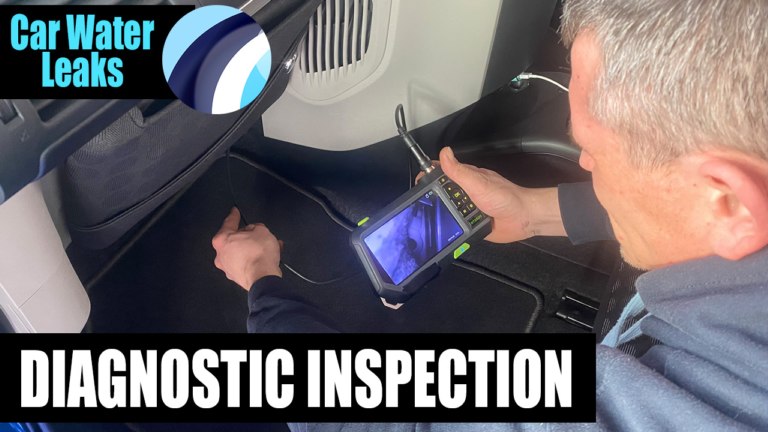
James films this regularly to show customers what the investigation reveals. The sequence is always the same: trim panels out, carpet lifted, and then the floor pan comes into view. On most cars with an active leak, what is sitting in that floor pan is not damp; it is a puddle. Deep enough to slosh when the car moves. Deep enough for the wiring loom to sit submerged in it. On one of the cars in this video the subwoofer was sitting in standing water.
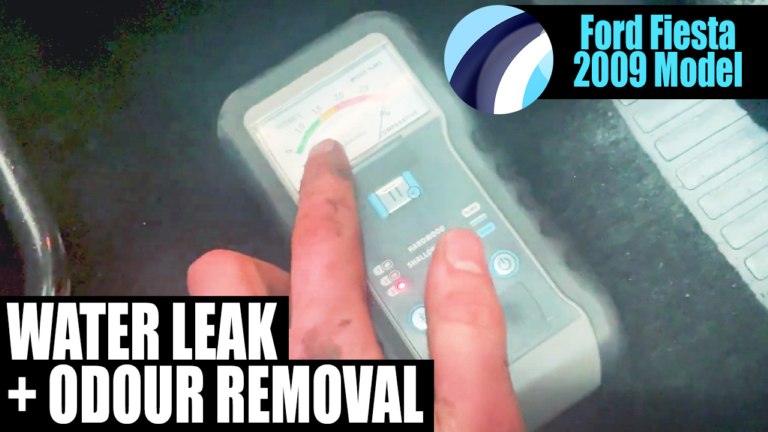
The underlay is why nobody feels it from above. The foam layer that sits between the carpet and the metal floor is there for sound deadening and comfort: it is thick, designed to absorb, and it does not release water easily. James picks it up and squeezes it: water pours out in a stream. That sponge will stay saturated for as long as the leak is ongoing, and even after the leak is fixed, it will not dry naturally. The water locked into foam that thick, with the carpet sitting on top trapping humidity, does not evaporate. You need a suction machine to pull the bulk out first, and then the drying machine to draw the remaining moisture out of the layers over several days.
The risk is the cables and control units that run along the floor pans on modern cars. You can see them on camera sitting in the water. Electronics corrode. Condensation from wet underlay works its way up into connectors and sensor housings. People come to us having driven on wet carpets for weeks and wonder why warning lights have started appearing on the dashboard: the two things are usually connected.
BMW underlay is particularly difficult: a polystyrene layer in the front section and dense foam throughout. James comments that on BMW the drying process takes longer than on most cars for this reason. The foam sucks up the water and does not like giving it back.
If you have a leak that is repaired but you are still smelling dampness, this is why. The car needs to be properly dried, not just allowed to sit in a warm garage and air out.



Share this video