Practical advice for managing a car with water in it while you wait for a repair slot. Hybrid/EV warning, how to keep water from spreading, ventilation tips, mould safety, and when not to drive at all.
You have found water in the car. You have called a few places, nobody can see you for a week, and you still have to get to work. This is what to do in the meantime.
Should you drive it?
Gary cannot answer that for you individually: it depends on the car and how much water is in it. Some people have driven cars with wet carpets for weeks and been fine. Others have called us with electrical faults that developed while they were waiting. What Gary can tell you is which cars to be most cautious with: hybrids and full EVs. The battery packs, charge management systems, and associated electronics do not like water, and on those cars the cost of continued water ingress can escalate fast. If you have a hybrid or electric car with water in it, do not keep using it while you wait.
On any car, before you drive it, check that the safety-related electrics are working: indicators, hazards, brake lights, airbag warning lights. If an airbag light has come on that was not on before, that may be water-related. Treat it accordingly.
Stop it getting worse
The most common mistake is trying to dry the car before the leak is fixed. Running the heater and dehumidifiers on a car that is still taking water every time it rains just moves moisture from the carpet into the air, steams up the windows, and achieves nothing lasting. The priority is keeping the car out of the rain: garage, carport, underground car park, multistorey. If none of those are available, duct tape over the sunroof or around any area you suspect is letting water in is a legitimate short-term measure: it tells us something useful when we see it, and it buys you time. Just replace it every few days; duct tape left on for months bonds to the paint and becomes a problem of its own.
Do not park on a slope. Water in the floor moves around when the car is not level, and it will find new areas to reach. Try to keep it on flat ground at home and at work.
Managing the water that is already there
If the boot has water in the spare wheel well, lift the carpet and get the spare wheel out if you can, then wedge towels in there to absorb it and change them over regularly. The concern is that water in the boot well can overflow into the rear footwells as the car moves. A wet spare wheel well that tips over that threshold becomes a much bigger drying job.
For ventilation: heater on warm, air conditioning on at the same time (the A/C dehumidifies the air even with the temperature up), fresh air setting not recirculate: the half-moon button on your climate control that you press in tunnels or behind lorries, you want that off so outside air is coming in. Direct the vents at the screen and the side windows. This will not dry the carpets but it will keep the glass clear enough to drive safely.
Mould
If you can see mould on the headlining, behind the seats, or on the seat belts, do not ignore it. Gary speaks to people every year who have been feeling unwell without realising the car is the cause: mould exposure causes flu-like symptoms and, in some cases, more serious respiratory effects. Do not put your head down to try to smell it; mould enters through the nose and mouth. Look for it, treat it with a proper anti-mould product, and do not drive a car with visible mould on the headlining.
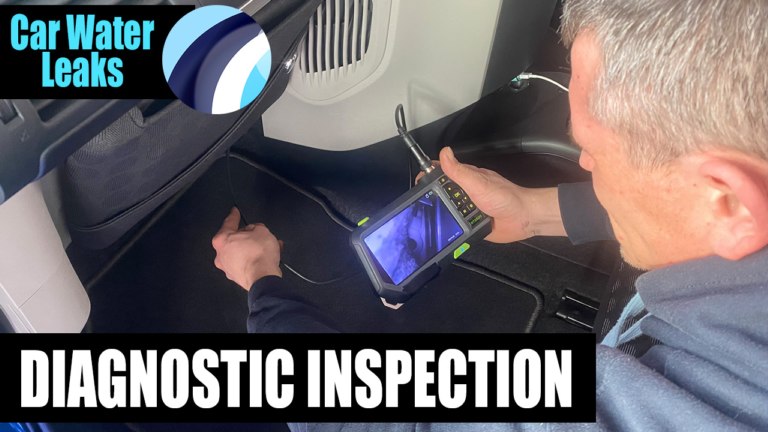
When you are ready to bring the car in, we do a 28-point water leak diagnosis and a carpet drying and decontamination service.



Share this video