A Ford EcoSport with a year of water ingress from a badly-resealed replacement windscreen. Mould between the seats, saturated carpet. Dealer accepted responsibility. Gary explains what to do when screen companies and dealerships are less straightforward.
You had a replacement screen fitted and now your car is full of water: what do you do?
In the case of this Ford EcoSport, the answer was straightforward. The dealership had replaced the windscreen under warranty about a year earlier because the heated front screen element had partially failed. The reseal had not held. Water had been running in slowly for twelve months, soaking down through the footwell foam (thick foam on this model) and spreading until it covered the entire floor.
The owner noticed steaming windows first, then a musty smell she could not place. She kept thinking her old car had not done this. By the time she came to us, the carpet was saturated and there was visible mould growing between the seats. The water had been in there long enough to turn the underlay black in places.
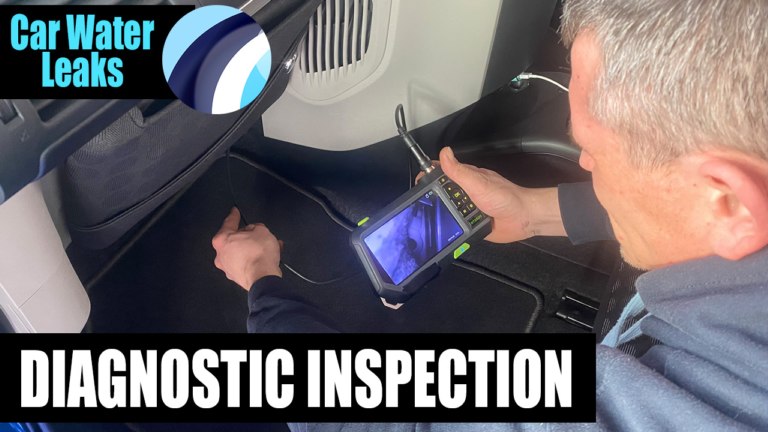
James ran the test: soap applied to the screen edge, air pressure applied from inside. Bubbles broke through the seal almost immediately. That gave us the probable cause. We cannot be completely certain until the glass comes out (it could be a cracked weld or a perished grommet behind the screen rather than the fitting itself) but we had narrowed it down enough. The dealer agreed to take the car back and sort it.
When it is less clear-cut.
Not every replacement windscreen case is as clean as this one. The first problem you may hit is the fitter asking how you know the leak is their screen and not something else. Until the glass is cut out, you cannot be certain, and that is exactly the leverage they use. The answer is to do what we did here: run a proper diagnosis, narrow the problem to beneath the screen, then let them investigate. If it turns out the screen is fine, you still needed it out: you just pay for the investigation instead of them.
The bigger problem is what happens to the wet car. Screen companies and dealerships are not equipped to dry and decontaminate a vehicle. They may try. More often, a contract valeter will shampoo the carpet and put an air freshener in it. That does not deal with mould. Mould spores spread through a car quickly and present a genuine health risk, particularly for children or anyone with a respiratory condition. Fixing the seal and leaving damp carpet is not a fix; it is a problem deferred.
If the screen was replaced through an insurance company, tell them about any mould and ask specifically that the car be dried and decontaminated before it is returned. Say it in writing. Most insurers will cover it; most will not do it unless you ask.
Dealing directly with a screen company is harder. Set out what you expect from the beginning (drying, decontamination, any consequential damage like corrosion or electrical faults) before any work starts. Once the screen is back in, the conversation becomes more difficult.
Older cars and multiple leaks.
On newer cars under warranty, replacement windscreens are the most common single cause of an unexpected interior water ingress. On older cars the picture changes. Rubbers, gaskets, grommets and body sealant all degrade, and somewhere around eight to twelve years they tend to start failing together. We regularly find three or four separate entry points on cars in that age range. If you have an older car with a wet interior, it is worth having a full water leak diagnosis rather than assuming the screen is the only issue. If the car is already wet, we can carry out decontamination and drying alongside the investigation.
This particular owner was lucky: the dealer had already accepted responsibility before she came to us. She left with the car diagnosed, treated with anti-microbial product, and a clear path back to the dealer. Not every case is that straightforward.



Share this video