Gary explains the difference between traditional acrylic sealants and ceramic nano-coatings: how they behave, how they're applied, and why the preparation matters as much as the product.
Hi, I'm Gary from New Again. We've been making cars like new again for over 30 years, and in this video I want to explain what ceramic and nano-coatings actually are, because there's a lot of confusion out there.
Traditional Sealants vs Ceramic Nano-Coatings
We've been applying car sealants for years, and the market leaders have been genuinely good products. A lot of dealers roll them into the deal now: you say yes, they do the fabric and the paintwork, it goes in the boot and that's that.
The key difference I want to show you is this. Traditional sealants, even the premium ones, don't go hard. They stay soft, which means they're forgiving if you apply them yourself, but it also means they're not as durable as your paintwork.
Ceramic nano-coatings are completely different. I've got an old bottle here where the product has gone solid at the bottom: rock hard, harder than the paint itself. In the bottle it's like a varnish. Once it cures on the car, the only way to remove it is wet-and-dry paper. A body shop respraying a panel would have to sand it off first.
How the Application Works
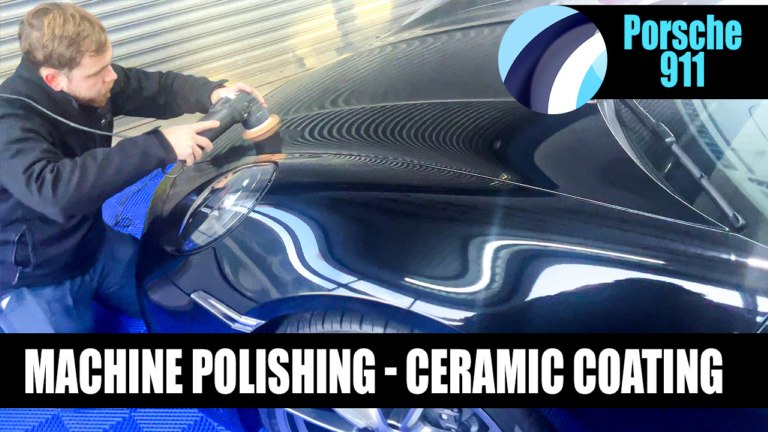
Because ceramic coatings are permanent, the preparation has to be right. We machine polish every car first (even brand-new ones) to get the paintwork as close to perfect as possible. Then an alcohol wipe-down removes every trace of polish residue. Then we airline the gaps so there's no moisture hiding anywhere.
The coating goes on inside our workshop. We carry accreditation from the manufacturers we use, and most of them won't grant that unless you have a controlled environment: no flies landing in wet coating, no dust, no humidity spikes. The first coat goes on, there's a wait of several hours, then the second coat follows. After that, it's on for good.
Why Ceramic Beats the Car Wash
A lot of hand car washes use strong alkaline chemicals (stuff that's not far off oven cleaner) sprayed on with pump sprayers. They use it on wheels and now on bodywork too. It strips wax and traditional sealants in two or three cleans. You don't even notice it happening.
Ceramic coatings are resilient against those chemicals. The hydrophobic effect means water beads up and rolls off, so you're washing the car roughly half as often, and half the washes means half the opportunity to pick up swirl marks and micro-scratches from wash mitts and chamois. Some customers go back to washing the car themselves once it's coated, because it's actually enjoyable when the result looks that good.
The Resale Argument
A lot of people rush to polish and detail a car right before they sell it. That makes sense, but it makes more sense to have it coated at the start and keep it looking new the whole time you own it. When someone finds your car on AutoTrader, they're looking at photos. The clean, glossy one gets the interest. You get the money, and you've had the benefit of driving it looking great the whole time.
Give us a call or have a look at our ceramic coating range. We'll need the car for a day or so. Yes, it costs more than a traditional sealant, but in our experience, it's worth it.


Share this video