Six-stage headlight restoration on a Nissan with heavily degraded lenses: barely visible bulbs before, fully clear after. The process runs from coarse wet sanding through progressively finer grades to compound and polish, finishing with a ceramic coating to slow future oxidisation.
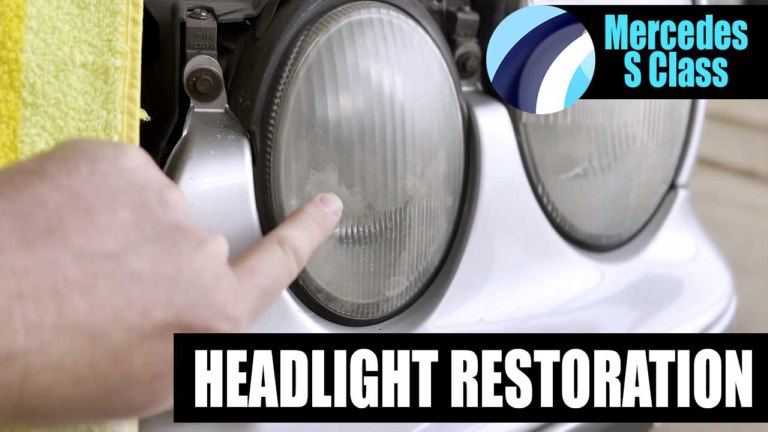
This Nissan came in with headlights that were described, accurately, as absolutely filled: the oxidisation had built up to the point where you could barely make out the bulbs behind the plastic. At that stage they are an MOT risk and a genuine safety issue at night, not just a cosmetic problem.
Our six-stage headlight restoration starts with coarse wet sanding to cut through the oxidised surface layer, then works through progressively finer grades before moving to compound and polish. Each stage removes the marks left by the previous one until the surface is clear again. The scars and yellowing that come off in the early stages give a good sense of how deep the degradation goes: it is not something a quick polish will touch.
By the end of the six stages the lenses were clear, shiny, and a thousand times better than they came in: the technician's words, and not much of an exaggeration. Once the polishing is done we apply a ceramic coating to the lens surface; this seals the plastic and significantly slows the UV degradation that caused the problem in the first place, extending the life of the restoration.
Replacement headlight units are expensive because manufacturers do not sell the lens separately: it comes as the full assembly. For most cars, headlight polishing is a fraction of that cost and delivers a result that is hard to tell from new.


Share this video