A black Range Rover Sport polished four stages and finished with Autoglym Ultra High Definition wax. The owner's boat car (not his main car) but he wanted it to look nice and glossy. Gary explains the four-stage polishing system and why even the finest wax cannot hide rough paintwork underneath.
A black Range Rover Sport: a few years old, the owner's boat car rather than his daily driver. He did not want to spend a lot but he wanted it to look good. He came in on a special offer that included a free upgrade to Autoglym Ultra High Definition wax, and the four-stage polish came with it.
Four-Stage Polishing
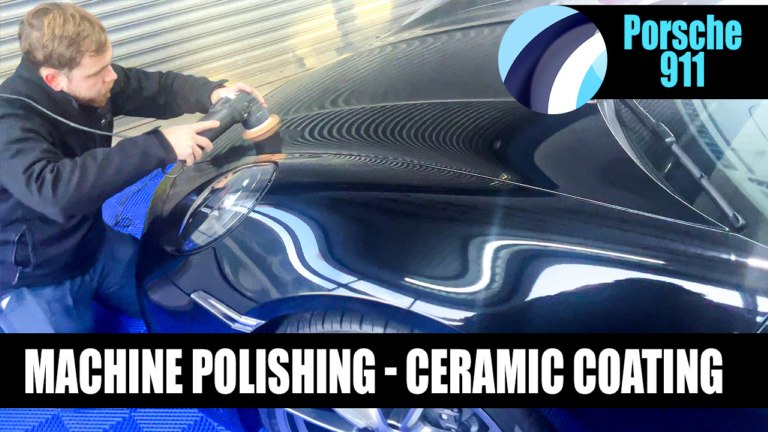
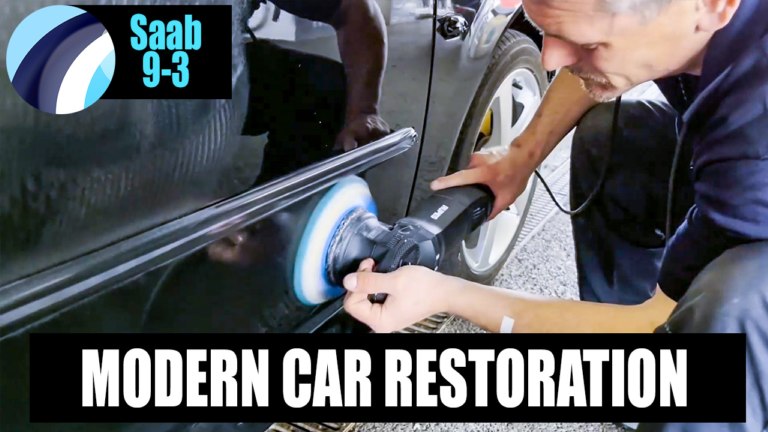
Four passes of machine polishing means four separate stages of cutting and refining. The first stages remove the upper layer of clear-coat: the part that contains the oxidisation, the fine scratches, the swirl marks from years of washing. Deeper scratches and paint etching get individual attention; where necessary we wet sand the area first, then buff out the sanding marks. The final stages use a random orbital polisher rather than a rotary: a rotary is faster but can leave "hologram" marks, which are micro-scratches from the polishing action itself. The orbital avoids that.
Only when we have wiped the panel down with alcohol and examined it under harsh direct light (and we are satisfied it is right) does any protective product go on top.
The Wax
As Gary puts it: "you can't put lipstick on a pig." The finest wax in the world over rough, scratched paintwork will not look good. The preparation is where the result comes from; the wax is the finishing step that adds depth, clarity and a vibrancy to the colour. Autoglym Ultra High Definition wax is one of the best traditional waxes on the market: not a ceramic coating, but an excellent choice for a car the owner plans to maintain himself without a permanent coating.
The owner came to collect it later that day. Gary's verdict: "looking a million dollars." See our machine polishing and paintwork correction service.



Share this video